
You're often handed this job late.
The venue is booked. Flights are landing at different times. The guest count keeps changing. Someone important needs airport pickup, someone else needs wheelchair access, and the event start time won't move. At that point, large group transportation stops being a simple booking and becomes a live logistics problem.
That's where many first-time planners make the wrong comparison. They compare quotes as if they're buying seats. In practice, they're buying coordination, timing control, communication, contingency planning, and reduced failure risk. If those pieces are weak, the cheapest option can become the most expensive one on the day that matters.
Your Complete Guide to Large Group Transportation
A lot of clients start in the same place. They think they need a bus. What they need is a plan that gets everyone where they need to be, in the right order, with enough time for loading, unloading, check-in, and the delays that always show up in busy markets.
That's why large group transportation should be treated as an operations function, not a last-minute add-on. Shared transportation already operates at national scale. According to the Federal Transit Administration's 2024 National Transit Summaries and Trends, transit operators provided 7.6 billion passenger trips in 2024, up 9.8% from 2023, and carried passengers 38.1 billion miles. That matters because it shows how fundamental coordinated transportation is when large numbers of people need to move reliably.
What goes wrong when the plan is thin
The common failure points are predictable:
- Too many vehicles: A planner splits the group across rideshares or separate cars. People arrive at different times, drivers use different routes, and the organizer spends the trip answering status texts.
- Not enough time: Pickup windows look fine on paper, but luggage loading, hotel exits, venue access, and curb restrictions add friction.
- The wrong equipment: A vehicle may technically fit the headcount while failing on luggage space, accessibility, or boarding flow.
- No control point: Nobody owns the manifest, passenger communication, route timing, or day-of adjustments.
Practical rule: If your event has a fixed start time, transportation should be planned backward from arrival deadlines, not forward from departure hopes.
Large group transportation works best when one team owns the details. That includes routing, dispatch communication, vehicle fit, airport timing, pickup sequencing, and contingency decisions. Done well, it feels easy to passengers. Done poorly, it creates stress that spreads into the rest of the event.
What Is Large Group Transportation
Large group transportation is managed movement for a shared itinerary. That sounds simple, but the difference between a vehicle rental and a managed service is substantial.
When a group provider does the job properly, they aren't just assigning a driver and keys. They're functioning like a project manager for passenger flow. They look at where people are coming from, when they need to arrive, what they're carrying, how many pickup points are realistic, where the vehicle can legally stage, and what happens if the schedule slips.
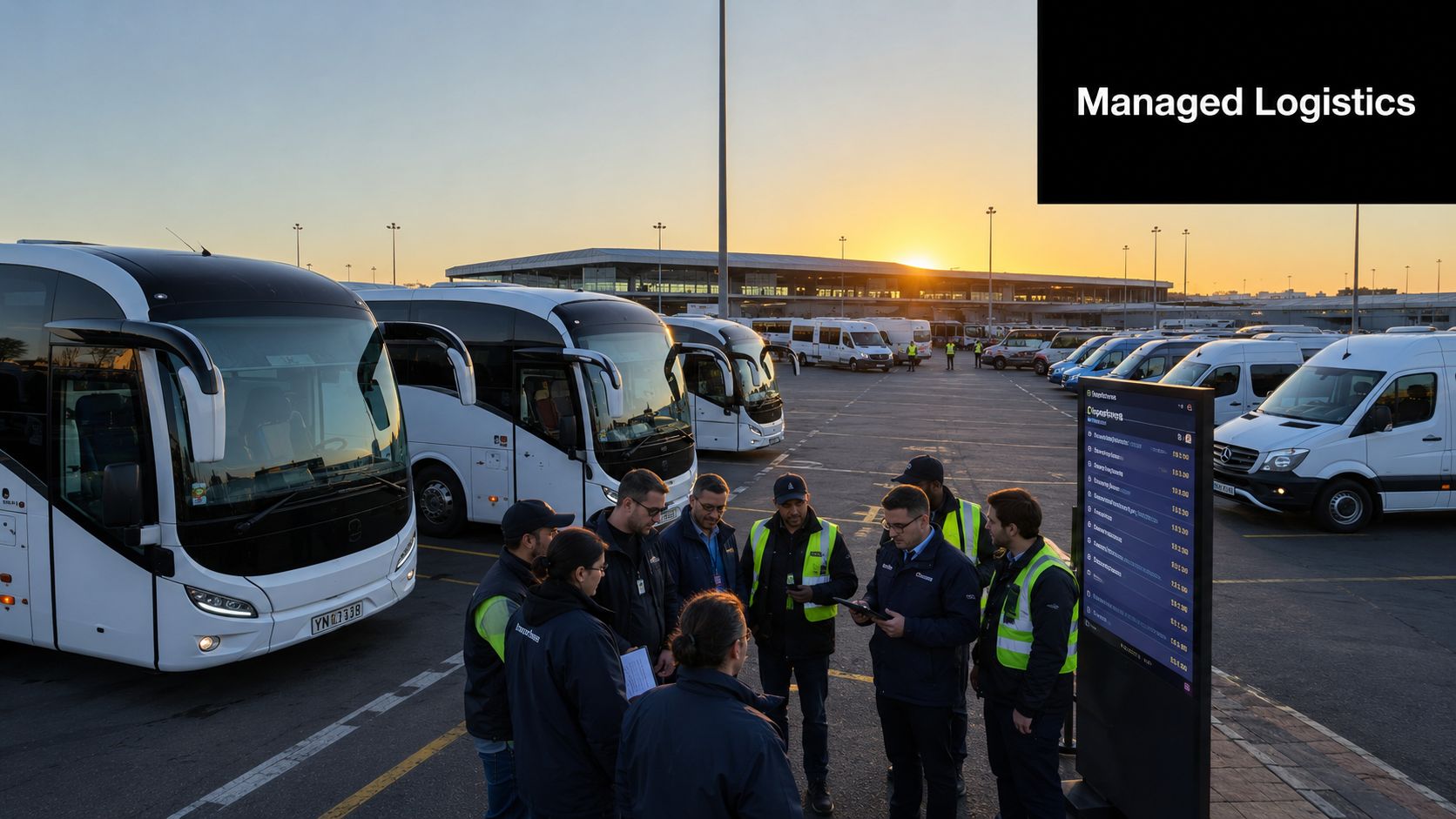
It's closer to project management than car service
A first-time buyer often asks, “What vehicle do I need?” A more useful question is, “What service structure keeps my group together and on schedule?”
For time-sensitive events, professionally managed transportation usually outperforms ad hoc options because it gives you:
- A single operating plan instead of multiple separate bookings
- Central communication between organizer, passengers, and dispatch
- Clear pickup sequencing for hotels, offices, airports, or venues
- Day-of adjustment capacity when arrivals shift or curb access changes
That matters for corporate conferences, airport transfers, wedding guest shuttles, sporting events, concerts, and multi-stop itineraries. In all of those cases, the organizer isn't trying to move one person efficiently. They're trying to move a group without fragmentation.
What this service usually includes
A real group transportation plan usually covers more than passengers notice.
Itinerary review
Pickup locations, stop order, venue access points, and realistic timing get mapped before service begins.Vehicle assignment
The operator matches group size, luggage needs, comfort level, and trip length to the right equipment.Operational coordination
Dispatch tracks progress, handles timing changes, and communicates with the organizer when conditions shift.
When the service is good, passengers think the trip was simple. The complexity was handled before they boarded.
What doesn't work well is treating a fixed-time group move like a collection of independent rides. Public transit can be valuable in many settings, but it isn't designed around your private event timeline. Rideshares help for individual flexibility, but they don't give you one arrival, one accountability chain, or one controlled plan.
Matching Your Group Size to the Right Vehicle
Choosing the wrong vehicle creates problems that don't show up on the quote. You see them at the curb. People wait longer to board, luggage gets jammed into aisles, VIP travelers lose privacy, and the route starts late.
The right choice depends on more than headcount. You need to consider trip length, formal versus casual use, luggage volume, the number of pickup stops, and whether everyone really needs to travel together.
Start with the trip type, not just the seat count
For executive moves, small leadership groups, or airport arrivals where appearance matters, a sedan or luxury SUV often makes more sense than placing everyone on a larger shuttle. For event operations, sales teams, wedding parties, and campus-style shuttles, a Sprinter van or minibus usually creates a better balance between efficiency and maneuverability. For major conferences, large weddings, sports travel, and venue transfers, a full-size coach bus is often the cleanest solution.
The market reflects that need for scale. The 2025 Motorcoach Industry Size and Scope Research found that companies running more than 100 motorcoaches accounted for 50.9% of the fleet and 32.4% of motorcoach mileage, which highlights how much large operators matter for major events and high-volume movements.
Vehicle comparison for group transportation
| Vehicle Type | Passenger Capacity | Best For | Common Amenities |
|---|---|---|---|
| Executive Sedan | Small VIP parties | Executive airport transfers, client pickup, private point-to-point travel | Premium seating, climate control, quiet cabin |
| Luxury SUV | Small groups with added luggage or privacy needs | Airport transfers, executive teams, family travel | Extra cargo room, premium interior, flexible seating |
| Mercedes Sprinter Van | Small teams and compact groups | Airport groups, corporate outings, wedding party movements | Comfortable seating, easier group boarding, luggage flexibility |
| Minibus | Mid-sized groups | Hotel shuttles, venue transfers, rehearsal dinners, conference loops | Higher group capacity, easier boarding, room for short-haul group moves |
| Full-size Coach Bus | Large groups | Conventions, sporting events, large weddings, multi-stop event transport | Large cabin, significant luggage space, comfort for longer runs, often includes onboard features such as Wi-Fi or power depending on configuration |
Practical fit by vehicle class
Executive sedans and luxury SUVs
Use these for VIP travelers, speakers, executives, or family principals, not broad guest movement. They work best when punctuality, discretion, and direct routing matter more than moving a crowd. They also solve a common problem in larger programs: not everyone should be transported the same way.
A frequent mistake is putting principals into the same loading pattern as the main group. That can create delays, curb confusion, and unnecessary waiting.
Mercedes Sprinter vans
These are useful when you need a small-group solution that still feels coordinated. They fit airport teams, board members, production staff, and wedding parties well, especially when the route is direct and the luggage profile is manageable.
They also work in urban settings where a larger coach may face tighter access constraints.
Minibuses
Minibuses are often the most practical middle ground. They're strong for hotel-to-venue loops, staff shuttles, off-site dinners, and guest transfers where you need more capacity than a van but don't need a full coach.
A minibus is often the right answer when a client thinks they need either “a few SUVs” or “a big bus.” It covers the middle cleanly.
Full-size coach buses
For large headcounts, full-size coaches simplify operations because they reduce fragmentation. One coordinated load-in and load-out is usually easier to manage than several smaller departures. They're especially useful for longer routes, high luggage demand, and event schedules where late arrivals ripple into everything else.
What doesn't work is choosing the biggest vehicle only because it sounds safest. Oversizing can create access issues at tight hotels, private venues, and crowded city curbs. The right vehicle is the one your route can support.
How Large Group Transportation Is Priced
Most buyers start with the wrong question. They ask, “What's your rate?” before they've pinned down the itinerary details that drive the cost.
Pricing usually follows a few core variables: vehicle type, service duration, route design, and added services. But the quote on paper isn't the full story. The bigger issue is whether the plan is resilient enough to avoid operational overages and day-of failures.
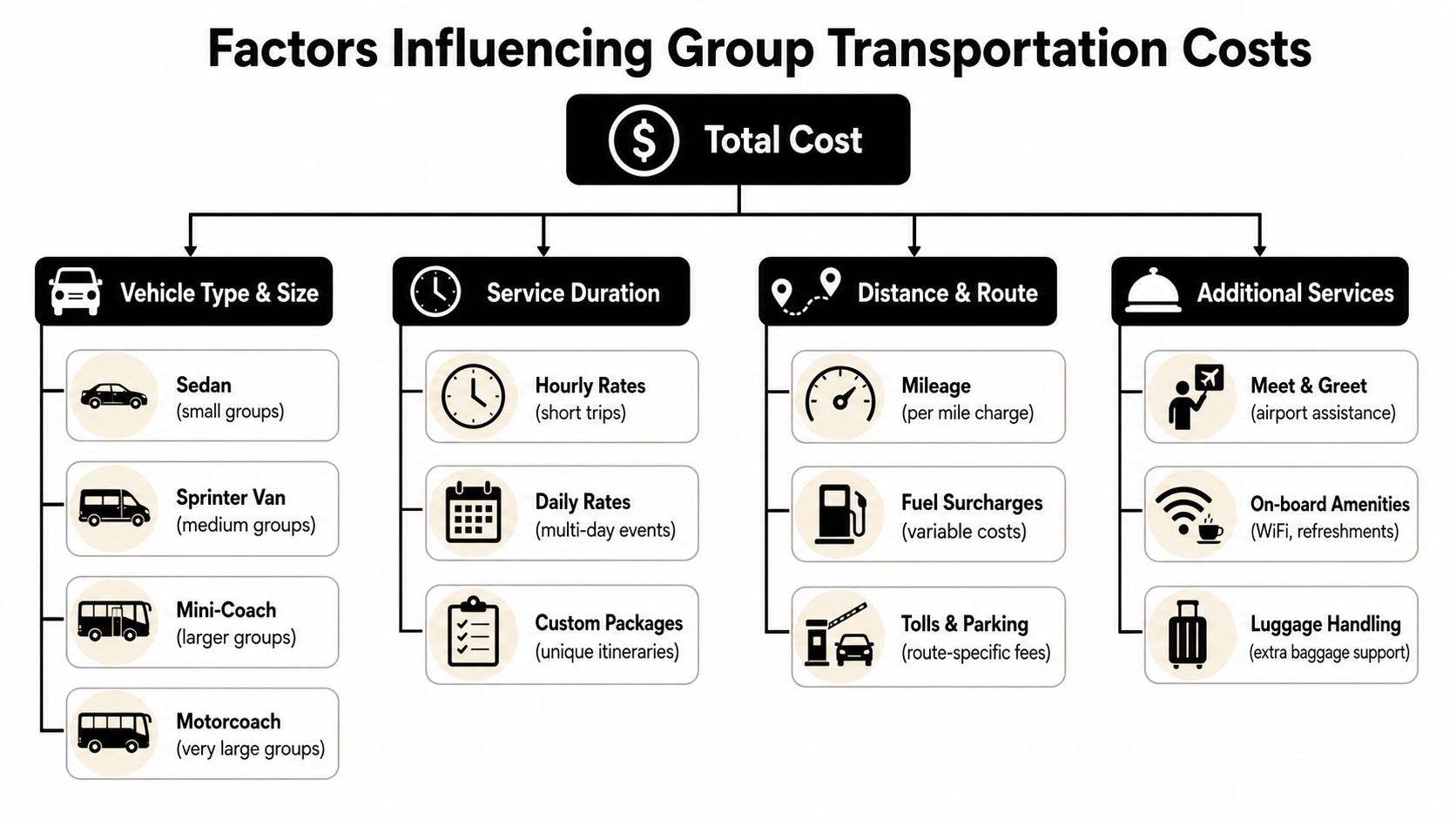
What usually shapes the quote
A transportation quote commonly reflects:
- Vehicle class: A sedan, Sprinter, minibus, and motorcoach sit in different operating categories.
- Time on duty: Short transfers, hourly service, and full-day assignments are priced differently.
- Distance and routing: Mileage, deadhead positioning, toll exposure, and parking conditions all matter.
- Service complexity: Meet-and-greet support, multiple pickups, wait time, and specialized handling increase coordination demands.
Those are visible costs. The hidden ones often come from poor planning.
The expensive part is often the delay
The Barr Foundation transportation policy discussion points to a practical reality for buyers: the full cost of large-group transportation often fails to account for hidden time loss from congestion, curb access issues, and event traffic, which can trigger chain-reaction scheduling problems and missed event starts. In group travel, that's exactly where budgets break.
A “cheap” option can become costly when:
- Airport construction changes pickup flow
- Venue loading zones back up at the same time everyone arrives
- A multi-stop itinerary leaves no recovery time
- Separate vehicles drift apart and require active troubleshooting
- The group misses a check-in window, opening session, or timed entrance
Cost warning: The most expensive transportation failure is usually not the invoice. It's the event disruption caused by a late arrival.
That's why managed service matters. A strong provider doesn't just quote a vehicle. They stress-test the timing, challenge unrealistic pickup sequences, and recommend a structure that lowers the chance of expensive surprises. For many groups, that's where the core value sits.
The Ultimate Planning and Booking Checklist
A solid plan starts before you request a quote. If you hand a provider incomplete information, you'll either get a vague estimate or a precise quote that later stops matching reality.
Use this checklist to tighten the scope before booking.
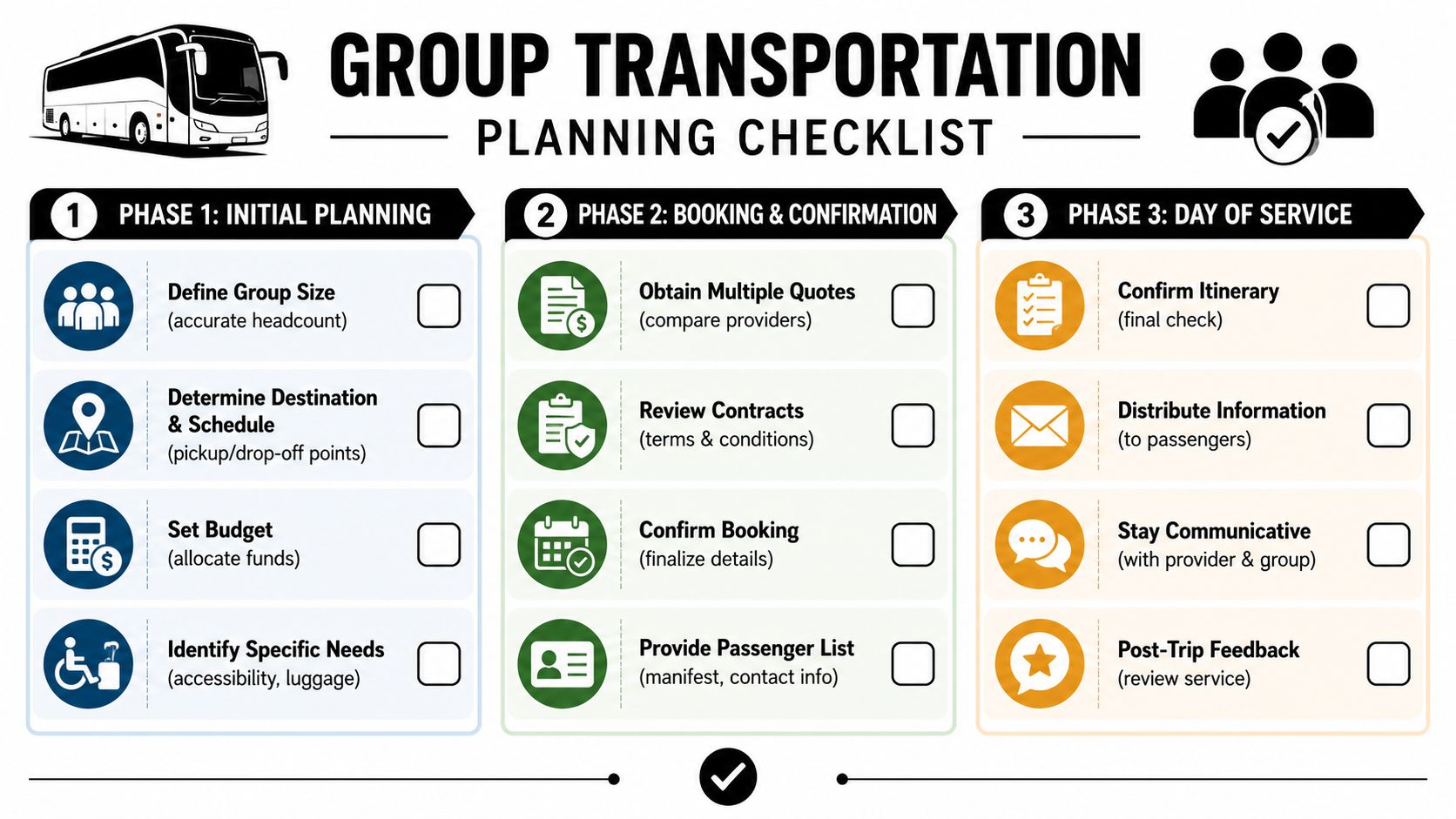
Phase one initial planning
Start with the essentials.
- Lock the headcount: Use a realistic passenger total, not an early guess. Include organizers, family members, production staff, and anyone who may board at the last minute.
- Map the itinerary: List exact pickup points, stop order, destination entrances, and target arrival times.
- Define luggage and special items: Suitcases, garment bags, sports equipment, signage, gift bags, and presentation materials can change the vehicle choice quickly.
- Choose a group contact: One person should own final approvals and day-of communication.
If your event involves security-sensitive arrivals, VIP handling, or controlled access, this is also the right stage to review Overton Security transportation insights. Their guidance is useful when transportation planning intersects with credentialing, protected guests, or tighter event protocols.
Phase two provider vetting
It's common for buyers to move too fast. The quote looks fine, so they stop asking questions.
Don't.
Ask each provider:
What vehicle are you assigning?
“Similar vehicle” language can create surprises.How do you handle schedule changes?
Airport delays, venue adjustments, and late passenger loads happen often.Who manages dispatch communication on the day of service?
You need a clear operating contact, not just a booking confirmation.What's included in waiting time, route changes, tolls, and parking?
Hidden assumptions usually live here.
To get passengers aligned before travel day, share the final instructions in writing. A short message with pickup time, exact curb location, lead contact, and what to do if someone is delayed prevents a lot of confusion.
Here's a visual planning reference you can use while building your own run of show:
Phase three accessibility and final confirmation
Accessibility should be planned directly, not left for a casual note at the end. Research on underserved transportation users shows that groups with disabilities or limited mobility face distinct barriers, requiring planners to ask practical questions about wheelchair positions, boarding time, and specialized mobility options beyond standard service, as outlined in this NCHRP report on underserved populations in transportation decision-making.
Use that principle in practical terms:
- Confirm accessible equipment: Don't assume availability. Ask what can be assigned and how boarding works.
- Build extra loading time: Accessible boarding changes timing, and that should be reflected in the itinerary.
- Check mixed-mobility flow: The vehicle and route should work for all passengers without creating avoidable delays.
- Address communication needs: If your group includes travelers who need language support, plan that before service day.
Accessibility planning isn't an accommodation added after the plan. It's part of the plan.
Before final payment, review the confirmation line by line. Check names, dates, flight details, pickup addresses, event timing, and cancellation terms. Small errors in paperwork turn into large problems at the curb.
Prioritizing Safety and Compliance
Transportation planning gets a lot easier when you treat safety and compliance as filters, not afterthoughts. If a provider can't answer basic questions about operating authority, insurance, chauffeur vetting, and dispatch control, stop there.
A professional operator should be ready to discuss licensing, coverage, and how they screen and manage drivers. That matters even more for airport runs, late-night events, wedding shuttles, and corporate programs where the organizer carries reputational risk if something goes wrong.
What to verify before service
Look for these basics:
- Operating credentials: Ask for the company's USDOT information when applicable and confirm that the operation type matches the service you're buying.
- Insurance clarity: Don't settle for vague assurances. Ask what coverage structure applies to the trip.
- Driver screening: You want to know how chauffeurs are vetted, assigned, and supervised.
- Dispatch oversight: A real operation should have live communication with the field, not just a reservation inbox.
If your event planning still has moving parts beyond transportation, a broad event prep resource like this party rental checklist can help you spot timing and coordination issues that affect guest arrivals, staging, and venue readiness.
Why technology matters for safety too
Modern fleet systems aren't only about efficiency. The Federal Highway Administration discussion of connected vehicle and traffic operations data notes that modern fleets utilize connected vehicle data for real-time traffic estimation and adaptive route optimization, which helps support on-time performance and improve passenger safety by avoiding unexpected hazards or delays.
That shows up in practical ways. Better route awareness can reduce last-minute scrambling, limit exposure to blocked approaches, and help dispatch make earlier decisions when traffic or access conditions shift.
For buyers, the takeaway is simple. Safety isn't just the condition of the vehicle. It's the quality of the operation behind it.
Partnering with Max's Luxury Rides
A group move can fail even when the vehicles are on time. Pickup zones get congested, venue access changes, guests split across entrances, and one missed handoff turns into a delayed program, overtime charges, or stranded passengers. Buyers get better results when they hire a provider that can manage those operational details, not just assign a vehicle.
For Chicago-area airport transfers, corporate movements, weddings, special events, and multi-stop programs, Max's Luxury Rides Inc. offers a fleet that includes executive sedans, luxury SUVs, Mercedes vans, minibuses, mini coaches, and full-size coach buses. That matters because many group itineraries are mixed by nature. VIP arrivals may need sedans or SUVs, while staff, family members, or attendees move on a different schedule and fit better in shuttle vehicles or coaches.
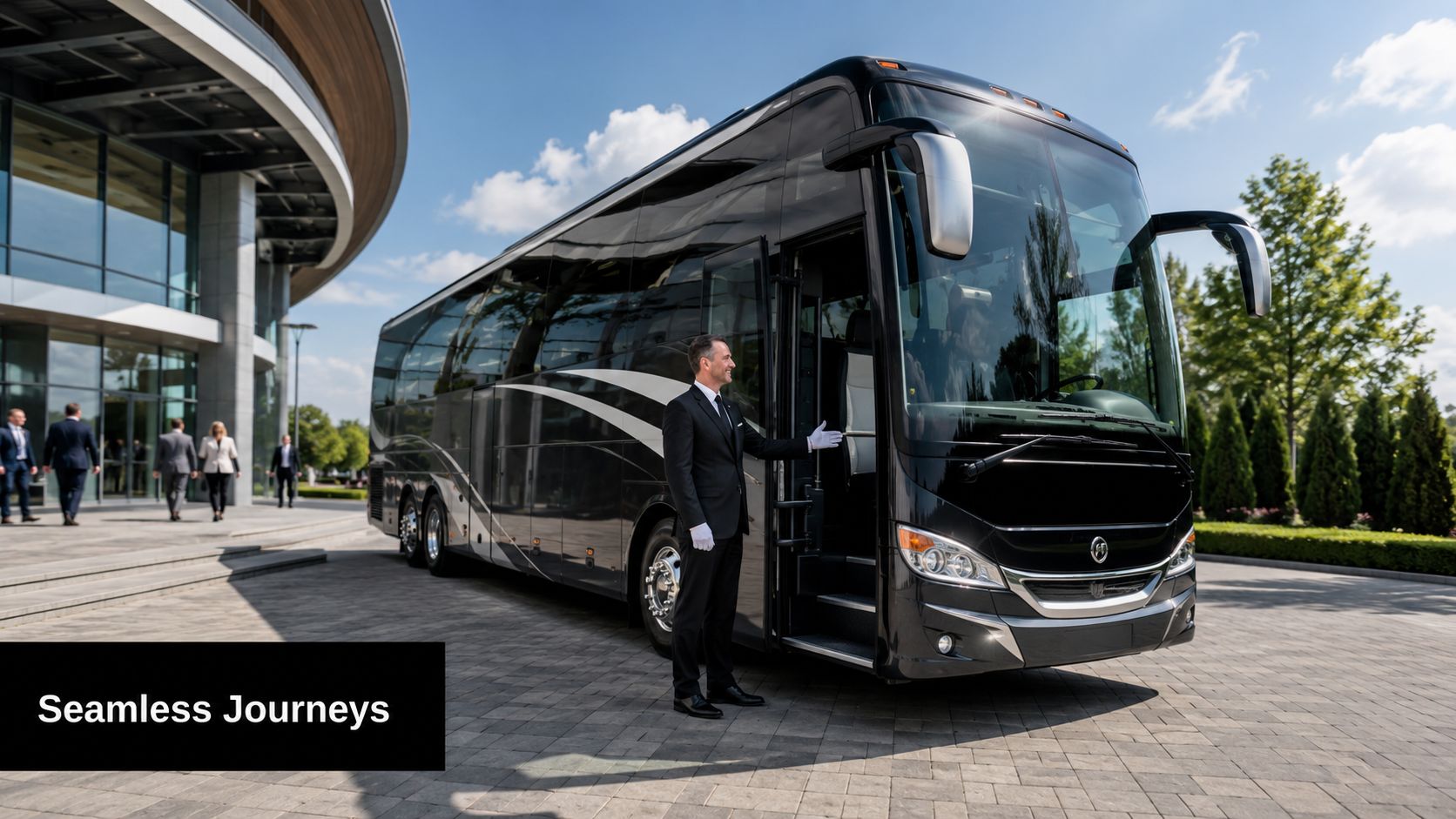
The true value of a managed service shows up when conditions change. A flight bank arrives late. A hotel asks buses to use a secondary entrance. A downtown route slows because curb space is blocked. In those moments, the job is no longer about transportation alone. It is about dispatch control, driver communication, timing adjustments, and keeping the client from absorbing every problem personally.
That is also where hidden costs are either contained or allowed to spread. Poor vehicle matching creates extra trips. Weak staging plans trigger wait-time charges. Loose coordination between venue staff and transportation leads to no-shows, missed departures, and liability exposure in active pickup areas.
If you are booking airport pickups, wedding shuttles, conference transfers, sporting event transportation, or a complex itinerary, treat the provider as an operations partner with clear accountability. That approach protects the schedule, reduces confusion on site, and gives the group a better chance of arriving together and on time.