
You've got the date on the calendar, the tasting reservations are half-set, and now the part that determines whether the day feels smooth or chaotic is still unresolved, the ride. If you pick the wrong vehicle, a winery with a narrow access road becomes a headache, the group gets cramped between stops, and those bottles you bought on the way home end up rattling around in the back. The right wine tour transportation choice fixes all of that before the first pour.
Wine country days look simple from the outside. A couple of wineries, a lunch stop, maybe a scenic route back. In practice, the vehicle, the chauffeur, and the booking terms shape the whole experience. That's why experienced planners treat transportation as a core part of the itinerary, not a last-minute transfer.
Why the Right Ride Changes the Whole Wine Day
A couple books a Napa weekend and thinks, “We just need a car.” Then the itinerary grows. One tasting room sits down a narrower lane, lunch moves later, and a few bottles turn into a heavier return trip than expected. That's the point where the ride stops being background logistics and starts controlling the day.
The vehicle decides the route
A luxury SUV can slip into places a larger coach can't, which matters on vineyard access roads and in tight parking areas. Larger vehicles can force itinerary changes, add deadhead time, or make certain stops a bad fit. The wrong choice doesn't just affect comfort, it can reduce the actual winery options you have.
Practical rule: pick the vehicle around the route, not the other way around.
The same logic applies to group mood. Couples want quiet space and an easy boarding process. Corporate groups need everyone together without splitting into multiple cars. Families need a ride that's easy to enter, easy to exit, and not punishing on a long day.
Premium service is the point
Wine tourism reached an estimated USD 46.47 billion in 2023 and is projected to reach USD 106.74 billion by 2030 with a 12.9% CAGR from 2024 to 2030, according to Wine Tourism Statistics. That scale explains why transportation has moved beyond basic point-to-point rides. Buyers want an experience, not just a seat.
That's also why wine tour transportation is usually sold as an hourly or day-rate service. The value is in flexibility, not mileage. A good operator keeps the group on time, handles alcohol-aware logistics, and adjusts the day without making guests feel rushed.
By the time people book it properly, they're not buying a ride. They're buying a controlled, comfortable wine day that works from pickup to return.
What Wine Tour Transportation Actually Is
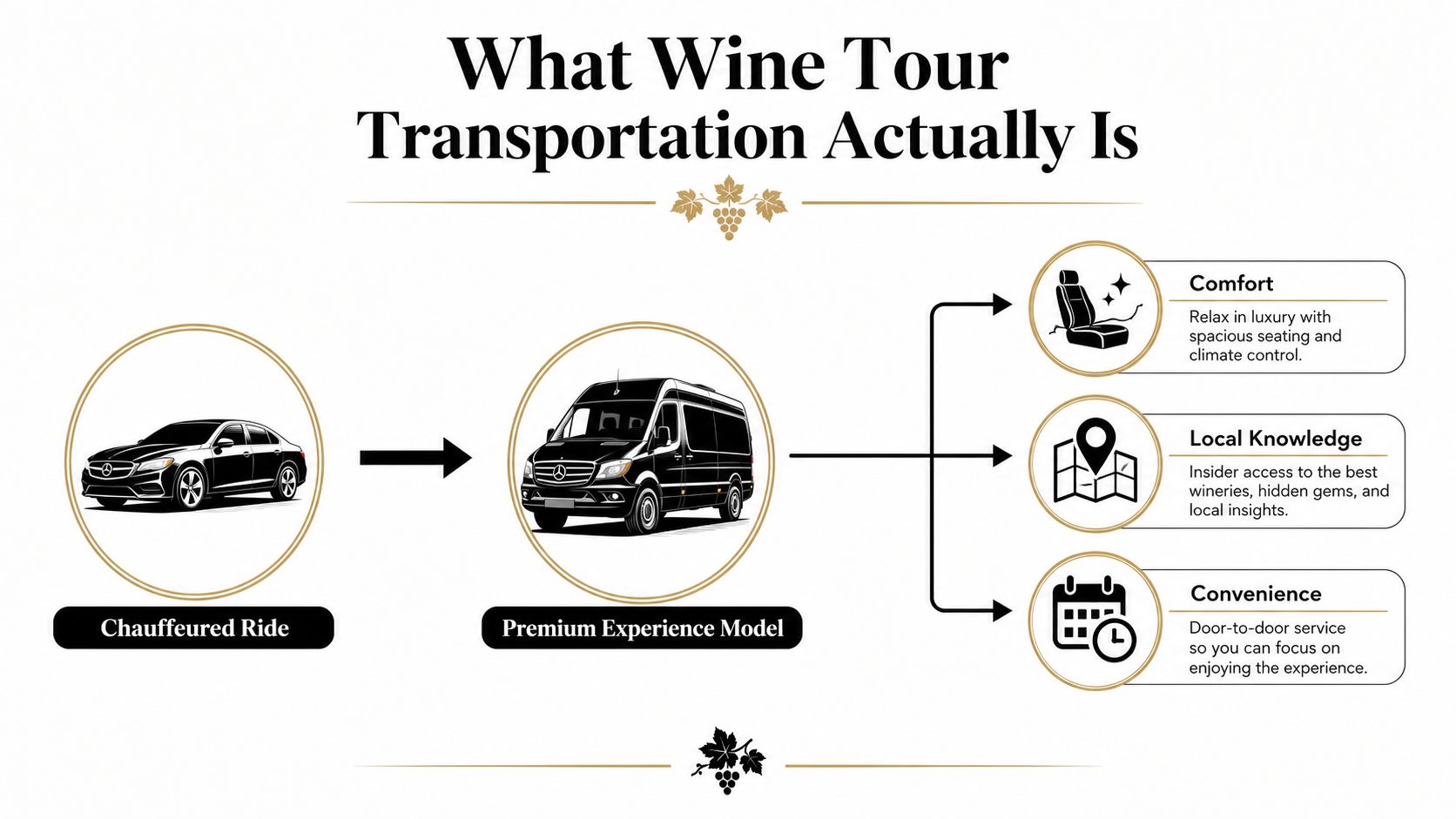
Wine tour transportation is a chauffeured, premium, schedule-aware service built for multi-stop winery days. It's not a normal ride-hailing trip, and it's not a generic charter with a fixed loop. It's a day plan on wheels, with a driver who understands tasting schedules, luggage, bottles, pacing, and the practical messiness of wine country roads.
What you're actually paying for
First, you're paying for a chauffeur, not just a driver. That means someone who can manage timing, handle multiple pickups when needed, and keep the day moving without making guests babysit the schedule. Second, you're paying for a vehicle class that matches the itinerary instead of forcing the itinerary to match the vehicle.
Third, you're paying for comfort that matters on a full-day outing. That means room to sit properly, controlled climate, storage for purchases, and a ride that doesn't feel like a rushed shuttle between errands. The service is designed around the whole experience, from first stop to final drop-off.
Why it's different from standard transport
A general airport transfer has a simple job, move people from one place to another. Wine tour transportation has to preserve the day's flow. Tastings run long, lunch shifts, and good operators build in enough flexibility to handle real-world timing changes without breaking the plan.
That's why the service is usually structured around a day rate or hourly booking. A metered ride makes sense for a straight trip. A winery day doesn't. You need a provider who expects stops, bottle storage, guest coordination, and a little unpredictability.
The best operators also understand terrain. That matters more than people think. A polished vehicle is useless if it can't comfortably reach the wineries you want to visit.
Comparing the Vehicle Classes for Wine Tours
The vehicle question is where you overthink style and underthink function. Don't start with “What looks nicest?” Start with “How many people, how much wine, and what roads are we using?” That's how you avoid a mismatch that ruins a good itinerary.
| Vehicle Class | Passenger Capacity | Ideal Group Size | Best Occasion |
|---|---|---|---|
| Executive Sedan | 2 to 3 | Couples or solo VIP travel | Anniversary day, airport-to-winery transfer |
| Luxury SUV | 2 to 6 | Small groups | Couples with luggage, families, narrow winery access |
| Sprinter Limo | 8 to 14 | Mid-sized parties | Weddings, birthdays, bridal parties |
| Executive Van | 8 to 14 | Business groups or families | Corporate outings, shared winery days |
| Minibus | 12 to 20 | Larger private groups | Team tours, reunion-style outings |
| Mini Coach | 20 to 30 | Big groups that still want private transport | Corporate events, multi-stop wine days |
| Full-Size Coach Bus | 30+ | Large event groups | Conferences, large celebrations |
Small groups should stay compact
For 2 to 6 guests, the luxury SUV is usually the smartest call. It handles narrow access roads better than bigger vehicles, and it gives people enough space to relax without paying for empty seats. For couples, an executive sedan makes sense if the day is simple and the luggage load is light.
A sedan can feel elegant, but it's not the vehicle I'd choose if guests plan to shop seriously. Once bottles start piling up, space gets tight fast. If the day includes multiple stops and a fair amount of purchasing, step up to the SUV.
Mid-sized groups need flexibility
For 8 to 14 guests, a Sprinter limo or executive van is the best fit. Sprinter vans are the workhorse for this range, and they're the right answer when the group wants to stay together without moving into bus territory. They're also far easier to stage at wineries than larger coaches.
For comfort, interior materials matter too. Anyone coordinating a premium day should think about the cabin condition the way they'd think about the vehicle type. If you want to keep leather interiors looking good, APEX NANO's leather care system is a useful reference for the kind of upkeep that keeps executive vehicles presentable.
Bigger groups need a hard reality check
Once you're into minibuses and coaches, you're trading maneuverability for capacity. That's fine when the guest count demands it, but it's not ideal for every winery lane. Larger coaches can be the right choice for corporate events or big family gatherings, but they need more planning and fewer boutique-style assumptions.
Bigger isn't better. It's just bigger. If the winery access is tight, a smaller vehicle wins every time.
Licensing, Insurance, and Safety on a Wine Tour
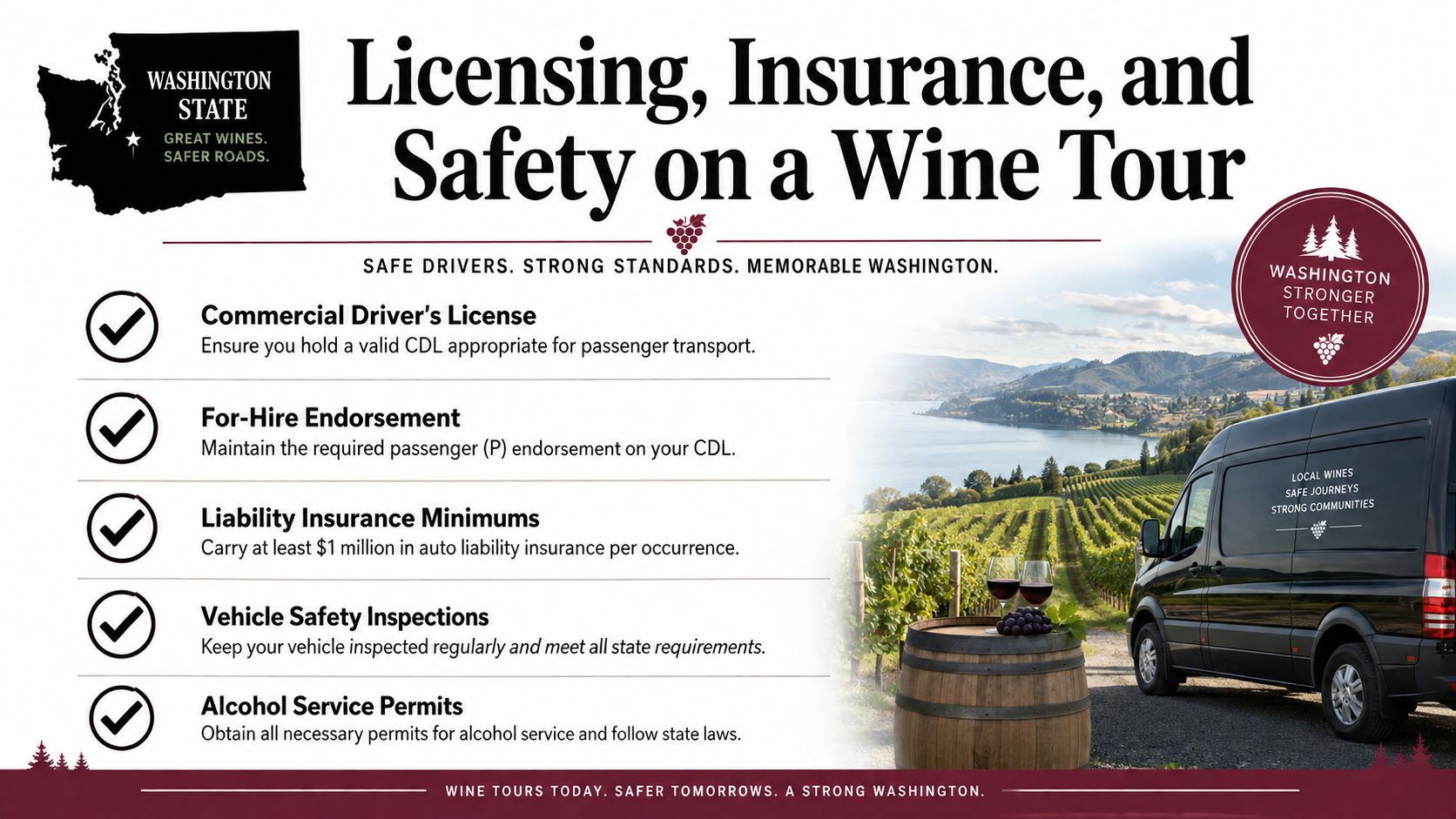
Wine tour transportation looks polished from the outside, but the operation behind it is regulated passenger transport. In Washington State, providers offering paid wine tours in a vehicle not licensed as a limousine or charter party need the proper For Hire license and a vehicle certificate, while chauffeur-driven unmetered and unmarked limousines require a Limousine Carrier license. If the service carries 7 or more passengers, a charter or excursion certificate and a USDOT number may be required, and the state warns that operating without the proper license can trigger fines of up to $1,000 per violation or per day of illegal operation, according to Washington State licensing requirements for wine tour transportation providers.
What to verify before you book
If you're hiring a provider, ask for proof that the vehicle is properly licensed for the type of service being offered. Then ask about commercial coverage, vehicle inspections, and how the operator handles passenger safety on winding roads. If the answer is vague, that's your answer.
For insurance questions, a practical starting point is business vehicle coverage options from Select Insurance Group, Inc. It's a useful reference if you want to understand the kind of protection a legitimate for-hire operator should be thinking about.
Safety is more than paperwork
The chauffeur should understand alcohol-aware service. That means no sloppy curbside handling, no rushed loading, and no attitude when the group wants one more minute at the tasting room. It also means driving like the day matters, because it does.
Clean paperwork matters. Smooth driving matters more once the road bends.
Seat belts, clean interiors, and sensible pacing are essential. If a provider treats wine tour transportation like a casual shuttle, don't book them. You want someone who understands that the service is part hospitality, part logistics, and part risk management.
Planning the Itinerary and Booking With Confidence
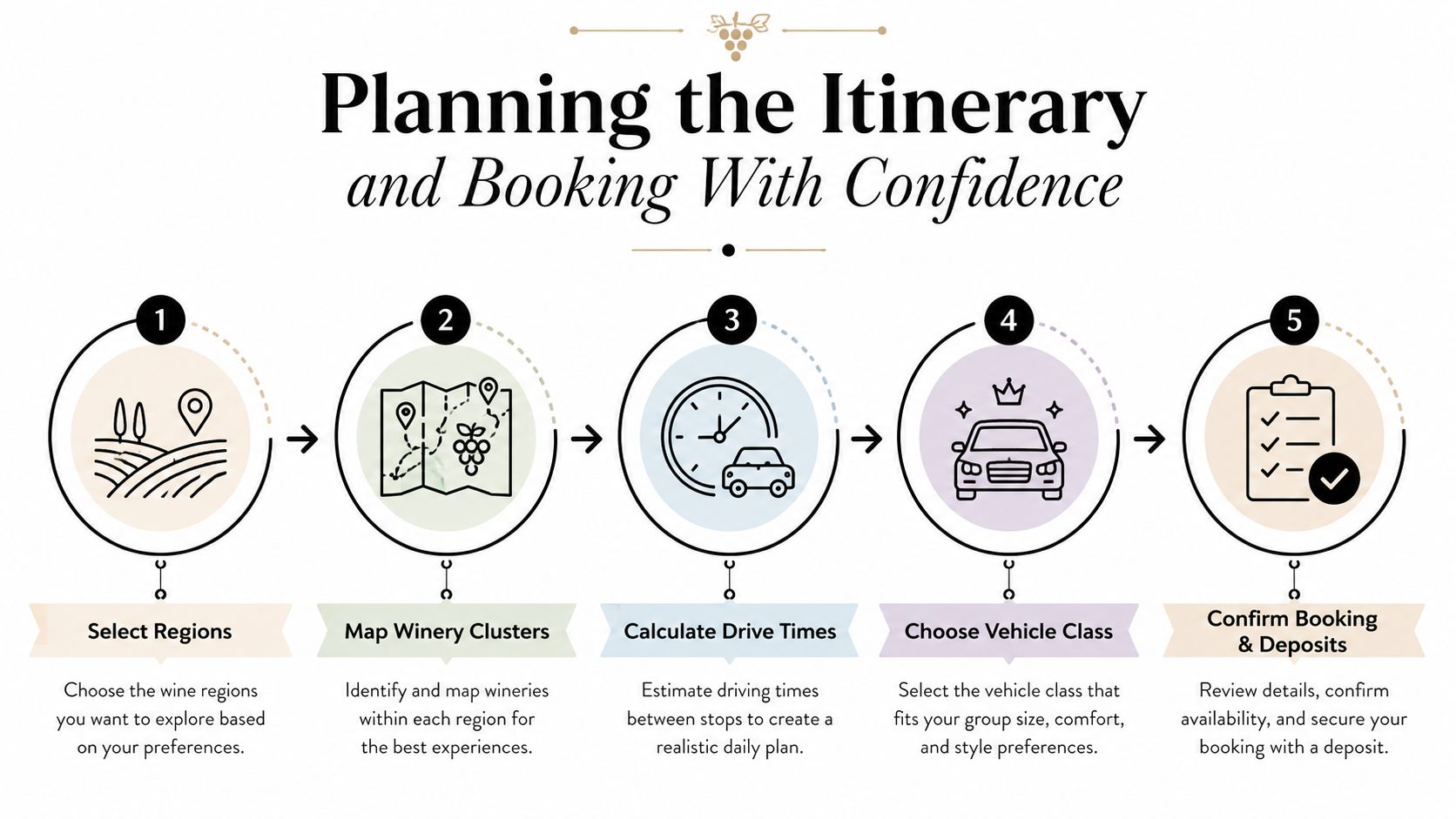
A strong wine day starts with geography, not wish lists. Put the wineries into clusters before you choose the vehicle, because travel time between stops decides whether the day feels easy or rushed. A good itinerary leaves room for tasting, lunch, and the inevitable delay that comes when a group stays longer than planned.
Build the day around the stops
Don't scatter your wineries across three different pockets of wine country unless you're prepared for more time in transit. Match the vehicle to the region, then lock the reservations around that choice. If you're building a regional plan for South Australia, ultimate McLaren Vale wine tour tips are useful because the same basic rule applies, cluster smartly and stop overreaching.
Confirm the lunch plan before the day arrives. Lunch shouldn't be an improvisation squeezed between tastings. It should be placed with enough breathing room that nobody is watching the clock while they're eating.
Put the booking terms in writing
Ask for the hourly minimum, overtime policy, cancellation terms, and gratuity expectations before you pay. Those terms decide whether the day is flexible or expensive the minute it goes long. If the chauffeur is expected to step inside for introductions at each stop, confirm that too, because not every operator does that.
Use this checklist before you approve the reservation:
- Guest list and headcount: Include everyone who will ride, not just the people invited.
- Pickup logistics: Give the exact address, hotel name, or airport terminal in advance.
- Timing windows: Share reservation times for wineries and lunch.
- Special notes: Birthdays, anniversaries, dietary issues, and accessibility needs belong on the booking.
- Arrival style: Decide whether you want a discreet transfer or a more hands-on chauffeur presence.
If you're flying in, line up the airport connection first and the winery pickups second. That keeps the first ride calm and prevents the whole day from starting in a scramble.
Handling Wine Purchases on the Return Trip
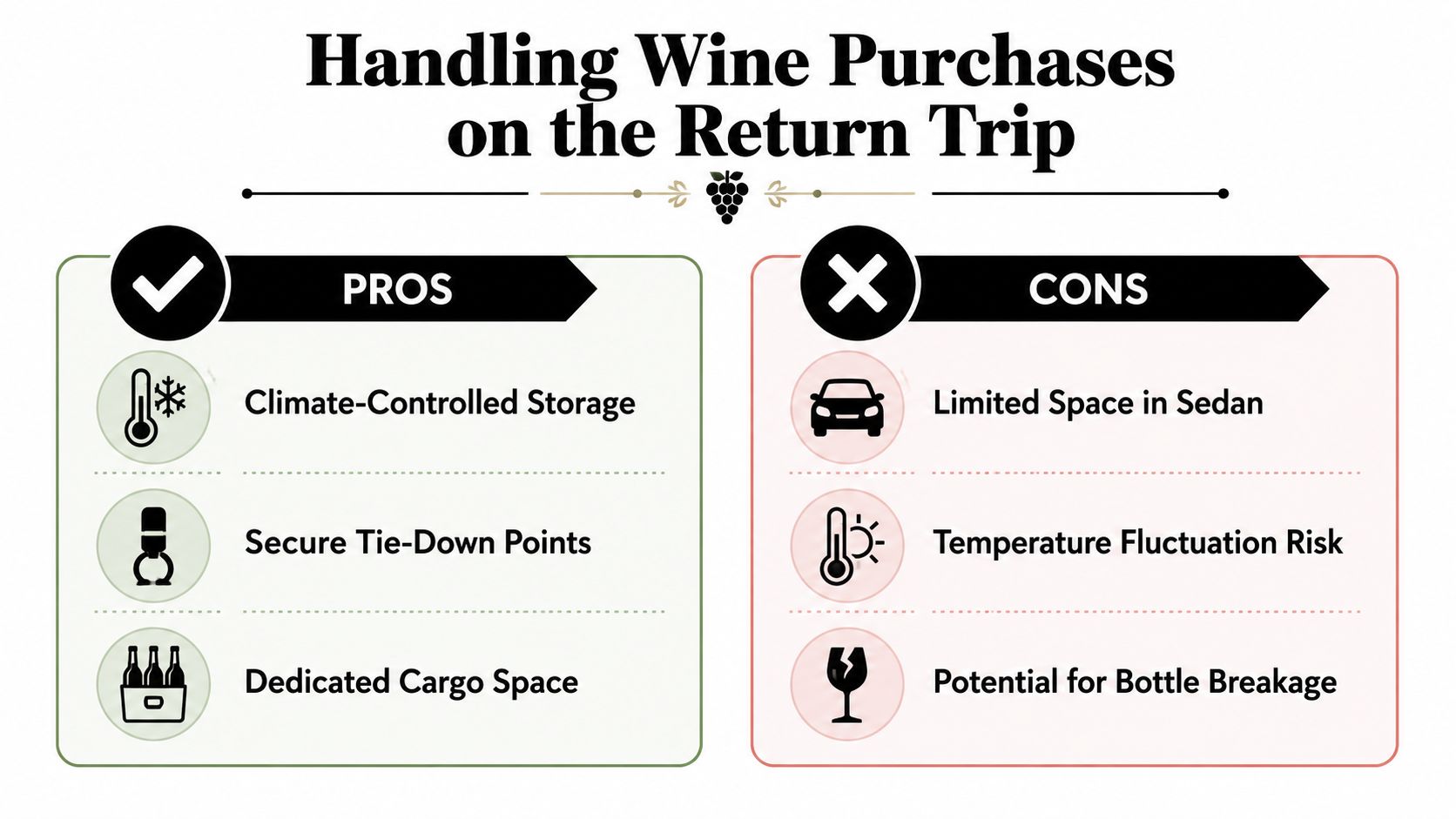
This is the part too many guides ignore. Guests don't just buy a bottle or two. They often leave with multiple bottles, and sometimes with enough wine that the return ride becomes a packing problem. The vehicle you choose determines whether those purchases sit securely, stay cool enough, and make it home intact.
Storage is a booking criterion
A sedan gives you the least room for bottles and boxes. A Sprinter van usually gives you far more usable cargo space, and a mini-coach can handle even more, especially for group tastings where everyone buys something. Cooler or storage availability should be part of the conversation before the booking is finalized.
The practical issue isn't just volume. It's how the vehicle supports upright placement, tie-down stability, and separation from passengers' feet, bags, and jackets. If you're expecting purchases, ask directly where the wine will sit during the ride back.
Packing wine the right way
Keep bottles upright when possible and cushion them so they don't knock together on rougher roads. If the day involves both whites and reds, short trips usually stay manageable in a climate-controlled cabin, but long return rides are a different story. On longer routes, the vehicle choice matters more than people think.
If the group expects significant purchases, shipping directly from the winery can be smarter than forcing everything into the cabin. That's especially true when the day has multiple stops or the vehicle is already full with guests and luggage. A bottle that's shipped safely is better than one that spent two hours rolling around in the back seat.
Ask one blunt question before booking, “Where will the wine go after we buy it?” If the provider can't answer clearly, keep looking.
Match vehicle to purchase volume
For a couple with light purchases, a sedan can work. For a social group with guaranteed shopping, a Sprinter van is the safer bet. For a larger celebration, the mini-coach is usually the calmest option because cargo room stops being an afterthought.
Matching Vehicles to Weddings, Corporate Groups, and Families
Some bookings are about more than tasting wine. They're about keeping a group together, managing timing, and making the day feel organized without being stiff. The right vehicle changes depending on the occasion, and I'd rather see a smart match than an oversized luxury choice that looks nice but works badly.
Weddings and bridal parties
For weddings, I'd choose a Sprinter limo or executive shuttle first. Those vehicles keep the bridal party together, give everyone enough space for bags and wardrobe changes, and handle photo-stop movement better than a full-size coach. If the group is larger, move up in size, but don't lose the ability to stage quickly.
The detail to confirm is pickup order. Wedding groups almost always have timing complications, and the operator needs to know whether the bride, groom, or entire party is boarding first.
Corporate outings
For corporate wine days, use an executive van or mini coach. The point is consistency, everybody stays together, nobody gets lost, and the vehicle feels professional enough for client-facing or team-building use. If the outing includes a meeting stop before the tasting portion, the vehicle should support that without feeling like a party bus.
Confirm whether the provider can handle multiple location pickups. Corporate groups often split across offices, hotels, or airports, and the transport needs to absorb that complexity cleanly.
Families and mixed ages
For families, the luxury SUV is the easy pick when the group is small. It's simpler for boarding, better for child-seat space, and less awkward for grandparents or younger kids. When the family is bigger, step up to a Sprinter van so nobody gets boxed in.
The one thing to verify is seat configuration. Family trips fail when someone assumes there's room and discovers there isn't.
Airport-connected trips
For airport-to-winery connections, sedans work for minimal luggage and two or three guests. Sprinter vans are the better answer when the group is larger or the bags are heavier. That keeps the transfer from becoming a juggling act before the wine day even starts.
A Practical Checklist Before You Book
Book the vehicle after you've answered six questions, not before. First, how many guests are riding, and how much luggage or wine will they bring back? Second, what's the occasion, because a corporate outing and a birthday trip should not feel the same.
Third, which wineries are on the list, and do they have narrow approaches or tight parking? Fourth, how much wine do you expect to buy, because that decides whether storage is a minor detail or a major one. Fifth, are you booking by the hour or by the day, and do the terms support the pace you want?
The trade-off that matters
Cheaper transport can save money, but it usually gives you less flexibility. A premium chauffeur booking costs more because it buys control over timing, stops, and on-board service. That difference shows up the moment a tasting runs long or a reservation changes.
Before you pay, request the provider's documentation, confirm the vehicle class, and make sure the booking terms match the kind of day you want. If the company can't explain how it handles route changes, guest communication, and return-trip wine storage, it's not the right operator.
Tipping and communication matter too. Set the expectation early, keep one phone number handy during the day, and tell the chauffeur immediately if the itinerary shifts. Good wine tour transportation feels effortless because somebody planned it that way.
If you want a polished wine country day without the guesswork, Max's Luxury Rides Inc. can handle the vehicle match, the chauffeur coordination, and the timing details that keep the trip smooth from pickup to final drop-off. Visit Max's Luxury Rides Inc. and book the kind of transportation that fits your group, your wineries, and your purchases.