
You know the moment. A traveler steps out at the curb, scans the black cars lined up outside O'Hare, and decides in a second which one feels right. Long before the route is confirmed or the bags are loaded, vehicle cleanliness has already told that rider something about the company, the chauffeur, and the kind of ride they're about to have.
That's why I treat cleanliness as a passenger-experience contract, not a wash bay task. In airport transfers, corporate travel, weddings, and event runs, the cabin is the service, and the standard is judged from the first glance to the last handoff. The right question isn't whether a vehicle looks presentable. It's whether it's prepared to carry strangers well.
The First Thirty Seconds of Every Ride
At a terminal curb, the inspection happens before anybody speaks. A rider looks at the windshield, the door sills, the seats, the floor mats, and the way the chauffeur opens the door. If the car feels cared for, the conversation starts with trust. If it doesn't, the ride starts with recovery.
That's the reality in chauffeur work, especially when the passenger has just come off a flight, is late for a meeting, or is trying to keep a wedding schedule on track. Cleanliness becomes a proxy for reliability because it's the only quality the rider can assess instantly. A spotless cabin doesn't just look good, it lowers friction before the trip even starts.
Practical rule: If a rider notices the dirt, the residue, or the smell before they notice the service, the vehicle failed the contract.
The rest of this guide keeps that standard in focus. It defines what cleanliness means in chauffeured service, shows why expectations run higher than many fleets assume, and lays out the protocols that hold up when the schedule gets ugly and the turnaround window gets short.
What Vehicle Cleanliness Really Means in Chauffeured Service
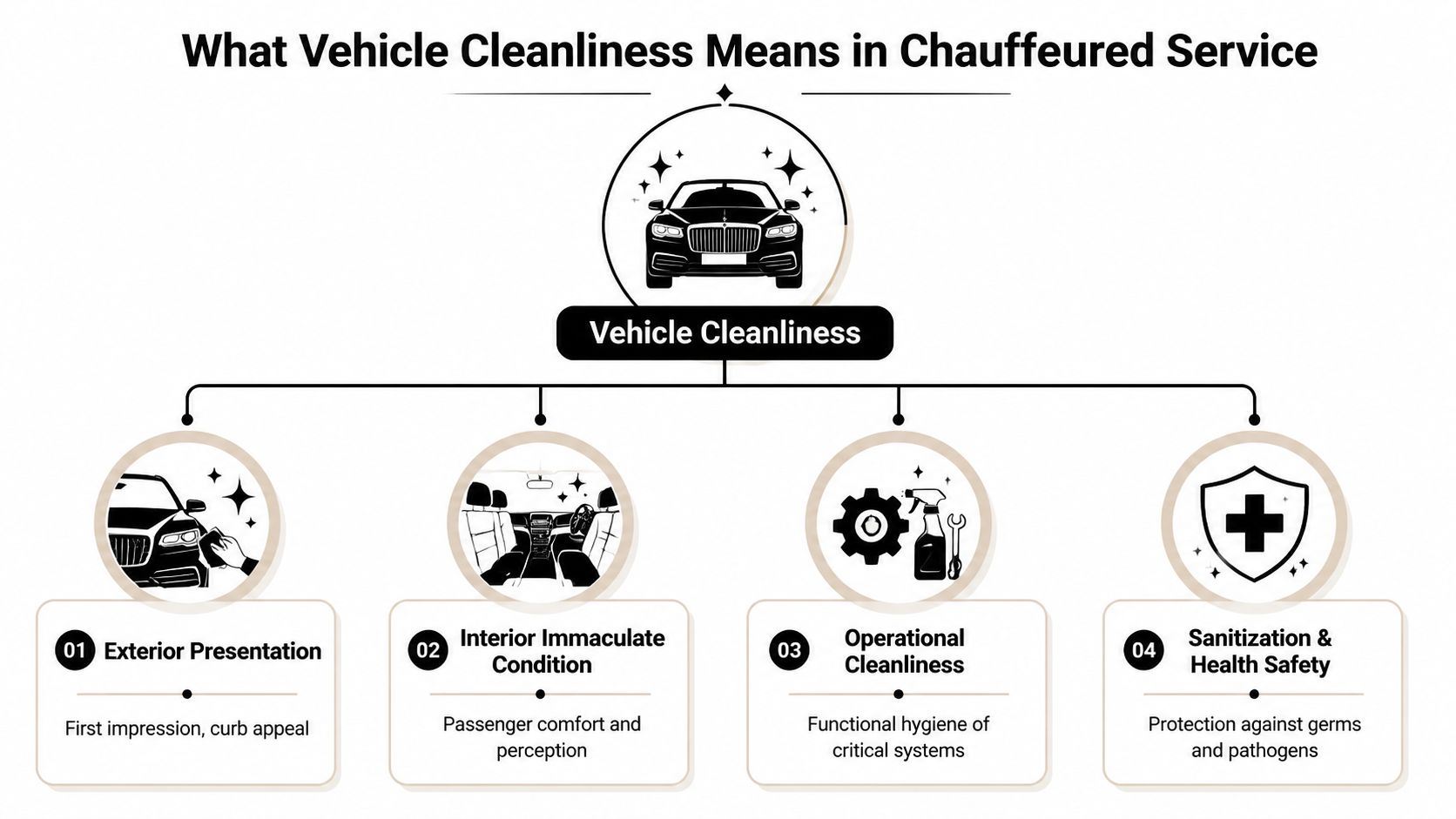
For a private owner, a clean vehicle often means no trash, no crumbs, and a decent shine. For a chauffeured operator, vehicle cleanliness has four working dimensions that all have to hold up at the same time.
The four-part standard
Exterior presentation covers the paint, glass, mirrors, wheels, door handles, and the way the vehicle meets the curb. That is the first visual promise. If the body panels are streaked or the wheels look neglected, the rider starts forming opinions before the door is even opened.
Interior immaculate condition is the part often noticed first, but it goes deeper than vacuuming. Seats, screens, cupholders, floor mats, touchpoints, and trim all need to read as intentional, not rushed. A polished sedan with debris under the seat is still a failed cabin.
Operational cleanliness is the part casual car owners miss. That includes seat tracks, door jambs, luggage areas, under-seat spaces, and the places where grime migrates after repeated use. In fleet work, these areas matter because passengers feel the difference even when they can't name it.
Sanitization and health safety covers the surfaces and systems riders touch and breathe through. In a shared ride environment, that means the cabin can't just look tidy. It has to be maintained as a space people can enter without hesitation.
A vehicle can pass a driveway glance and still fail a professional inspection. That's why good fleet cleaning is structured, not improvised. The standard has to account for what the passenger sees, what they touch, what they breathe, and what they never see at all.
Why Passenger Expectations Run Higher Than Most Fleets Expect
The numbers tell a useful story. In a 2025 survey of Australian car owners, 45% said they clean the inside of their car at least once a month, and 15% said they do it every week. For the outside, 44% clean at least monthly and 12% every week, which shows that cleanliness is treated as a recurring habit, not a special event (Budget Direct survey).
The gap becomes clearer in the UK data. In a 2020 survey, only 3% of drivers said they clean their car weekly, while 6% said they had never cleaned it. Another 28% said they clean only twice a year or never, and one report said drivers clean their cars less than five times a year on average, with about 11 weeks between full cleans (Fleet Alliance report). Those figures don't just describe habits. They explain expectations.
What that means in the back seat
Most passengers bring their own baseline into a chauffeured vehicle. If they clean their own car monthly, or they've spent years riding in vehicles that aren't maintained well, they notice a clean cabin immediately. They also notice the opposite immediately.
That creates three operational consequences. First, first impressions are immediate, because riders judge the car before the trip begins. Second, complaints are unforgiving, because cleanliness is visible and personal. Third, cleanliness is hard to copy, which makes it one of the few real differentiators a chauffeur business can keep in house.
A premium fleet doesn't win this game by being flashy. It wins by being consistently ready when the passenger opens the door.
Visible-Zone Protocols That Hold Up Under Pressure
A real cleaning protocol has to survive airport rush hours, back-to-back weddings, and late-night returns when the next pickup is already staged. The visible zones are where the passenger's trust is won, so they need a cadence, not a mood.
Cleaning cadence for chauffeured vehicles
| Zone | Pre-Trip Touch-Up | End-of-Shift Reset | Weekly Deep Clean |
|---|---|---|---|
| Interior surfaces | Quick wipe of seats, screens, cupholders, and the dash | Full vacuum, wipe-down, and spot check | Deep clean of trim, seams, and hidden debris |
| Exterior surfaces | Glass check, mirror wipe, light surface dust removal | Wash, dry, and wheel attention | Full body clean with detailed wheel and door-edge attention |
| Luggage area | Confirm empty, remove debris, wipe load surface | Vacuum and sanitize touchpoints | Cargo liner swap and seam inspection |
The cadence matters because different runs load the car differently. A corporate airport transfer may need a fast reset. A weekend shuttle might need a deeper wipe-down after every cycle. A coach or Sprinter that carries luggage, folding strollers, garment bags, or trade-show cases needs a cargo area check every time.
What actually goes in the kit
Use microfiber cloths by color so glass, interior trim, and exterior touchpoints don't cross-contaminate. Keep pH-neutral interior products for leather and mixed surfaces, because aggressive cleaners can leave residue or damage finishes. For glass, choose a cleaner that won't streak on tinted windows. For odors, use neutralizing products that remove the smell instead of burying it.
When the team needs a fast practical refresher on removal technique, a simple guide like practical dust removal steps can help reinforce the same discipline: start high, work low, and don't scatter dust back onto a finished surface. That logic works in a cabin just as well as it does in a home.
A rushed wipe makes a vehicle look busy. A controlled sequence makes it look prepared.
The Hidden Zones Most Fleets Miss
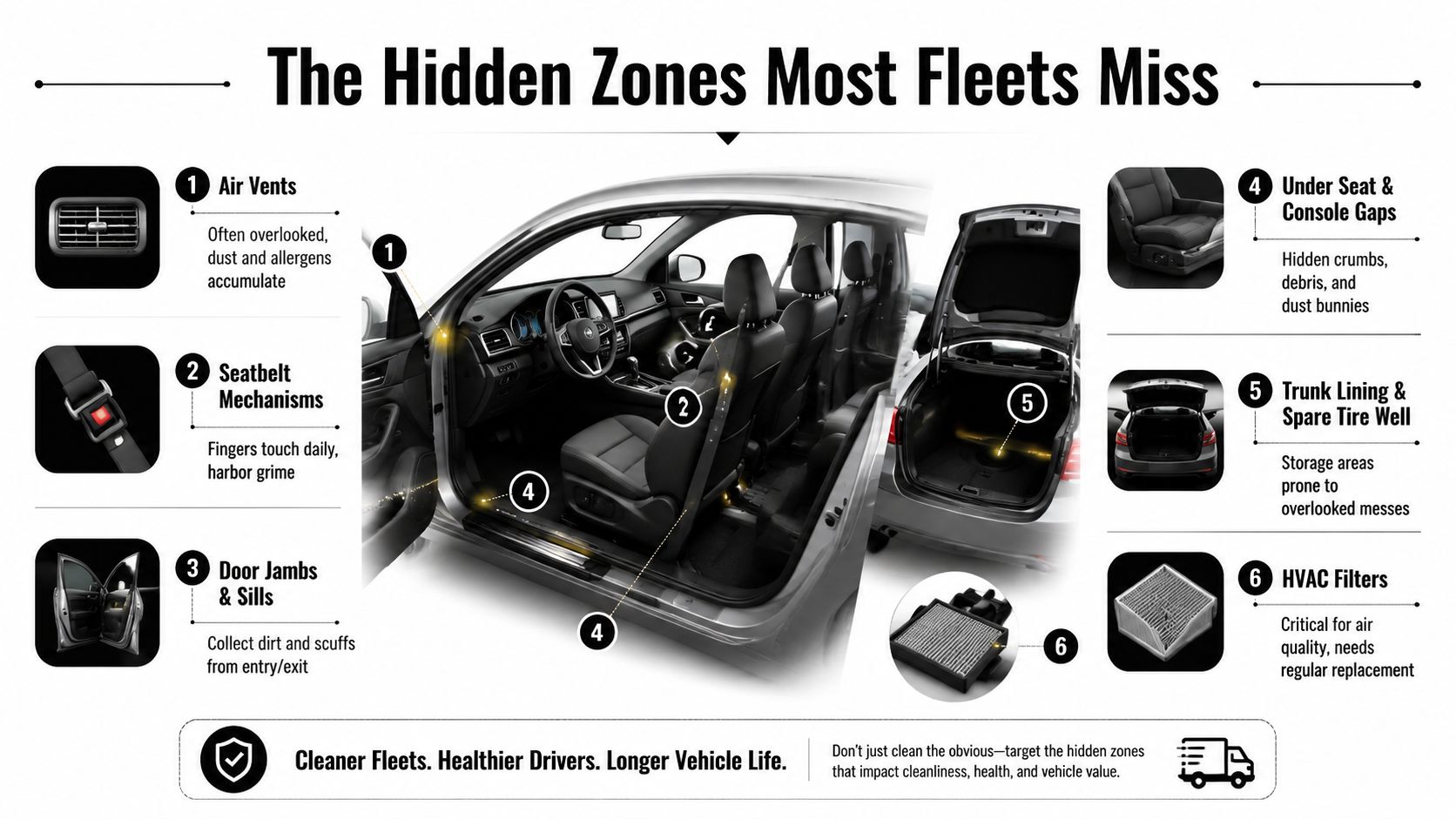
A cabin can look polished and still feel wrong. That usually means the visible surfaces got attention, while dust, grit, and moisture were left in the places passengers notice once they settle in.
Where hidden buildup lives
Air vents and HVAC pathways matter because passengers breathe through that system for the whole ride. Independent detailing guidance points out that vents, seat tracks, window seals, under-seat spaces, and other hard-to-reach areas are often skipped during routine cleaning, and it recommends cleaning vents to support better air quality, especially for allergy sufferers (Prokleen guidance).
Damp carpets and upholstery need a different response. If they do not dry fully, mold and mildew can follow, which is why a quick spray-and-go routine can create more work later, especially in wet weather or during winter slush season. In a chauffeured vehicle, that is not just a maintenance issue. It affects how the ride feels the moment the passenger steps in.
The neglected zones change with the season. Winter drives salt and slush into seams, door jambs, and mats. Summer pushes dust into vents, seals, and seat rails. A serious cleaning plan follows the contamination path, not just the dirt you can see.
If the cabin smells off, the rider assumes the whole vehicle is off.
From Component Cleanliness to Cabin Cleanliness
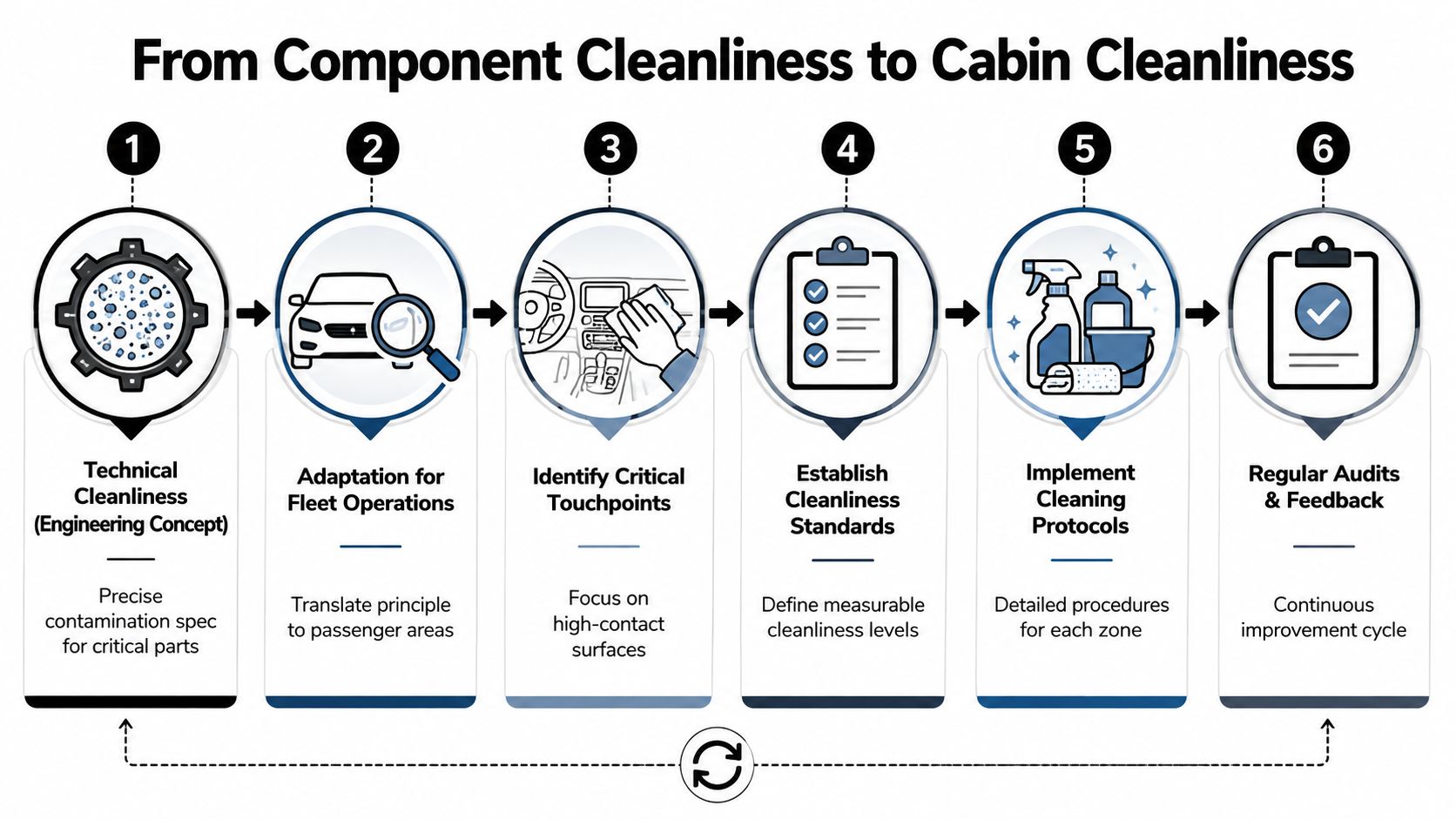
Automotive engineering uses technical cleanliness as a contamination spec, not a wash metric. ISO 16232:2018 standardizes how particulate contamination is inspected and documented on vehicle components and systems, and it standardizes how cleanliness results are expressed across the quality chain (ISO 16232:2018). That mindset translates well to fleet operations.
The contamination-control mindset
In a fleet, cleanliness fails when dirty and clean workflows blur together. A freshly detailed seat can be recontaminated by a dusty glove, a dirty storage bin, or a tool that was reused too quickly. The vehicle may still look clean, but the process behind it is already compromised.
That's why the better operators separate workflow zones. Dirty tools stay with dirty jobs. Clean towels stay sealed until they're needed. Fresh supplies are stored apart from wash waste. The path from the wash bay to the pickup lane should be controlled, not casual.
The same logic applies to products. A simple using an interior cleaner for your car resource is useful only if the operator already understands the bigger rule, which is that the cleaner has to match the surface and the contamination type. Product choice matters, but process discipline matters more.
Here's the practical bridge from engineering to fleet work:
- Technical cleanliness: Treat contamination as a controlled condition, not a visual afterthought.
- Separate clean and dirty handling: Keep tools, towels, and storage from cross-contact.
- Protect the passenger path: Nothing that touched a dirty zone should touch a finished cabin without a reset.
- Audit the result: If a zone keeps failing, the process is wrong, not the staff's attitude.
That's how a cabin stays ready under pressure. Not by polishing harder, but by controlling contamination from start to finish.
Staff Training, Checklists, and the New Standard of Sanitization
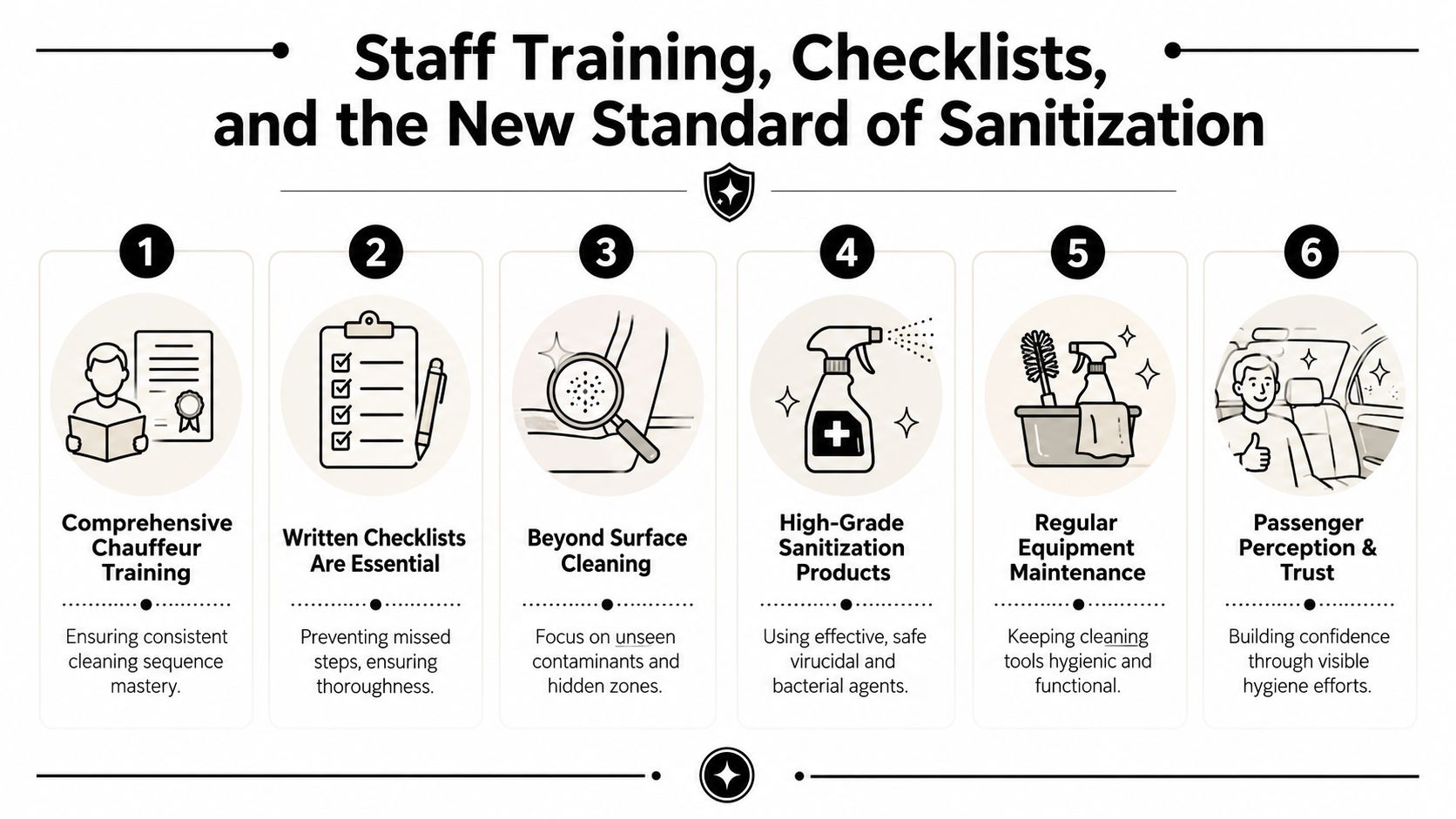
The best cleaning protocol fails if the chauffeur is guessing at 2 a.m. with a line of pickups waiting. That's why training and checklists matter more than memory, especially in 24/7 operations where the pace changes but the standard can't.
What a real training system covers
Chauffeurs need to know the cleaning sequence, the product set, and the surfaces that can't be treated the same way. Leather, touchscreen panels, plastics, and soft trim all react differently, and a spray that works on one can leave haze or residue on another. A written checklist keeps that from becoming a shift-by-shift improvisation.
The sanitization habits that became common during COVID didn't disappear in premium service. Riders still expect high-touch wipe-downs between passengers, visible hand sanitizer in the rear cabin, and disinfecting attention on door handles, armrests, and other contact points. In practice, that means a vehicle has to signal cleanliness before the trip starts, not after somebody asks about it.
If you want a useful benchmark for what passenger-facing sanitization language looks like in the market, Arelli Cleaning covid conscious is one example of how service language can frame hygiene as part of the customer experience. In fleet work, the principle is the same, even if the execution is different.
The tools have to stay clean too
Microfiber systems should be swapped rather than reused across every surface. Cleaning tools need their own maintenance routine, because dirty cloths and clogged applicators undo the work fast. Cabin filter replacement matters as part of the same logic, since air quality is part of the experience, not a separate concern.
Operational rule: If the crew can't show the checklist, the standard is already drifting.
That's why the chauffeur isn't just a driver. In a serious operation, the chauffeur is the steward of the cabin.
What to Ask Before You Book
A buyer doesn't need to audit a fleet like an inspector, but a few direct questions will tell you a lot. Ask how the cabin is prepared between trips, and listen for a process, not a vague promise.
Ask whether vents, luggage areas, and seat tracks are part of the normal routine. Ask what disinfectant is used, and which surfaces it's safe for. Ask whether the company has a written cleaning checklist, and how issues are escalated if a vehicle misses standard.
A clean-looking car can still hide shortcuts. The service that handles those shortcuts well is usually the service that handles your ride well too. That's the difference between a vehicle that just shows up and a vehicle that feels ready.
Max's Luxury Rides Inc. provides airport transfers, corporate travel, and special-occasion transportation with a focus on maintained vehicles and professional chauffeurs. If you want rides that treat vehicle cleanliness as part of the service contract, visit Max's Luxury Rides Inc. and book with a team that builds presentation, punctuality, and passenger comfort into every trip.