
In today's global business landscape, travel is a constant. While it opens doors to new opportunities, it also presents unique risks that can impact both personal well-being and corporate assets. Proactive safety planning is no longer an option but a necessity for the modern professional. This guide moves beyond the basics, offering a comprehensive roundup of actionable business travel safety tips designed to mitigate risks, from digital threats in a hotel lobby to navigating unfamiliar urban environments.
By implementing these strategies, you can focus on your business objectives with confidence, knowing you have a robust safety framework in place. We will explore eight critical areas, providing the tools and insights needed to transform your travel routine into a secure and seamless experience. You will learn specific techniques for researching destination security, protecting your digital footprint, securing documents, and establishing clear emergency protocols. This playbook provides a structured approach to safeguarding your journeys, ensuring every trip is as productive as it is secure.
1. Research Your Destination's Security Profile
Proactive threat assessment is the foundation of corporate travel security. Before you even book a flight, a thorough investigation into your destination's security profile is non-negotiable. This goes beyond a quick search, it involves a multi-faceted analysis of the political climate, local crime statistics, health risks, and cultural norms that could impact your safety and business objectives. This pre-trip intelligence forms the basis for all subsequent safety decisions, from choosing accommodations to planning your daily itinerary.
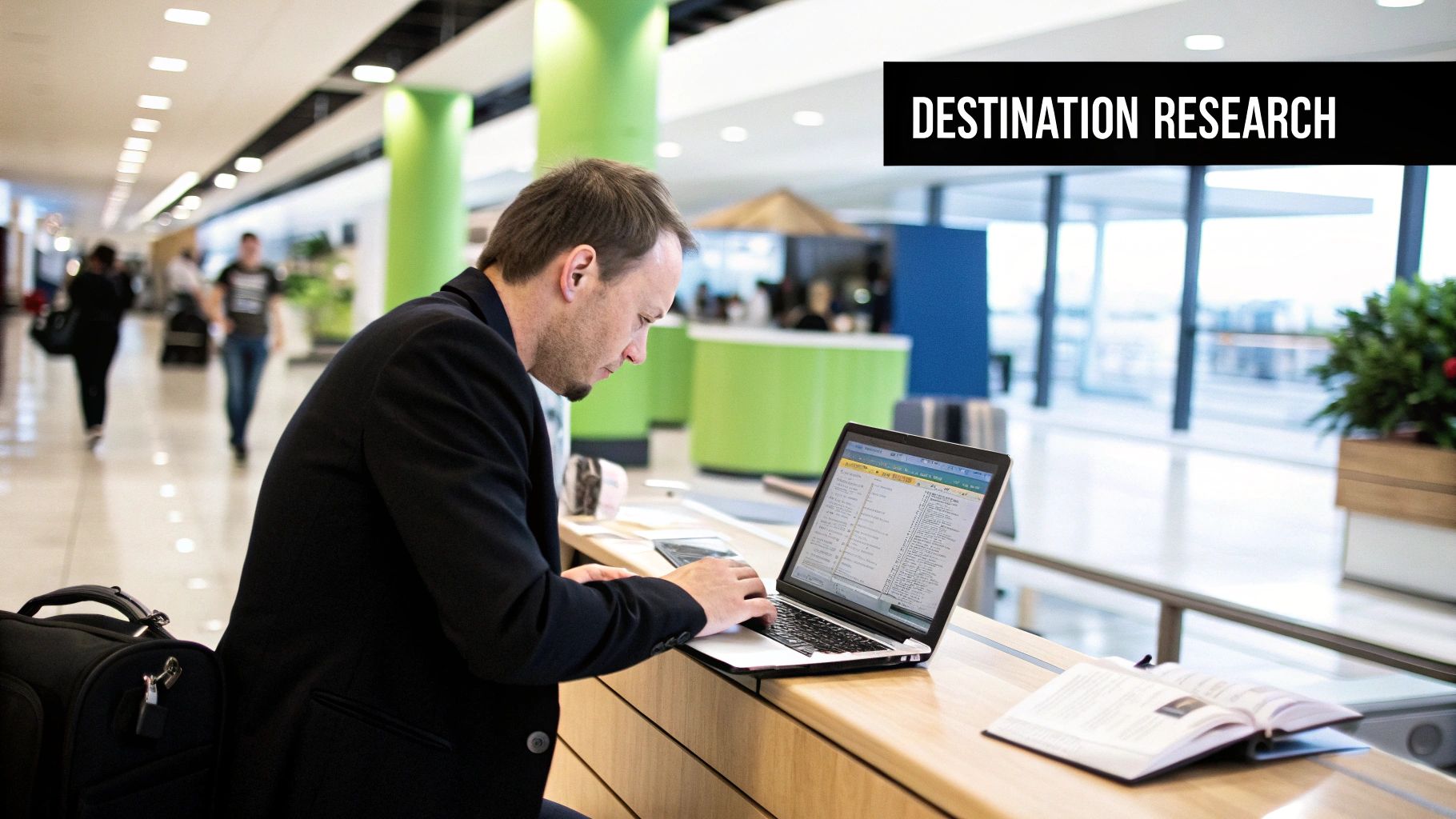
Many leading global corporations integrate this practice into their standard operating procedures. For instance, major energy companies often conduct comprehensive country risk assessments before deploying personnel. Similarly, top-tier consulting firms maintain internal, real-time travel risk databases to provide their consultants with the most current safety information, ensuring they are well-prepared for any environment.
Actionable Steps for Implementation
To effectively build a destination's security profile, it’s crucial to consult a variety of reliable sources. Relying on a single report can provide a skewed or outdated perspective.
- Consult Government Advisories: Start with official sources like the U.S. Department of State's travel advisories and the Centers for Disease Control and Prevention (CDC) for health-related information. These provide a high-level overview of significant risks.
- Utilize Professional Services: For high-risk destinations, consider subscribing to a travel security service like International SOS or Global Rescue. These services offer detailed, real-time intelligence, alerts, and on-the-ground support.
- Seek Local Insights: Connect with local business contacts or expatriates in your destination city. Their firsthand knowledge of specific neighborhoods, transportation risks, and cultural nuances is invaluable.
- Final Pre-Departure Check: Perform a final review of all sources 24-48 hours before you leave. Political situations and security threats can change rapidly, making this final check one of the most critical business travel safety tips to follow.
2. Maintain Digital Security and Privacy
In an era of remote work and global connectivity, your digital footprint is as vulnerable as your physical person. Protecting corporate data and personal information is a critical component of modern business travel safety tips. Business travelers are often high-value targets for cybercriminals seeking access to sensitive corporate networks, financial data, or intellectual property. Implementing robust digital security protocols before and during your trip is essential to mitigate these significant risks.
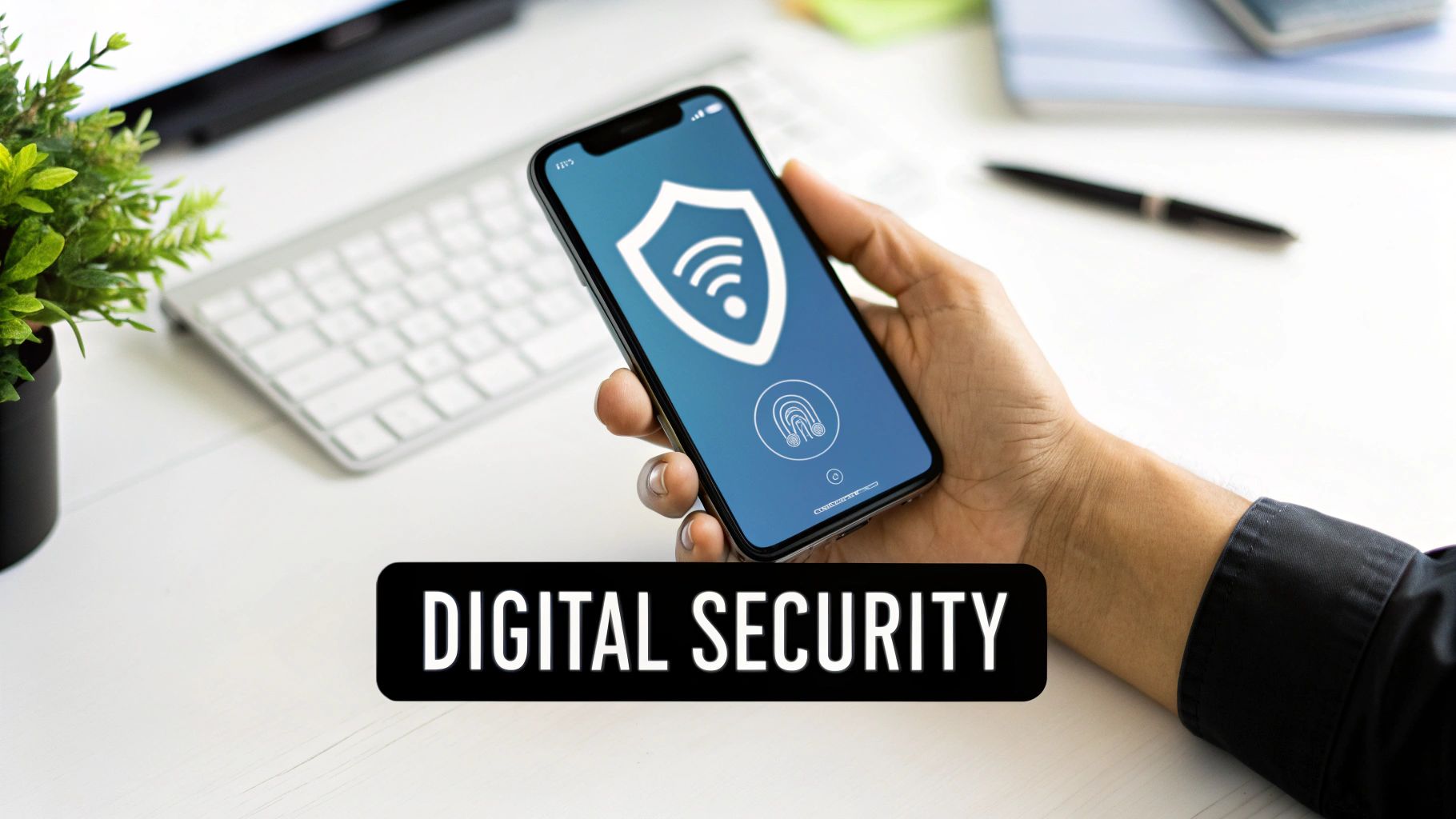
This proactive approach to cybersecurity is standard practice in many security-conscious organizations. For example, JPMorgan Chase often provides employees with specialized 'travel laptops' that contain minimal data for international trips, reducing the potential impact of a security breach. Similarly, IBM mandates that all traveling employees use company-provided VPNs and encrypted devices to ensure a secure connection to corporate resources, no matter their location.
Actionable Steps for Implementation
A multi-layered defense is the most effective strategy for protecting your digital assets while on the move. Simple, consistent habits can drastically reduce your vulnerability to cyber threats.
- Utilize a Virtual Private Network (VPN): Always use a reputable VPN service, like NordVPN or ExpressVPN, especially when connecting to public Wi-Fi in airports, hotels, or cafes. A VPN encrypts your internet traffic, making it unreadable to anyone trying to intercept it.
- Secure Your Devices: Before you travel, ensure all devices (laptops, phones, tablets) are updated with the latest security patches. Enable automatic screen locks with strong passwords or biometric authentication (fingerprint or face ID).
- Be Wary of Public Networks: Avoid conducting sensitive transactions, such as online banking or accessing proprietary company files, while connected to unsecured public networks. If you must, use a secure mobile hotspot from your phone instead.
- Consider a 'Travel Phone': For travel to high-risk destinations, using a separate, low-cost "burner" phone with minimal personal data can limit your exposure if the device is lost, stolen, or compromised.
3. Share Detailed Itineraries with Trusted Contacts
Maintaining a constant, reliable communication link with your home base is a critical safety protocol. Sharing a detailed itinerary ensures that trusted contacts, whether family or a corporate security team, are always aware of your location, schedules, and expected check-in times. This creates an essential safety net, enabling a rapid and informed response should you deviate from your plan or become unreachable. It transforms a potentially chaotic emergency into a structured response scenario.

This practice is standard procedure in high-stakes corporate environments. For example, financial institutions like Goldman Sachs often utilize services like TripIt Pro to automatically share comprehensive travel plans with their security departments. Similarly, consulting firms like Deloitte integrate internal travel tracking systems that require real-time updates from their traveling consultants. This proactive monitoring is one of the most effective business travel safety tips for mitigating risk.
Actionable Steps for Implementation
A robust communication plan involves more than just sending a copy of your flight confirmation. It requires a systematic approach to sharing information consistently throughout your trip.
- Establish a Communication Schedule: Set up a regular check-in schedule, such as a brief text message or email every morning and evening. For travel in higher-risk regions, this might be more frequent.
- Centralize Your Itinerary: Use travel management apps like TripIt or WorldMate to consolidate all your bookings, from flights and hotels to car rentals and meeting locations. Share access to this live itinerary with your designated contacts.
- Leverage Location-Sharing Technology: For personal contacts, consider using apps like Find My Friends (iOS) or Life360. For corporate travel, your company may provide a dedicated tracking solution. This provides real-time location data in case of an emergency.
- Detail Your Plans: Your shared itinerary should include more than just flight numbers. Include hotel names, addresses, contact numbers, meeting locations, and names of people you are meeting. The more detail you provide, the faster help can be dispatched if needed.
4. Use Secure and Reputable Transportation
Your choice of ground transportation is a critical control point for your personal security during business travel. Opting for secure, vetted, and reputable transportation services significantly reduces your exposure to risks such as opportunistic crime, scams, accidents, and kidnapping. This principle involves a strategic shift from reactive choices, like hailing a random cab, to a proactive approach of pre-arranging travel with trusted providers, thereby maintaining control over your movements in an unfamiliar environment.

This practice is standard procedure in corporate security protocols. For instance, Amazon executives often use premium services like Blacklane for reliable global ground transportation. Similarly, Microsoft provides its employees with approved vendor lists for each destination to ensure safety standards are met. In high-risk regions, such as parts of Nigeria, executives from major oil companies utilize specialized armored vehicle services as a non-negotiable security measure. These examples underscore the importance of treating ground transportation as an integral part of your security plan.
Actionable Steps for Implementation
Implementing a secure transportation strategy requires planning and vigilance. A few moments of verification before you get into a vehicle can prevent significant security incidents.
- Pre-Arrange Your Rides: Whenever possible, book transportation through your hotel's concierge, your company’s designated travel department, or a trusted executive car service. This ensures the provider is vetted and accountable.
- Use Established Ride-Sharing Apps: In cities where they operate safely, services like Uber and Lyft offer valuable safety features. These include GPS tracking, driver identification, and a digital record of your trip that can be shared.
- Verify Before You Enter: Always match the license plate number, car model, and driver's photo with the information provided in the app or booking confirmation. Ask the driver to confirm your name before you state it yourself.
- Avoid Unlicensed Taxis: Refrain from flagging down unmarked taxis or accepting rides from unsolicited drivers at airports or on the street, as this is a common tactic used by criminals. Stick to official taxi queues or pre-arranged services.
5. Secure Travel Documents and Backup Copies
The loss or theft of essential travel documents like a passport, visa, or driver's license can instantly derail a business trip, causing significant delays and potential security risks. Protecting and creating redundant backups of these items is a critical layer of personal security that prevents a minor inconvenience from escalating into a major crisis. This practice involves creating multiple copies, storing them in separate physical and digital locations, and being prepared with the necessary information to expedite replacement procedures.
This level of preparedness is standard procedure for professionals in high-stakes environments. U.S. State Department employees, for example, often carry backup passports when traveling to high-risk areas to ensure continuity of mission. Similarly, international business travelers frequently utilize services like American Express travel assistance, which offers robust support for rapid document replacement, minimizing operational downtime and personal stress.
Actionable Steps for Implementation
A multi-layered backup strategy ensures that you are never completely without access to your vital information. Implementing these business travel safety tips for document security is straightforward and highly effective.
- Create Multiple Copies: Make both physical photocopies and high-quality digital scans of your passport, visas, driver’s license, and any other critical documents.
- Diversify Storage Locations: Never store originals and copies together. Keep your passport on your person, a photocopy in your hotel safe, another in your locked luggage, and digital copies in a secure cloud storage service like Dropbox or Google Drive.
- Email Copies to Yourself: Send an encrypted or password-protected email to yourself and a trusted contact back home containing all scanned documents. This provides an easily accessible backup if other methods fail.
- Use Protective Gear: Store your passport and credit cards in an RFID-blocking wallet or sleeve. This prevents criminals from using skimming devices to electronically steal your personal information.
- Keep Embassy Information Handy: Save the contact information and address of your country's nearest embassy or consulate in your phone and on a physical card. In the event of a lost or stolen passport, this will be your first and most important point of contact.
6. Maintain Low Profile and Cultural Awareness
Effective business travel safety tips extend beyond physical security to encompass social and cultural integration. Maintaining a low profile and demonstrating cultural awareness is a strategic method for minimizing risk. By blending in, you avoid attracting unwanted attention from criminals, scammers, or others who may target foreigners. This involves a conscious effort to respect and adapt to local customs, from dress codes to social etiquette, making you a less conspicuous and therefore less vulnerable target.
This principle is a cornerstone of diplomatic security and corporate risk management. For example, tech company employees traveling to certain parts of Asia are often instructed to avoid wearing branded clothing to prevent corporate espionage or targeting. Similarly, executives from financial institutions operating in Latin America frequently use understated vehicles and avoid displays of luxury to mitigate the risk of kidnapping or robbery. This proactive cultural adaptation is a powerful, yet subtle, layer of personal security.
Actionable Steps for Implementation
Adopting a low-profile approach requires pre-trip research and in-the-moment observation. This skill is critical for navigating new environments safely and successfully.
- Research Local Norms: Before your trip, study the destination's dress codes, social greetings, and business etiquette. Understand what is considered respectful and what might be seen as offensive or ostentatious.
- Dress to Blend In: Avoid wearing expensive jewelry, high-end watches, or clothing that clearly marks you as a wealthy foreigner. Opt for attire that is common locally, particularly when not in formal business meetings.
- Learn Key Phrases: Mastering basic greetings and courtesy phrases in the local language, such as "hello," "please," and "thank you," demonstrates respect and helps you navigate simple interactions more smoothly.
- Observe and Adapt: Pay attention to how locals conduct themselves in public spaces, from queuing to dining. Mimicking these behaviors can help you appear less like an outsider and more like someone familiar with the environment.
7. Establish Emergency Protocols and Contacts
A well-defined emergency plan is a critical safety net that can dramatically alter the outcome of a crisis. Proactive preparation involves establishing clear protocols and compiling essential contact information before a situation arises. This ensures a swift, coordinated response to medical emergencies, security incidents, natural disasters, or other unexpected events. Having this framework in place minimizes panic and confusion, enabling decisive action when every second counts.
This practice is standard procedure in high-stakes industries. For example, Chevron employees often carry destination-specific emergency cards with both local and international numbers. Similarly, UN officials operate under standardized emergency protocols linked to 24/7 security operations centers, ensuring a consistent and rapid response system. This level of preparedness is one of the most vital business travel safety tips for any organization serious about its duty of care.
Actionable Steps for Implementation
Creating an effective emergency plan requires more than just noting down a few phone numbers. It involves building a comprehensive resource that is both accessible and practical for the specific travel environment.
- Program and Document Key Contacts: Before you arrive, program local emergency numbers (police, fire, ambulance) directly into your phone. Also, carry a physical, laminated card with these numbers, key company contacts, your embassy or consulate’s information, and your travel insurance provider’s emergency line.
- Identify Critical Locations: Pinpoint the location and contact details of the nearest reputable hospital, police station, and your country's embassy or consulate relative to your hotel and meeting places. Save these locations in your phone's map application for offline access.
- Establish Communication Backups: Cell service can be unreliable during a crisis. Plan for backup communication methods, such as a satellite phone for remote areas or pre-determined check-in times and methods with your home office using various platforms (email, messaging apps).
- Understand Local Capabilities: Research the limitations of local emergency services. In some regions, response times may be slow or resources limited. This knowledge helps set realistic expectations and informs decisions, such as using a private medical evacuation service like International SOS or Global Rescue.
8. Implement Health and Medical Precautions
A traveler's well-being is paramount, and proactive health management is a critical component of any comprehensive safety plan. Implementing medical precautions involves a systematic approach to identifying destination-specific health risks, securing necessary immunizations and medications, and establishing a clear plan for accessing medical care abroad. This preparation mitigates the risk of illness, which can not only derail business objectives but also pose a significant personal threat in unfamiliar healthcare systems.
This level of medical foresight is standard practice in industries with global operations. For example, international development organizations often mandate medical evacuation insurance for all traveling staff. Similarly, major tech companies frequently provide employees access to in-house travel medicine specialists who offer tailored advice and prescriptions based on their itinerary, ensuring a high standard of care no matter the destination.
Actionable Steps for Implementation
A robust medical plan is built on expert advice and careful preparation. Overlooking even small details can lead to significant health complications during your trip.
- Consult a Travel Medicine Specialist: Schedule a consultation with a travel health clinic or specialist 4-6 weeks before departure. They provide the most current information on required vaccinations, prophylactic medications for diseases like malaria, and destination-specific health advice.
- Prepare Prescription Medications: Carry all necessary prescription medications in their original, clearly labeled containers, along with a copy of your prescription and a doctor's note. Ensure you have enough supply for your entire trip, plus extra in case of delays.
- Research Local Health Conditions: Investigate local food and water safety standards. Be aware of prevalent insect-borne illnesses and pack appropriate repellents. Identifying reputable medical facilities and pharmacies near your hotel and office in advance is also a crucial step.
- Secure Comprehensive Insurance: Confirm your health insurance provides international coverage. For more remote or high-risk travel, invest in a dedicated travel medical insurance policy that includes emergency medical evacuation. This is one of the most vital business travel safety tips for ensuring access to quality care.
Business Travel Safety Tips: 8-Factor Comparison Guide
| Item | Implementation Complexity 🔄 | Resource Requirements ⚡ | Expected Outcomes 📊 | Ideal Use Cases 💡 | Key Advantages ⭐ |
|---|---|---|---|---|---|
| Research Your Destination's Security Profile | Moderate – requires time and cross-source analysis | Moderate – data subscription or manual research | Informed travel decisions, reduced risks | High-risk or unstable destinations | Avoid dangerous areas, preparedness, anxiety reduction |
| Maintain Digital Security and Privacy | High – technical setup and ongoing management | High – software tools, training, and devices | Data protection, secure remote work | Business travelers handling sensitive digital info | Prevents cyber attacks, protects sensitive data |
| Share Detailed Itineraries with Trusted Contacts | Low to moderate – needs communication tools/setup | Low – apps and communication methods | Rapid emergency response, ongoing contact visibility | Travel to risky areas, solo travel | Emergency readiness, peace of mind |
| Use Secure and Reputable Transportation | Moderate – pre-booking and vetting required | Moderate to high – costlier transportation | Reduced transportation-related risks | Travel in unfamiliar or high-risk locations | Crime and accident risk reduction, reliability |
| Secure Travel Documents and Backup Copies | Moderate – organizing physical/digital copies | Low to moderate – scanners, cloud storage | Quick recovery from lost/stolen documents | Travel to areas with theft risk or bureaucratic delays | Stress reduction, faster replacement process |
| Maintain Low Profile and Cultural Awareness | Moderate – behavioral and wardrobe adjustments | Low – research and possibly new clothes | Lower target profile and improved local relations | High-crime areas, culturally sensitive regions | Safety through discretion, cultural respect |
| Establish Emergency Protocols and Contacts | Low to moderate – setting up contacts and plans | Low – mostly info collection and distribution | Faster crisis response, reduced panic | All travelers especially in volatile regions | Life-saving readiness, professional support access |
| Implement Health and Medical Precautions | Moderate to high – vaccinations, insurance, planning | Moderate – health services, insurance costs | Reduced illness, medical continuity, emergency readiness | Travel to developing countries or health-risk areas | Illness prevention, confidence, emergency care access |
Integrating Safety into Your Travel DNA
Navigating the complexities of global business requires more than just professional acumen; it demands a deep-seated commitment to personal and corporate security. The business travel safety tips detailed throughout this guide are not merely a collection of disconnected actions. Instead, they represent a holistic framework designed to build a resilient, proactive, and instinctual approach to safety on the road.
From conducting meticulous pre-trip research on your destination's security landscape to implementing robust digital hygiene practices, each step is a critical layer in a comprehensive defense strategy. The value lies not in executing these tasks once, but in weaving them into the very fabric of your travel preparation and execution. Think of it less as a checklist and more as a mindset shift.
From Checklist to Instinct
The ultimate goal is to move beyond conscious effort, transforming these safety protocols into second nature. Maintaining a low profile, understanding cultural nuances, and choosing secure transportation should become as automatic as checking for your passport. When you share a detailed itinerary with a trusted contact or have emergency protocols already established, you are not just planning for the worst; you are empowering yourself to operate at your best, free from the cognitive load of preventable anxieties.
This proactive stance offers significant returns. It minimizes risks to your personal well-being, safeguards sensitive corporate data, and protects your company's reputation. A journey derailed by a security incident is a journey of lost opportunities, compromised objectives, and unnecessary stress. In contrast, a well-prepared traveler can focus entirely on the mission at hand, navigating new environments with confidence and efficiency.
The Cornerstone of Productive Travel
Ultimately, mastering these business travel safety tips is about reinforcing the connection between safety and success. Safe travel is productive travel. By adopting these principles, you are making a strategic investment in every business trip you undertake. You build a foundation of preparedness that allows you to be more agile, focused, and effective, no matter where your work takes you.
Make this commitment to integrated safety the cornerstone of your professional journeys. Let it guide your planning, inform your decisions, and provide peace of mind. By doing so, you ensure that every trip is not only successful in its business objectives but also exemplary in its execution of safety and care. Travel with purpose, and travel with preparation.
For a seamless and secure ground transportation experience, consider a provider dedicated to your safety and comfort. Max's Luxury Rides Inc. offers professionally vetted chauffeurs, impeccably maintained vehicles, and a commitment to reliability, ensuring your transit is one less thing to worry about. Book your secure airport transfer or corporate travel at Max's Luxury Rides Inc. to elevate your travel safety standards.