
A regional director lands at JFK at 7:40 a.m. She has meetings in Midtown and Brooklyn, a dinner reservation at 8 p.m., and no interest in ordering a new car after every stop. A single airport transfer won't solve the day, while app-based rides leave her coordinating vehicles, luggage, timing, and expense receipts between appointments.
Car service by the hour is designed for that kind of itinerary. You reserve a chauffeur-driven vehicle for a continuous block of time, keep the vehicle available between stops, and pay for the reserved time rather than for each individual trip. The hourly rate is only the headline, though. Minimum booking rules, vehicle class, waiting time, gratuity, tolls, parking, and driver duty limits determine what the reservation costs and how the day must be planned.
What Hourly Car Service Actually Means
Hourly service reserves a time block, not a single route. You provide the start location, scheduled pickup time, expected duration, passenger and luggage needs, and preferred vehicle class. The chauffeur stays assigned to that reservation as you move between destinations, wait during meetings, or adjust the itinerary.
A point-to-point booking usually covers one pickup and one drop-off, such as an airport transfer from JFK to a hotel. By-the-hour service covers the period when the vehicle and chauffeur remain available to you. Ride-hailing works differently: an app dispatches a vehicle for each requested trip, so every additional stop requires another request and may involve a different driver.
What stays under your control
Within the reserved block, you can generally add stops, change destinations, and ask the chauffeur to wait during a meeting or event. Those changes still need reasonable notice. A longer route may add travel time, parking, or tolls, and a wedding shuttle may require a different vehicle plan than an executive sedan serving one passenger.
A wedding shuttle, for instance, must account for group movement and scheduled loading, while an executive itinerary may involve one passenger and several short stops. Vehicle choice affects both the service plan and the final bill.
“By the hour” also does not mean a taximeter records every traffic minute. Operators usually bill the reserved block according to their overtime policy. The clock generally starts at the scheduled pickup time, rather than when a chauffeur arrives early and waits.
Practical rule: Confirm the start time, minimum hours, overtime increments, and definition of waiting time before authorizing the reservation.
Why minimums matter
An hourly company commits a driver, vehicle, dispatch capacity, and repositioning time to one customer. That commitment creates a minimum booking. As a result, a short trip can cost more under an hourly arrangement than under a point-to-point quote, even when the vehicle travels only a modest distance.
The model becomes more useful when the itinerary includes several destinations, uncertain meeting lengths, event standby, or a return journey. The hourly rate may look straightforward, but the minimum and vehicle class often shape the starting charge before the vehicle moves.
Driver duty rules also affect longer reservations. Under the FMCSA summary of Hours of Service regulations, drivers generally may drive up to 11 hours after 10 consecutive hours off duty, must stop driving after 14 consecutive hours on duty, and must take a 30-minute break after 8 cumulative driving hours without interruption. A long reservation may therefore require a relief driver or planned handoff. One chauffeur cannot work indefinitely because the client reserved the vehicle for the day.
How Hourly Pricing Is Built
A corporate itinerary may show a simple hourly rate, yet the final invoice is shaped by the minimum booking, vehicle class, waiting rules, and add-on charges. The base rate is the starting point, not the complete price. A sedan, SUV, and Sprinter van require different operating costs, labor, and fleet capacity, so vehicle choice changes the bill before the route begins.
Published market examples place executive sedans around $65 to $120 per hour, luxury SUVs around $95 to $160 per hour, and Sprinter vans around $139 to $280 per hour. These published Chicago chauffeur rate bands show why a larger vehicle carries a premium. A Sprinter seats more passengers, but it also costs more to operate and reserves more of the operator's fleet for one booking.
The main invoice components
The base hourly rate covers the vehicle and chauffeur during the reserved period. Fuel is commonly included, but the quote should state that directly because operators do not all handle fuel the same way.
The minimum booking sets the smallest billable block. Minimums can change by vehicle, date, and service type. Event providers publish examples from 3-hour to 6-hour minimums. Vehicle service, chauffeur time, fuel, and tolls may sometimes be bundled into the hourly price, as shown in Executive Ride's package information.
A short airport transfer can therefore cost more under an hourly reservation than under a point-to-point quote. The vehicle is being held for the client, even if the actual driving takes little time.
Waiting time needs a written definition. An operator may include a grace period at pickup, then bill additional time in set increments. A late passenger, delayed meeting, or extended venue standby can push the reservation into overtime while the vehicle remains parked.
Gratuity may be included, preset, or left to the passenger. Confirm whether it is calculated before or after taxes and whether overtime receives the same treatment.
Tolls, parking, and surcharges may sit outside the hourly rate. Airport garage charges, event parking, holiday service, late-night requests, and special cleaning can appear as separate line items.
| Cost Component | How It Is Calculated | Typical Range |
|---|---|---|
| Base hourly rate | Vehicle class multiplied by billable hours | Sedans commonly $65 to $120/hour, SUVs $95 to $160/hour, Sprinters $139 to $280/hour. Published market examples |
| Minimum booking | The provider's minimum billable block | Common event examples run from 3 to 6 hours. Executive Ride packages |
| Waiting or overtime | Added time under the operator's increment policy | Varies by provider and vehicle |
| Gratuity | Included, preset, or added by the customer | Confirm the policy in writing |
| Tolls and parking | Actual route and facility charges | Depends on itinerary and location |
| Fuel | Usually built into the hourly rate | Confirm inclusions before booking |
The useful comparison is the all-in cost for your actual block, including the minimum and probable waiting time. A low advertised hourly figure may produce a higher invoice once the minimum is applied. Independent pricing information also reports a national average booking cost of about $279 to $593, with examples from $75 per hour for a luxury sedan to $250 per hour for a party bus, according to Thumbtack pricing data. Those figures reinforce the practical question for a dispatcher and client: what hours are billable, what is included, and which charges remain outside the rate?
Hourly vs Point-to-Point vs Ride-Hailing
A client has meetings across the city, luggage in the vehicle, and an end time that may shift. Hourly service keeps the same chauffeur and vehicle available. A point-to-point reservation covers a defined transfer, while ride-hailing dispatches a car when someone requests one. The hourly rate is only the headline. Minimum booking blocks, vehicle-class premiums, and driver duty limits can shape the final bill.
| Service model | Billing method | What you receive | Best fit | Main drawback |
|---|---|---|---|---|
| Hourly chauffeur | Reserved time block with a minimum | A dedicated vehicle and chauffeur for the booking | Multi-stop days, events, roadshows, standby | The minimum can make a short trip expensive |
| Point-to-point | Flat or quoted fare between set addresses | One scheduled transfer | A known airport-to-hotel or hotel-to-venue trip | A new booking is needed for each additional movement |
| Ride-hailing | App-based fare, often affected by demand | A vehicle dispatched when requested | Spontaneous solo travel where cost and speed matter most | Vehicle quality, driver continuity, and availability can vary |
Hourly service fits an itinerary rather than a single ride. A corporate traveler can leave luggage in the same vehicle, finish one meeting, and continue to the next without briefing a new driver. The reservation also leaves room for reasonable changes, subject to the booked minimum, overtime policy, and the chauffeur's permitted duty period.
Point-to-point service is usually the cleaner choice for one-way travel. If the only requirement is a trip from JFK to a hotel, with no further use of the vehicle, a time block may charge for availability you do not need. A return trip can remain a separate point-to-point reservation when its pickup time and destination are already known.
Ride-hailing works well for an unscheduled personal errand where immediate dispatch and price matter most. It becomes less suitable when an executive requires a consistent vehicle class, formal arrival, luggage space, or one chauffeur throughout the itinerary. Uber Black and traditional chauffeur service describes app-based booking and upfront pricing as distinct from advance-booked hourly or full-day engagements.
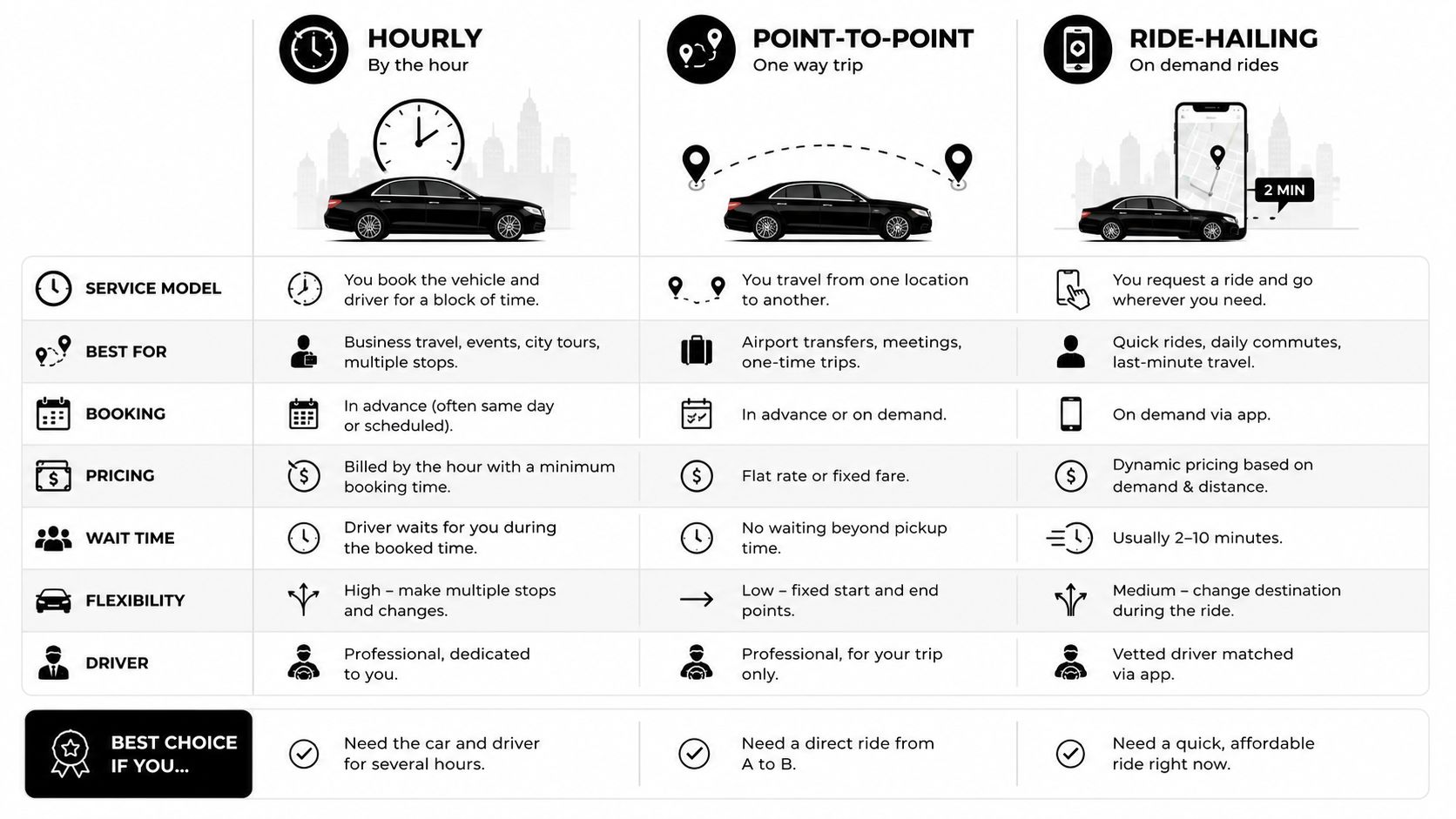
Use the itinerary as the test: one clean A-to-B trip, choose point-to-point; one stop plus a return or meaningful wait, consider hourly; an unpredictable solo trip where price matters most, use ride-hailing. Confirm the minimum, vehicle class, overtime increments, and duty limits before comparing hourly rates.
Best Situations to Book by the Hour
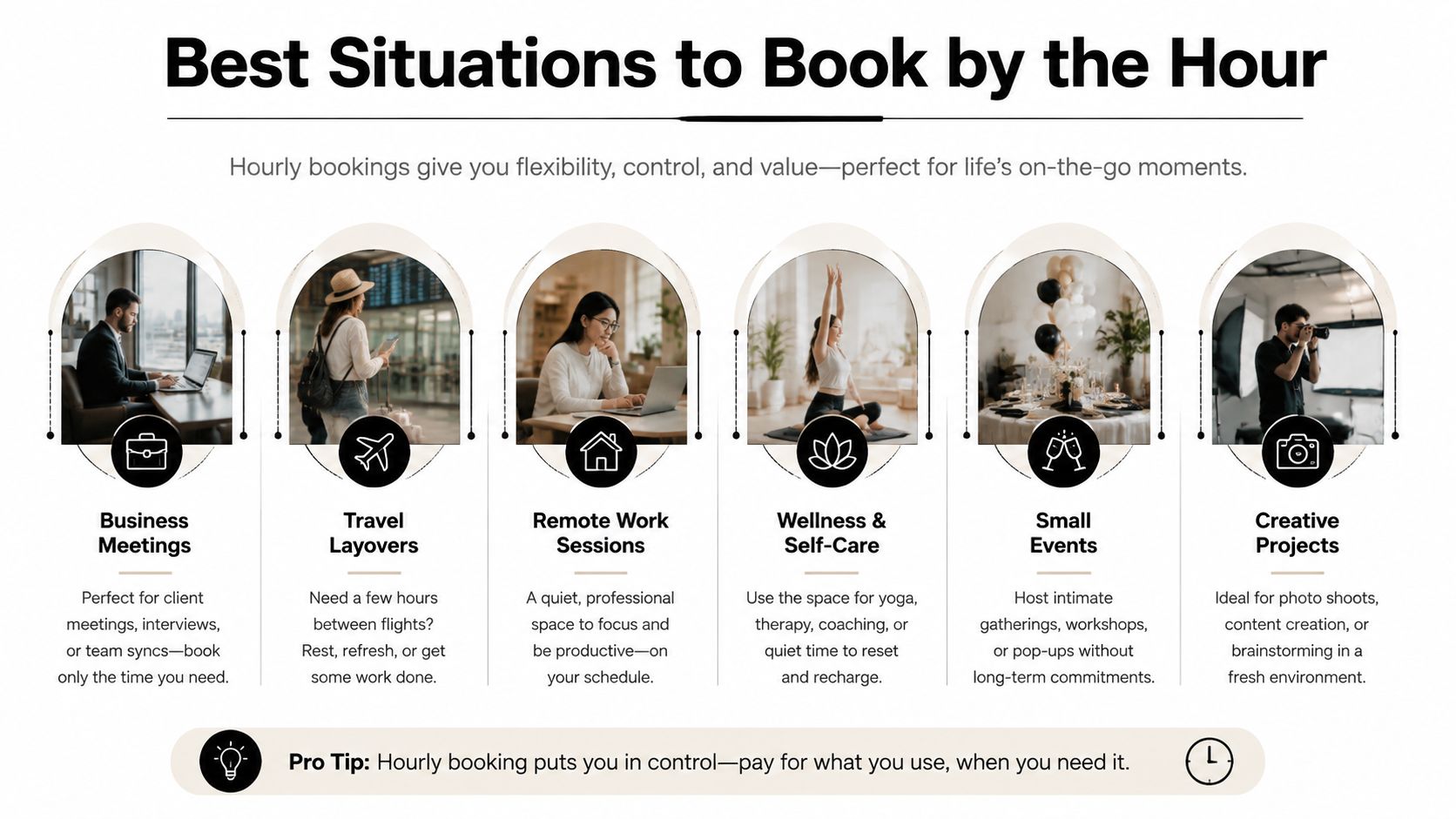
Hourly service fits assignments where keeping the vehicle available matters as much as reaching the next address. The rate is only the starting point. The final value depends on the minimum booking, the vehicle class, waiting time, and whether the chauffeur can remain on duty for the full itinerary.
Airport waits and extended arrival days
A client may land, collect luggage, greet colleagues, visit a hotel, attend meetings at two offices, and finish with dinner. Booking each movement separately creates several pickup times to coordinate around the flight. An hourly chauffeur can follow the planned schedule, wait between stops, and handle reasonable changes without requiring a new vehicle for every leg.
An executive sedan generally suits one or two passengers with light luggage. A luxury SUV gives a traveler more room for several bags, a companion, or equipment. Compare the full hourly quote with separate transfer quotes. The hourly option may cost more when the minimum exceeds actual use, while a vehicle-class premium can change the result when an SUV or larger vehicle is required.
Weddings and formal events
Wedding transportation often involves the couple, bridal party, parents, photographers, and formalwear. The group needs room for people and clothing, not enough seats. A shared run sheet lets the chauffeur move passengers from preparation locations to the ceremony, photographs, and reception while keeping the sequence together.
Vehicle choice follows the party size and luggage. A luxury SUV, limousine, Sprinter, or larger group vehicle may be appropriate. Event providers commonly publish 3-hour to 6-hour minimums for vehicles ranging from sedans to coaches, as noted earlier in the published event transportation information. The benefit is continuity during a tightly timed event. Guests are less likely to split into separate cars or request another vehicle between locations.
Corporate roadshows
A roadshow may take one executive team to several offices, hotels, or client sites in one day. Hourly booking gives the chauffeur a working itinerary rather than a series of isolated transfers. The chauffeur can adjust the route when a meeting changes, keep presentation materials in the vehicle, and wait near the next entrance.
An executive sedan works for a small team. An SUV or Sprinter provides additional room for several passengers or display materials. The practical value is consistency: one transportation contact, one vehicle, and fewer separate pickup arrangements. Confirm that the reserved minimum covers the expected schedule, because a short day can still be billed at the provider's minimum.
Concerts and sporting events
After a performance or game, the exact pickup time may be uncertain. Traffic can shift quickly, and venue parking or staging may be restricted. With an hourly reservation, the vehicle can remain nearby and collect passengers when they exit, instead of relying on a new ride during the busiest departure period.
An SUV suits a small group, while a Sprinter or minibus handles a larger party. Ask whether event parking, venue access, and staging charges are included. The right booking reflects the time the vehicle must remain available, not only the length of the outbound trip.
Booking, Payment, and Driver Duty Rules
A corporate itinerary can change the final bill before the vehicle moves. Send dispatch the pickup address, start time, passenger count, luggage details, known stops, likely end location, and whether the chauffeur will wait during meetings or an event. This information helps dispatch set the vehicle class, reserved minimum, parking plan, and any required relief coverage.
What happens after the quote
Use this sequence to confirm the reservation:
- Request the quote. Ask for the hourly rate, minimum hours, included services, overtime increments, gratuity treatment, taxes, tolls, parking, and cancellation terms.
- Confirm the assignment. Verify the vehicle class, pickup time, passenger count, and contact number. A sedan quote does not guarantee SUV or van capacity.
- Authorize payment. Some operators place an authorization or collect a deposit before service. Others invoice after completion. Ask when the final amount is calculated.
- Receive dispatch details. Before pickup, the operator may provide the chauffeur's name, vehicle information, and a tracking or contact link.
- Review the final invoice. Check the reserved hours, overtime, gratuity, taxes, tolls, parking, and approved route changes.
The hourly rate is only the headline. The minimum-hour rule sets the starting time block, while vehicle class can raise the rate. Waiting, parking, and overtime can then add to the total.
Cancellation policies vary. Many operators use a window around 24 hours before pickup, with fees increasing closer to service. Request the exact policy in writing, particularly for weddings, holidays, and larger vehicles.
Why long reservations need planning
Federal rules limit how long many commercial drivers may drive and remain on duty. Per the FMCSA Hours of Service rules outlined earlier, standard limits include 11 driving hours after 10 consecutive hours off duty, a 14-hour on-duty window, and a 30-minute break after 8 cumulative driving hours without interruption. A historical Nevada limousine rule also limited a driver to 12 consecutive hours per shift and 16 hours in a 24-hour period, as shown in the Nevada limousine regulation record.
A long hourly reservation can still cover a full day. Dispatch may need to schedule a break, relief chauffeur, vehicle inspection, or shift handoff so the service continues within applicable duty limits. If the itinerary runs past its estimate, contact dispatch before the booked window ends. The operator may bill overtime in a defined increment or send another driver when the original chauffeur reaches a legal duty limit.
Sample Hourly Totals Across the Fleet
A corporate roadshow may need one sedan from the airport to several meetings, then dinner and a return transfer. A group itinerary may need a Sprinter waiting throughout the day. In both cases, the hourly rate is only the headline. The minimum block, vehicle class, and final service conditions shape the bill.
| Vehicle Class | Typical Minimum | Hourly Rate Band | Best For |
|---|---|---|---|
| Executive sedan | 2 to 4 hours | $65 to $120/hour | One or two corporate travelers with light luggage and several city stops |
| Luxury SUV | 2 to 4 hours | $95 to $160/hour | Airport luggage, small teams, client travel, and flexible day itineraries |
| Sprinter van | 2 to 4 hours | $139 to $280/hour | Group transfers, wedding parties, event transportation, and roadshows |
These figures use the market bands cited earlier. They are planning examples, not guaranteed invoices. A provider may apply different minimums, vehicle premiums, or package rules, and the final amount can also depend on tolls, parking, taxes, gratuity, route length, and overtime.
For a sedan roadshow, calculate the base by multiplying the hourly rate by the provider's minimum. An early finish usually does not reduce that reserved block. A five-hour SUV itinerary carries both a longer time commitment and a higher vehicle-class rate, but one reservation may replace separate airport, meeting, and dinner bookings.
A six- to eight-hour Sprinter booking can fit a wedding party, group tour, or roadshow. Dispatch still needs to account for vehicle repositioning, parking, and driver duty planning. A long reservation is therefore a schedule, not a clock running beside a vehicle.
Ask for an all-in estimate that states whether fuel, tolls, gratuity, parking, and overtime are included. Compare the minimum and the vehicle class before comparing hourly rates. Two similar itineraries can produce different totals because one requires a larger vehicle or a longer billable block.
Quick Checklist and Common Questions
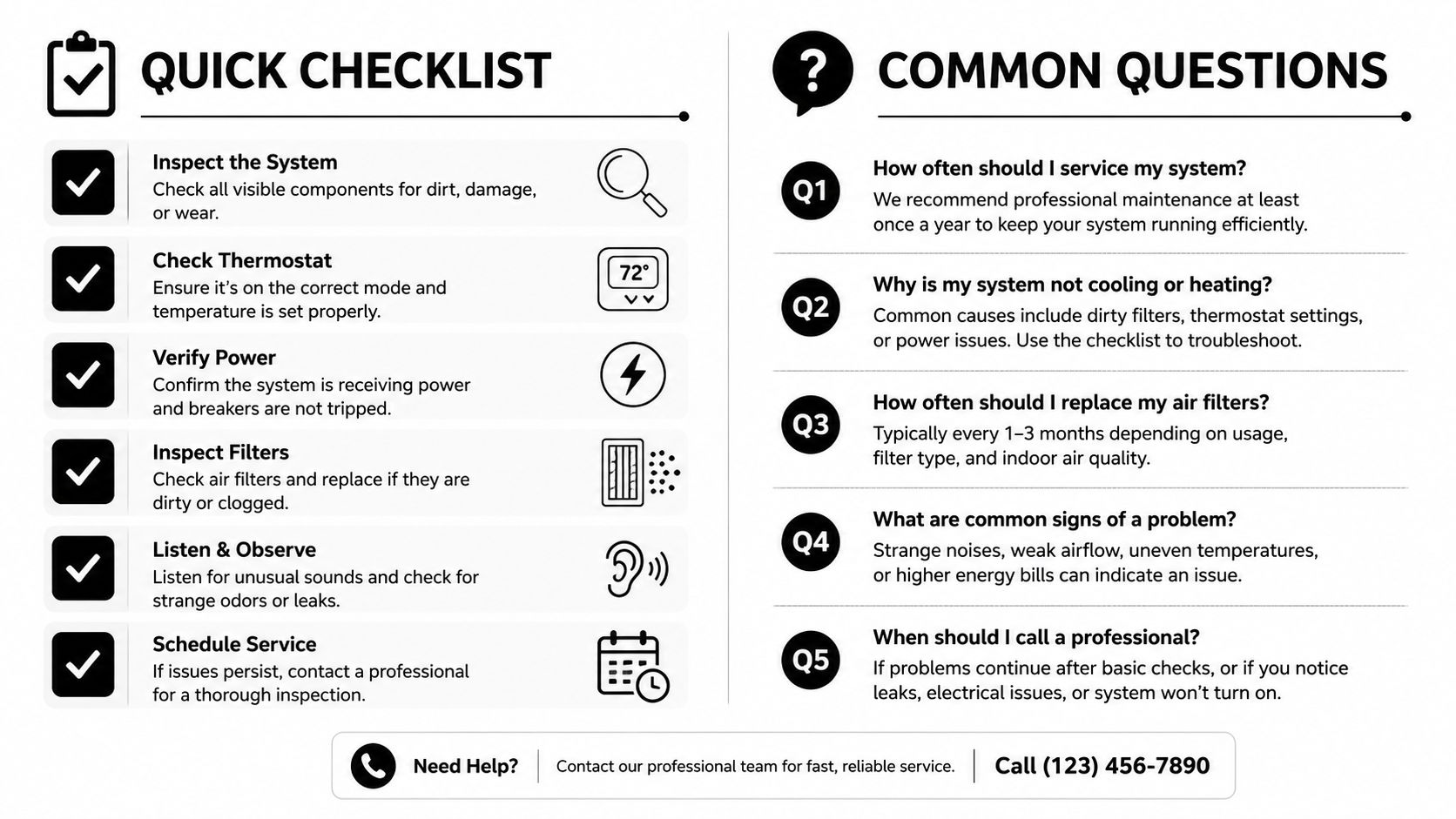
A reliable hourly reservation starts with a dispatch-ready itinerary. Send:
- Route: Every known stop, venue, airport, and final drop-off.
- Timing: Pickup time, expected end, and any standby periods.
- Vehicle: Passenger count, luggage, equipment, and presentation requirements.
- Minimum: The minimum billable hours, confirmed in writing.
- Invoice: Whether gratuity, fuel, tolls, parking, taxes, and overtime are included.
- Contact: Dispatch and chauffeur details, plus a clear process for reporting route changes.
The hourly rate is only the headline. The minimum, vehicle class, overtime increments, and driver-duty planning determine the amount charged.
Dispatcher answers
How are minimum hours enforced? The operator bills the stated minimum even if the itinerary ends early. Ask whether an unused portion of the reserved block remains billable, as noted earlier.
Does overtime use 15-minute or 30-minute increments? Policies differ. Confirm whether added time is billed by the quarter-hour, half-hour, or full hour before booking.
Is gratuity included? It may be included, preset, or left to the passenger. The quote should show how it is handled and calculated.
Do multiple stops restart the clock? Usually, no. Stops stay within the reserved block. Time beyond that block may create overtime.
What happens when the reservation runs long? Dispatch may extend the booking under its increment policy. If the chauffeur reaches a duty limit, the operator may arrange a relief driver or handoff.
Does the same driver stay throughout? Often, but long reservations can require a planned change. Federal duty rules limit driving and on-duty time, as noted earlier.
Max's Luxury Rides Inc. provides hourly transportation for airport transfers, corporate itineraries, weddings, concerts, sporting events, and group travel. Its fleet includes executive sedans, luxury SUVs, Mercedes vans, Sprinter vehicles, shuttles, limousines, minibuses, and coaches. Visit Max's Luxury Rides Inc. to request a vehicle-matched quote covering minimum hours, stops, airport logistics, and extended reservations.