
You can feel the difference before the car even stops. The booking confirmation is in your inbox, the meeting is already running late, and the first thing you notice when the door opens is not the upholstery or the badge on the grille, it's whether the cabin feels meticulously cared for. In luxury transportation, cleanliness standards are part of the promise, not a finishing touch.
That expectation has changed because people now live with a very visible hygiene baseline at home and in public life. UNICEF reports that by 2022, 75% of the global population had a basic handwashing facility with soap and water at home, while 2.0 billion people still lacked basic hygiene services, which makes travelers especially alert to hygiene provisions when they're away from home (UNICEF JMP report 2023). For a chauffeur company, that means cleanliness can't be left to impressions alone, it has to be built into the operation.
Why Cleanliness Standards Matter More Than Ever
A corporate traveler steps out of a terminal, glances at the vehicle, and makes a silent judgment in seconds. A wedding planner sending a bridal party across town does the same thing. They're not asking whether the interior was “pretty clean,” they're asking whether the car feels safe, orderly, and worthy of the fare they paid.

That expectation is stronger now because hygiene has become a daily reference point, not a niche concern. Travelers now compare a chauffeured cabin against the standards they rely on at home, and they notice quickly when a vehicle falls short. In a luxury fleet, that means cleanliness has to be built into the operation, not left to a quick visual pass.
Trust starts with what passengers can see
Visible order still matters. A clean floor mat, dust-free trim, and a fresh cabin scent signal that the vehicle was prepared with care. But visibility only gets you part of the way there, because passengers also care about what touched the last rider, what's circulating through the vents, and whether the high-touch areas were handled properly.
Practical rule: if a rider notices cleaning only after something looks wrong, the standard already failed.
For luxury transport, that matters across every use case. Airport transfers need fast turnover without sloppiness. Corporate accounts expect consistency across repeated trips. Families and event guests want calm, not uncertainty, when they settle in.
Why this is now a service differentiator
A spotless cabin used to be enough to avoid complaints. Today, it helps define the premium tier itself. A company that treats cleanliness as a verifiable standard can reassure passengers before they ever sit down, and that reassurance carries real weight in travel, hospitality, and event logistics.
Operationally, that also means the work cannot stop at appearance. A vehicle can be wiped down and still fall short if the air system is neglected, if high-touch points are missed, or if the team has no shared checklist to confirm what was done. The standard has to survive handoffs between chauffeurs, detailers, and dispatch, which is why companies such as Derek's detailing services frame detailing as a process, not a quick cosmetic touch-up.
Defining Cleanliness Beyond a Visual Inspection
A clean vehicle can still fail the standard if the process behind it is weak. That's why the first decision is to separate cleaning, sanitizing, and disinfecting. Cleaning removes visible dirt and residue. Sanitizing lowers the level of germs on a surface. Disinfecting goes further and is used when the goal is to kill pathogens according to the product's directions.
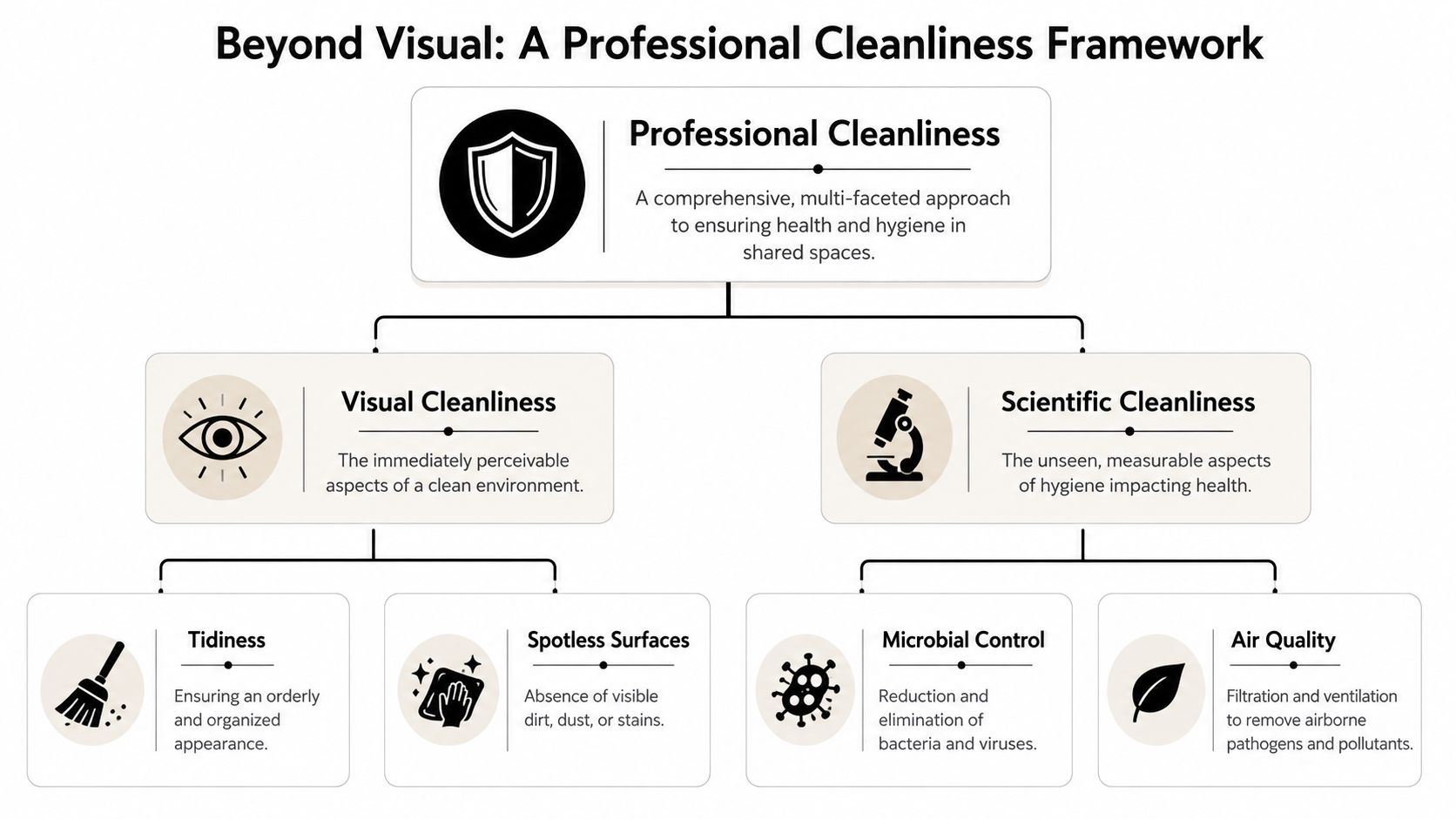
The problem with relying on appearance is simple. A cabin can look polished and still miss the mark on hygiene. Guidance from health authorities notes that visual cleanliness often does not prove hygienic safety, and objective checks like ATP bioluminescence are preferred over subjective visual assessment because they produce measurable data on cleaning effectiveness (CDC environmental cleaning manual).
What “clean” means in a professional fleet
In our operation, a vehicle is not considered ready because someone says it “looks fine.” It's ready when the visible surfaces are clean, the high-touch areas have been handled, and the cabin has passed a documented review. That approach gives us something a glance can't provide, consistency across sedans, SUVs, vans, and larger group vehicles.
The same logic appears in technical fields where cleanliness is treated as a measurable attribute rather than a visual impression. ISO 16232:2018 frames contamination control around how particulate contamination is measured and documented on functionally relevant parts and systems, which is why particle size distribution and traceable reporting matter in engineered environments (ISO 16232:2018).
Why the distinction matters to passengers
Passengers don't need the technical vocabulary, but they do benefit from the outcome. A vehicle that's only surface-clean can still leave guests uneasy if touchpoints are uncertain. A vehicle that's cleaned and verified creates a calmer, more confident ride.
Cleanliness standards work best when they can be repeated, checked, and explained.
That's the point of a process-based approach. It turns cleanliness from a subjective promise into a service discipline, and that discipline is what luxury clients feel.
Our Meticulous Protocols for Every Vehicle
A clean fleet doesn't happen by accident. It happens when every vehicle type follows the same basic logic, with details adapted to the cabin size, passenger load, and usage pattern. In a luxury sedan, that means fast turnaround without missing the console, seatbacks, or door pulls. In a coach bus, it means handling more touchpoints without sacrificing consistency.
The precision behind that mindset is similar to what high-reliability systems demand. NASA's MSFC-SPEC-164 requires that rinsing fluid used for cleanliness verification has no particle greater than 175 µm, which shows how operational controls replace guesswork when failure risk matters (NASA MSFC-SPEC-164).
A day in the schedule
After every ride, the interior gets a full passenger-contact reset. That includes waste removal, visible surface cleaning, disinfecting the touchpoints that every rider reaches for, and a quick inspection for anything left behind. Drivers also flag anything unusual immediately, so maintenance doesn't get buried under the next dispatch.
Daily deep cleaning goes further. It focuses on the cabin as a whole, not just the last passenger's footprint. Weekly detail work handles buildup, creases, vents, storage pockets, and other spots that don't get a full reset on a normal turnover.
| Vehicle Type | After Every Ride | Daily Deep Clean | Weekly Detail |
|---|---|---|---|
| Executive sedan | Touchpoints, visible surfaces, waste removal | Cabin reset, mats, seats, vents | Full interior detail, trim, glass, hard-to-reach areas |
| Luxury SUV | Touchpoints, cargo area, visible surfaces | Cabin reset, seating rows, floor areas | Deep detail, air outlets, third-row areas if present |
| Mercedes van, Sprinter van | Passenger entry points, seatbelts, grab handles | Full cabin wipe-down, floor, storage zones | Detail across rows, rails, and shared contact points |
| Minibus or coach bus | High-traffic touchpoints, aisle points, waste removal | Interior reset, restroom areas if equipped, floor surfaces | Extended detail of seats, rails, vents, and luggage areas |
What gets checked every time
The checklist is simple, but it's mandatory.
- Door handles and latches: these get touched at pickup and drop-off, so they never get ignored.
- Seatbelts and buckles: straps, releases, and buckles are cleaned because riders notice them immediately.
- Control panels and climate controls: passengers often adjust these first, especially in executive vehicles.
- Payment terminals or tablet interfaces: if they're used, they're handled as shared contact points.
- Armrests, grab handles, and window switches: these are easy to overlook and easy for passengers to notice.
A useful external reference for broader detailing categories is Ozone generator for car and home, especially for readers comparing equipment options in a detailing workflow. In our own fleet, equipment choice always comes second to procedure, because a tool can support a standard, but it can't create one on its own.
Advanced Air Filtration and Sanitization Technology
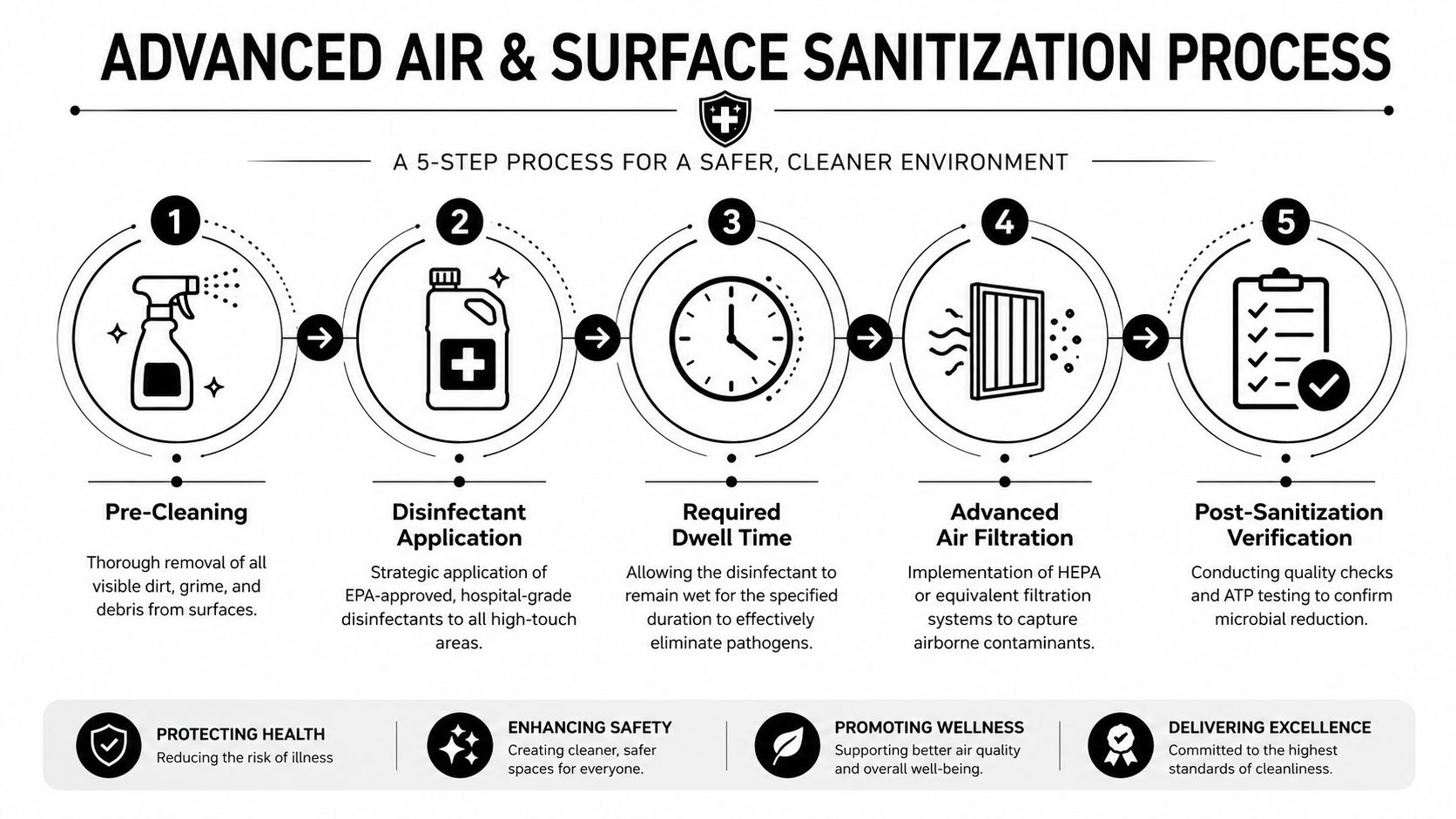
Surface cleaning alone doesn't solve cabin hygiene. Air moves through the vehicle the entire time passengers are inside, which means filtration and ventilation matter just as much as wipe-downs. That's especially true in high-use luxury fleets where multiple riders, multiple stops, and different trip lengths all place different demands on the cabin environment.
Why air quality belongs in the standard
A passenger may never inspect a filter, but they'll feel the result of poor airflow quickly. That's why advanced filtration belongs in the same conversation as disinfecting surfaces. It helps reduce the load of airborne particles and supports a cabin that feels fresher between trips.
The best systems don't replace cleaning, they support it. Disinfectants handle high-touch surfaces when used according to label directions, while filtration helps manage what rides in the air. The value is in combining both, not treating either one as a magic fix.
What matters in practice
The products we use are selected for effectiveness and for the ability to dry without leaving heavy residue behind. That matters in premium interiors where finishes, stitching, and touch surfaces need to hold up over time. On the air side, filtration hardware needs routine inspection and replacement on a schedule that matches actual vehicle use, not just the calendar.
A simple rule applies here. If a cleaning method makes the cabin smell stronger but doesn't make the process more controlled, it's probably the wrong method. Passengers want comfort, but they also want confidence that the vehicle hasn't been overtreated or masked with fragrance.
The strongest result comes from layered control, clean surfaces, managed airflow, and a verification step after both are complete.
Training and Documenting Our Standards
Standards only work when people can repeat them under pressure. That's why training is where cleanliness either becomes culture or falls apart into individual habits. A chauffeur who understands the sequence, the chemistry, and the inspection points will deliver a different ride from one who is just trying to finish quickly.
Equity matters here too. WHO and UNICEF report that about half of global healthcare facilities lack basic hygiene services, and that many sites still fail to include disability-accessible toilets or menstrual hygiene management (WHO and UNICEF joint report). That's a strong reminder that cleanliness standards are not just about polish, they're about whether a space is usable for different people.
Training has to cover the full workflow
Our staff learn the order of operations, not just the task list. They're trained to separate clean tools from used ones, apply products with the correct contact time, and report problems instead of working around them. That includes seat fabric care, touchpoint disinfection, and what to do when a guest leaves behind personal items.
Documentation matters just as much. A shared reference point keeps standards from drifting across shifts and vehicle types, especially when the fleet includes sedans, SUVs, vans, minibuses, and coaches. For teams that want to structure that knowledge internally, Pebb's knowledge base articles are a practical model for turning procedures into accessible SOPs.
Operational truth: if a cleaning step isn't written down, it will eventually be done differently by different people.
What we document
We use digital checklists, inspection notes, and handoff records to confirm that the vehicle is ready before dispatch. That lets supervisors review patterns, spot recurring misses, and reinforce training where needed. It also gives us a record that the standard was followed, not just assumed.
The result is consistency that passengers can feel without ever seeing the paperwork. They get into a vehicle that behaves like a system, not a guess.
Communicating Our Commitment to Your Safety
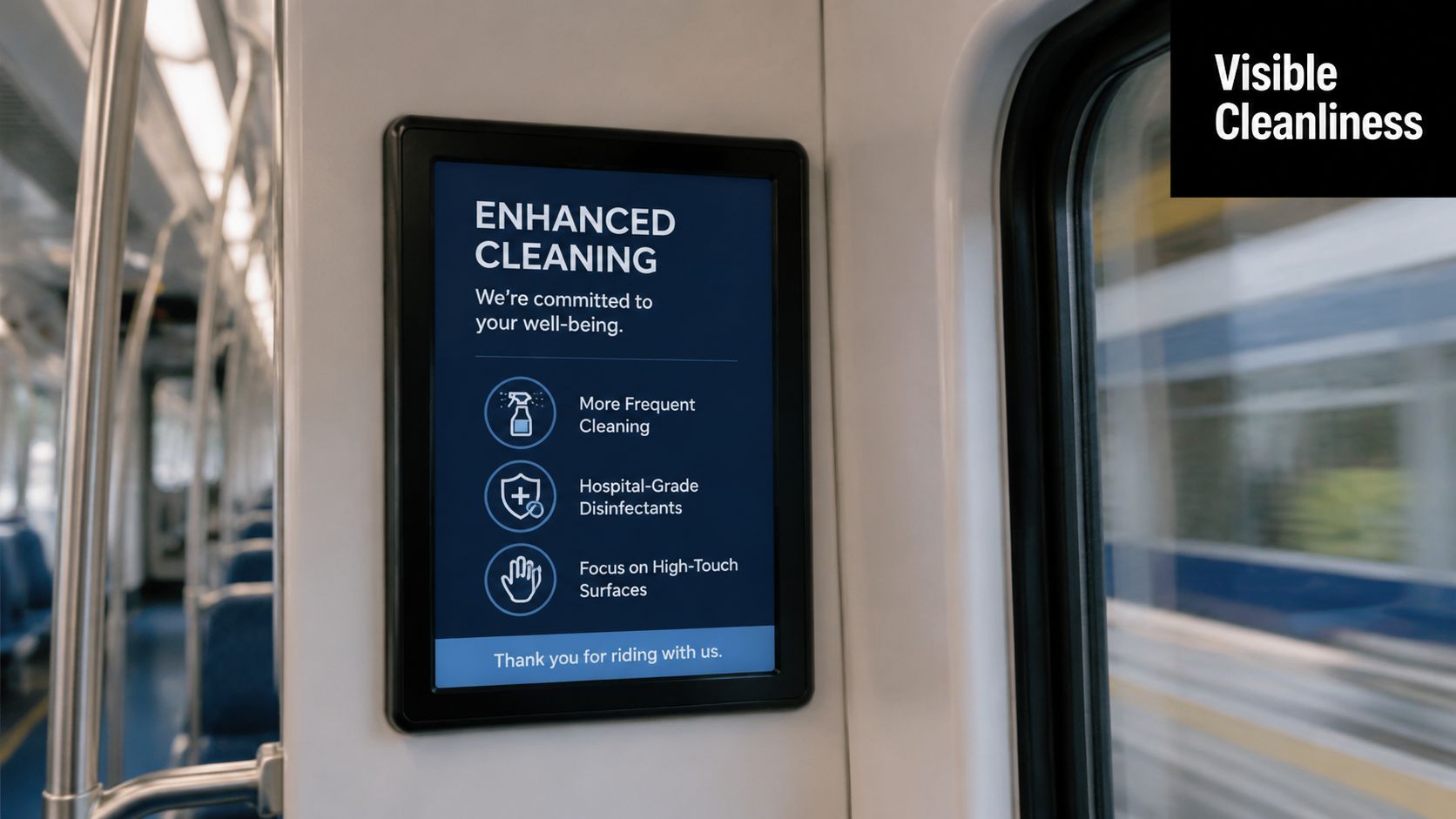
Passengers shouldn't have to infer cleanliness from a polished dashboard alone. They should know, in a clear and professional way, what happened before they entered the vehicle. That transparency turns an internal process into part of the service experience.
The reason this matters is simple. WHO data from 2022 show that 4.6 billion people used a safely managed sanitation service, which links infrastructure directly to health outcomes (WHO sanitation fact sheet). When people travel, they bring those expectations with them. They want to know the provider treats hygiene as part of reliability, not as a marketing claim.
How we make the standard visible
The cleanest operations still need communication. Confirmation emails can briefly describe the cleaning process. Chauffeurs can offer a calm, professional assurance at pickup if a passenger asks. Subtle in-vehicle messaging can reinforce that the cabin was prepared using a repeatable standard rather than a quick wipe.
This doesn't mean overexplaining. It means giving passengers enough information to trust the ride without turning the trip into a lecture. For corporate clients, that communication also reduces friction because it aligns the transportation experience with the standards they already expect from hotels, venues, and managed workplaces.
The strongest message is still the simplest one. The vehicle was prepared, the process was checked, and the passenger can settle in without wondering what was missed.
The New Benchmark for Luxury Travel
Cleanliness standards are no longer a background detail in premium ground transportation. They're the benchmark that tells passengers whether the operation is disciplined, safe, and worthy of repeat business. When a provider treats cleanliness as measurable, trains people to execute it, supports it with technology, and communicates it clearly, the ride feels different from the first second.
That standard depends on five pillars. Scientific cleanliness instead of guesswork. Vehicle-specific protocols instead of generic routines. Air management as part of hygiene, not an afterthought. Documented training so execution stays consistent. Transparent communication so passengers know what to expect.
Luxury clients don't need perfection in the abstract. They need a vehicle that feels ready, a process that can be trusted, and a team that doesn't improvise on the basics. That is what modern cleanliness standards should deliver, and it's what separates a polished ride from a professionally controlled one.
A CTA for Max's Luxury Rides Inc..