
Corporate event planning is a high-stakes discipline where success is measured in seamless execution, attendee engagement, and tangible business results. A single oversight can cascade into logistical nightmares, impacting brand reputation and wasting significant investment. To navigate this complexity, a structured, comprehensive plan isn't just helpful-it's essential for achieving strategic goals and delivering a return on investment.
This definitive corporate event planning checklist provides a strategic roadmap broken down into eight critical phases. Each step is designed to build upon the last, ensuring no detail is missed, from initial stakeholder alignment and granular budgeting to on-site execution and post-event analysis. It moves beyond generic advice to offer a tactical framework that addresses the core components of any successful corporate gathering.
Whether you're organizing a global conference, an executive retreat, or a pivotal product launch, this guide will equip you with the actionable insights and practical tools needed for flawless delivery. We will cover everything from defining clear objectives and establishing financial controls to coordinating advanced audio-visual requirements and executing a robust post-event evaluation. This structured approach ensures every decision is intentional, every resource is optimized, and every outcome is measurable. Following this checklist will empower you to transform a complex logistical challenge into an impactful and memorable experience that resonates with attendees and stakeholders long after the final applause.
1. Define Event Objectives and Success Metrics
The most critical step in any successful corporate event planning checklist is the first one: establishing clear objectives and defining how you will measure success. Before considering venues, caterers, or guest lists, you must understand the core purpose of the event. Every decision that follows, from budget allocation to marketing messaging, should directly support these foundational goals.
Without this strategic direction, an event risks becoming a collection of costly, disconnected activities rather than a targeted business initiative. A clear purpose ensures that your event delivers a quantifiable return on investment (ROI) and aligns perfectly with broader company goals.
Setting SMART Goals for Your Event
Vague objectives like "improving team morale" are difficult to measure. Instead, apply the SMART framework (Specific, Measurable, Achievable, Relevant, Time-bound) to create actionable targets.
- Specific: Clearly state what you want to accomplish. Instead of "increase brand awareness," aim to "secure media coverage in three major industry publications."
- Measurable: Define the Key Performance Indicators (KPIs) you will track. For a product launch, this could be "generate 500 qualified leads through event registration and demo stations."
- Achievable: Ensure your goals are realistic given your resources, timeline, and budget.
- Relevant: The event's purpose must align with larger business objectives, such as Q3 sales targets or employee retention initiatives.
- Time-bound: Set a clear deadline for achieving your goals, such as "increase partner engagement by 15% within 30 days post-event."
Examples of Objectives and KPIs
Here are practical examples for different corporate events:
- Sales Kickoff:
- Objective: Equip the sales team with the knowledge and motivation to achieve a 20% year-over-year revenue increase in the next fiscal year.
- KPIs: 95% of attendees pass a product knowledge assessment; track a 10% increase in pipeline value within 60 days.
- Client Appreciation Gala:
- Objective: Strengthen relationships with top-tier clients to improve retention rates.
- KPIs: Achieve an 80% attendance rate from invited key accounts; secure a 5% increase in contract renewals from attending clients within six months.
- Internal Team-Building Retreat:
- Objective: Improve cross-departmental collaboration and communication.
- KPIs: Post-event surveys show a 25% increase in employees' reported confidence in collaborating with other teams; a measurable decrease in project completion times for cross-functional projects in the following quarter.
By beginning with this strategic foundation, your event transforms from a simple gathering into a powerful tool for achieving tangible business outcomes.
2. Establish Budget and Financial Controls
With clear objectives defined, the next essential step in your corporate event planning checklist is to establish a comprehensive budget and implement strict financial controls. This financial framework serves as the roadmap for all your spending decisions, ensuring every dollar is allocated purposefully and effectively. It prevents scope creep and protects your event from costly overruns.
A well-managed budget does more than just track expenses; it forces strategic decision-making and aligns spending with your primary goals. By creating a detailed financial plan and monitoring it closely, you can demonstrate fiscal responsibility and maximize the event's return on investment, making it a justifiable business expenditure rather than just an expense.
Building a Comprehensive Event Budget
A successful budget is more than a simple list of costs. It should be a detailed, categorized document that anticipates every potential expense, from major vendor contracts down to minor logistical needs. This granular approach helps identify areas for potential savings and ensures no critical cost is overlooked.
- Categorize Everything: Break down your budget into major categories like Venue, Catering (per head cost), A/V and Technology, Marketing and Promotion, Speaker Fees, Staffing, and Miscellaneous.
- Include Hidden Costs: Account for often-forgotten expenses such as credit card processing fees, insurance, permits, taxes, gratuities, and post-event cleanup charges.
- Build in a Contingency: Always allocate 10-15% of the total budget as a contingency fund. This buffer provides crucial flexibility to handle unexpected costs or last-minute opportunities without derailing your financial plan.
- Track in Real-Time: Use event budgeting software or a detailed spreadsheet to track actual spending against your projections. Regular, real-time updates are critical for maintaining control.
Examples of Budgetary Models and Controls
Different events may benefit from different budgeting approaches to optimize financial management:
- Trade Show Participation:
- Approach: Implement detailed ROI tracking for each line item. Allocate funds to booth design, lead-capture technology, and pre-show marketing based on their potential to generate qualified leads.
- Financial Control: Require all booth-related expenses over $500 to receive pre-approval, ensuring every spend directly supports lead generation goals.
- Internal Corporate Retreat:
- Approach: Use a zero-based budgeting method where every expense must be justified for the new event, rather than rolling over last year's numbers. This forces a critical evaluation of what truly adds value to employee engagement.
- Financial Control: Set firm per-employee spending caps for activities, lodging, and meals to ensure equitable and predictable costs across the entire group.
- Large-Scale Conference (like Google I/O):
- Approach: Employ a tiered budgeting model with separate cost centers for premium experiences (e.g., VIP lounges, keynote speaker production) and standard execution tracks (e.g., general session logistics).
- Financial Control: Establish a formal approval workflow. Planners submit purchase requests, which are then routed to a finance manager or department head for sign-off, ensuring centralized oversight.
By implementing these rigorous financial controls from the outset, you create a system of accountability that keeps your event on track and on budget, safeguarding its success.
3. Select and Secure Appropriate Venue
With your objectives and budget defined, the next critical step in your corporate event planning checklist is selecting and securing the right venue. This decision is foundational, as it directly impacts the attendee experience, logistical complexity, and overall atmosphere of your event. The venue is often the largest single expense, and its choice should be a direct reflection of your event's goals, brand identity, and audience expectations.
A poorly chosen venue can create logistical nightmares and undermine your event's purpose, while the perfect space elevates the entire experience. It sets the stage for everything that follows, from catering and A/V production to transportation and networking opportunities.
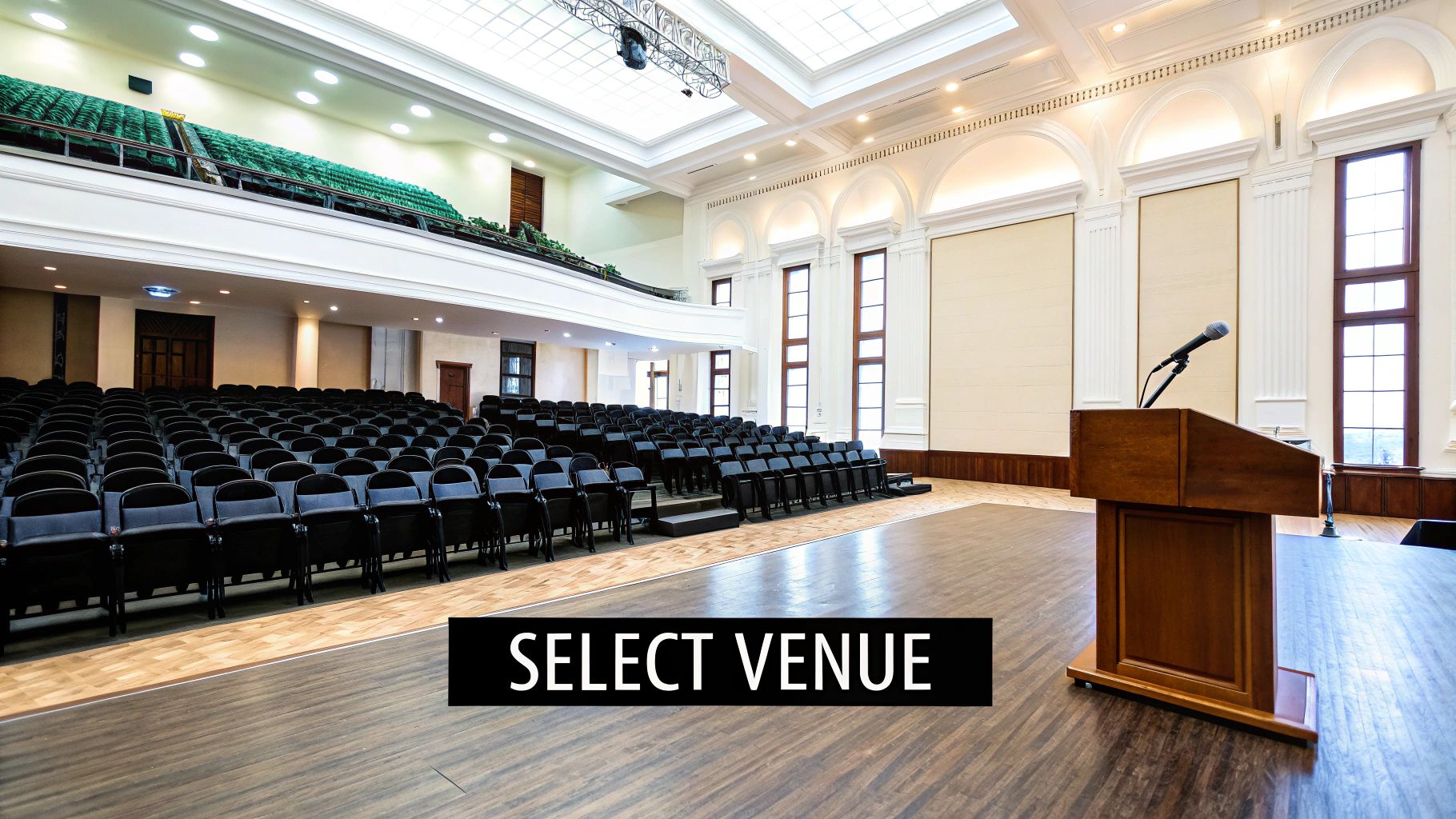
Aligning Venue Choice with Event Type
The ideal venue varies drastically depending on the event's purpose and scale. A generic space won't do; the environment must enhance your objectives.
- Capacity and Layout: Ensure the space can comfortably accommodate your expected guest count in the desired format (e.g., theater-style for presentations, banquet-style for a gala, or pods for breakout sessions). Consider the flow of traffic, registration areas, and networking spaces.
- Brand Alignment: The venue's style should match your company's brand. A luxury financial firm hosting a high-value client event would suit a premium hotel, whereas a tech startup might prefer a modern, industrial loft space.
- Location and Accessibility: Consider how easily attendees can reach the venue. Is it close to major airports, public transportation, or highways? Is there sufficient, affordable parking? The convenience of the location directly affects attendance and satisfaction.
- Technical Capabilities: Confirm the venue has robust Wi-Fi, adequate power supply, and modern A/V equipment, or allows you to bring in your own vendors to meet your technical needs for presentations, streaming, or interactive elements.
Examples of Strategic Venue Selection
Here are practical examples of how different organizations match venues to their goals:
- Large-Scale Tech Conference:
- Venue: A large convention center like the Las Vegas Convention Center.
- Reasoning: Offers massive exhibition halls for sponsors, numerous breakout rooms for concurrent sessions, and the infrastructure to support thousands of attendees, aligning with goals of industry leadership and lead generation.
- Exclusive Client Appreciation Dinner:
- Venue: A high-end hotel ballroom, such as at The Ritz-Carlton.
- Reasoning: Provides a sophisticated and luxurious atmosphere that reinforces a premium brand image and makes top-tier clients feel valued, supporting the objective of strengthening key relationships.
- Intimate Executive Summit:
- Venue: An exclusive, unique space like Salesforce Tower's 'Ohana Floor.
- Reasoning: Creates a private, impressive setting that facilitates high-level networking and discussion away from public distractions, perfect for strategic planning and C-suite engagement.
Booking the right venue early is crucial, as the best locations are often reserved months or even years in advance. This decision anchors your event date and allows all other planning to move forward with confidence.
4. Develop Comprehensive Timeline and Project Plan
Once your objectives are set and your budget is approved, the next step in a comprehensive corporate event planning checklist is to create a detailed project timeline. This master schedule acts as the event's central nervous system, mapping out every task, deadline, and dependency from the initial concept to post-event analysis. It provides clarity, assigns ownership, and ensures the entire planning process stays on track.
Without a well-structured timeline, planning can become chaotic, with critical tasks overlooked and deadlines missed. A strategic project plan transforms a complex undertaking into a series of manageable steps, allowing you to identify potential bottlenecks early and allocate resources effectively. This proactive approach is the difference between a stressful, last-minute scramble and a smooth, professional execution.
Building a Reverse-Engineered Timeline
An effective technique is to work backward from the event date. Start with the day of the event and map out all necessary tasks and their required lead times. This method ensures that nothing is forgotten and that all vendor deadlines and logistical requirements are met in the proper sequence.
- Assign Clear Ownership: Every single task on the timeline, from "Confirm Keynote Speaker" to "Order Attendee Lanyards," must have a designated owner. This eliminates confusion and creates accountability.
- Identify Dependencies: Recognize tasks that cannot start until another is completed. For example, you cannot finalize the catering menu until the venue is booked and the attendee count is estimated.
- Incorporate Buffers: Experienced planners build a 15-20% time buffer into critical path tasks. This contingency allows you to absorb unexpected delays, such as a slow vendor response or a change in stakeholder requirements, without jeopardizing the entire event.
- Use Project Management Tools: Leverage software like Asana, Trello, or Monday.com to create a dynamic, shareable timeline. These tools make it easy to track progress, adjust deadlines, and communicate updates to the entire team in real-time.
Examples of Timeline Application
The scale and complexity of your timeline will vary, but the principles remain the same for any successful event.
- Annual Shareholder Meeting: These events often follow a standardized template. The timeline is highly structured with legally mandated deadlines for sending notices, distributing proxy materials, and confirming board member attendance, ensuring regulatory compliance.
- Multi-Day Industry Conference: For a large-scale conference, a Gantt chart is indispensable. It visualizes complex dependencies between speaker confirmations, content track development, sponsor deliverables, and attendee marketing campaigns over a 12- to 18-month planning cycle.
- Agile Product Launch: A fast-paced product launch might use agile project management principles, with the timeline broken into short "sprints." This allows the planning team to adapt quickly to market feedback or product development changes, ensuring the launch event is perfectly aligned with the final product.
The following infographic illustrates the key phases of a typical 12-month corporate event planning timeline.
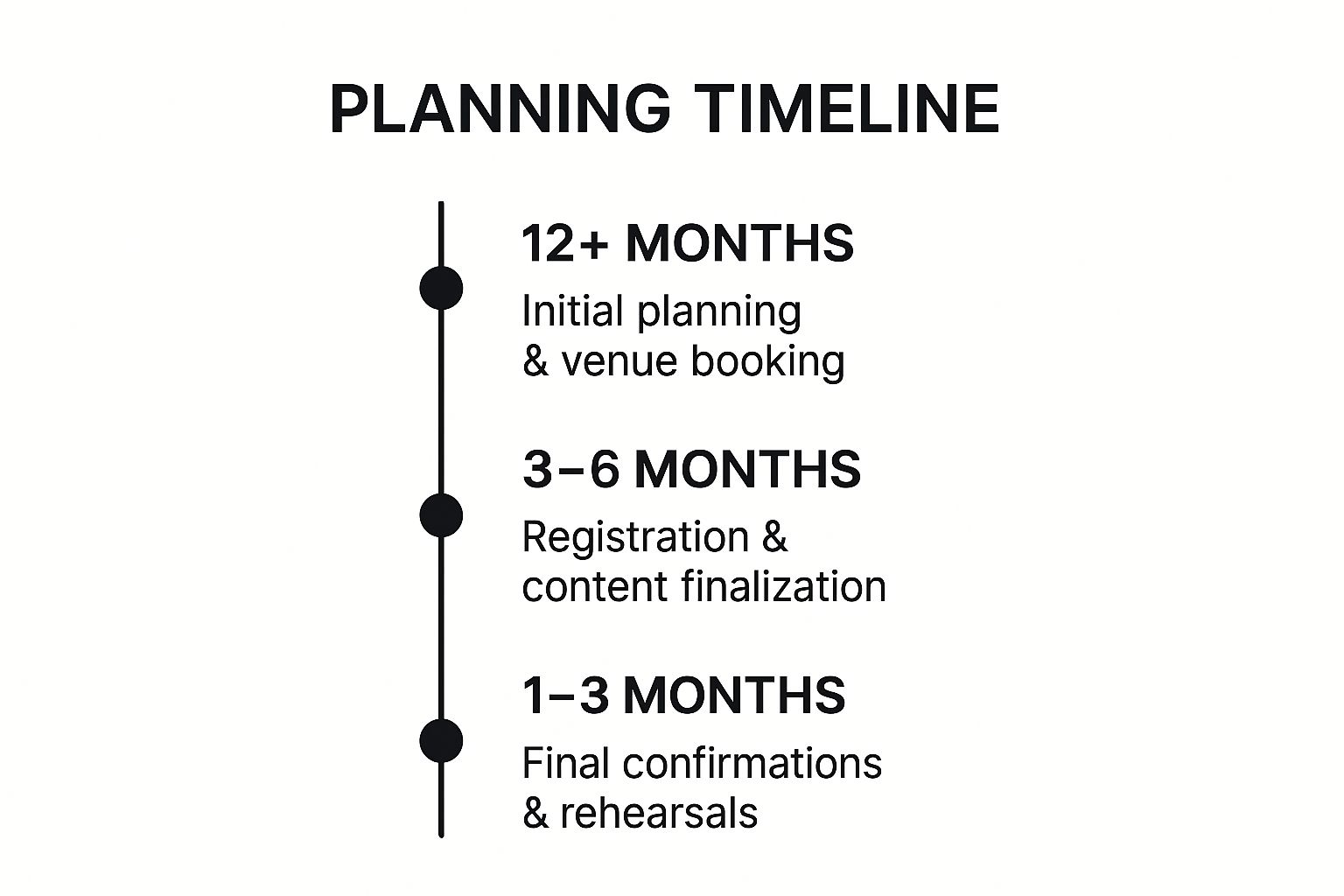
This visual breakdown emphasizes how foundational decisions like venue selection must be made far in advance, while more granular tasks like final rehearsals occur closer to the event date.
5. Coordinate Catering and Dietary Requirements
A crucial element of any corporate event planning checklist is the thoughtful coordination of catering. Food and beverage are not merely sustenance; they are a core component of the attendee experience, capable of elevating networking sessions, energizing participants, and reflecting the event's overall quality and brand standard. Mishandling this aspect can lead to guest dissatisfaction, disruptions, and a tarnished event reputation.
Effective catering management goes beyond just selecting a menu. It involves a strategic approach to timing, service style, and accommodating the diverse needs of your audience. When executed well, catering enhances the event's atmosphere, supports its objectives, and demonstrates a commitment to attendee well-being and inclusivity.
Planning Menus with Purpose
The menu should align with the event's tone, schedule, and audience demographics. A formal gala requires a different approach than a fast-paced tech summit, and understanding these nuances is key to making the right impression.
- Align with Event Tone: A high-end client appreciation dinner might feature a multi-course plated meal, while an internal innovation workshop could benefit from interactive food stations or trendy food trucks to encourage mingling.
- Support the Schedule: For sessions packed with content, offer light, energizing "brain food" and quick grab-and-go options to minimize downtime. Avoid heavy, carb-heavy lunches that can lead to post-meal sluggishness.
- Accommodate All Guests: The most critical step is systematically collecting dietary information. Add a mandatory field in your registration form for allergies (e.g., nuts, gluten, dairy) and preferences (e.g., vegetarian, vegan, halal, kosher) to ensure every guest feels considered and safe.
Examples of Strategic Catering
Here are practical examples of how catering can support event goals:
- Global Sales Kickoff:
- Objective: Foster a sense of global unity and inclusivity for an international team.
- Execution: Microsoft often features culturally diverse food stations at its large-scale events, offering dishes that reflect the home countries of its global workforce, making international employees feel welcomed.
- Environmental Conference:
- Objective: Reinforce a commitment to sustainability and corporate responsibility.
- Execution: Offer a menu that is entirely plant-based, locally sourced, and seasonal. Clearly label the origin of ingredients to highlight the low carbon footprint of the catering choices.
- Startup Networking Mixer:
- Objective: Create a casual, high-energy environment that encourages informal connections.
- Execution: Utilize a variety of popular local food trucks, giving attendees choice and a natural conversation starter as they mingle in a relaxed outdoor or semi-formal setting.
By treating catering as an integral part of the event strategy rather than an afterthought, you create a more memorable and impactful experience for every attendee.
6. Manage Registration and Attendee Communications
Once your event's framework is in place, the next crucial component of your corporate event planning checklist is managing how guests sign up and what they hear from you. An efficient registration process and a clear communication plan are the first direct touchpoints attendees have with your event. A seamless experience sets a professional, organized tone, while a clumsy one can cause frustration and disengagement before the event even begins.
This phase is about more than just collecting names; it's about creating a smooth user journey that gathers necessary data, manages expectations, and builds anticipation. A strategic approach ensures attendees feel valued and informed from the moment they register until the final post-event thank you note is sent.
Building a Seamless Attendee Journey
Your registration and communication strategy should be designed with the attendee's perspective in mind. The goal is to make the process intuitive, informative, and engaging at every stage.
- Registration Platform: Select a platform that is user-friendly, mobile-responsive, and capable of handling your specific needs, like tiered ticketing, session selection, or dietary requirement collection. It should integrate with your other event management tools.
- Communication Cadence: Develop a schedule for pre-event, during-event, and post-event communications. This includes confirmation emails, "know before you go" guides, real-time updates via a mobile app, and follow-up surveys.
- Data Management: Ensure your registration process securely captures essential attendee information. This data is invaluable for personalizing the event experience, informing logistical decisions like catering counts, and measuring post-event ROI.
- Accessibility: Provide clear contact information for attendees who have questions or encounter issues during registration. A dedicated support email or helpline demonstrates excellent customer service.
Examples of Effective Registration and Communication
Here are practical examples for different corporate events:
- Large Industry Conference:
- System: Use a sophisticated event management platform like Cvent or Bizzabo that offers tiered registration, session sign-ups, and an integrated mobile app for real-time schedule updates and networking.
- Communication: Send a detailed pre-arrival email one week out with venue maps, parking information, and a QR code for quick check-in. Use push notifications during the event to announce session changes or keynote speaker reminders.
- Internal Corporate Training:
- System: Integrate registration with the company's existing Learning Management System (LMS) or HR portal to streamline the sign-up process for employees.
- Communication: Automate confirmation emails through the internal system and send calendar invites. A post-event email should link directly to training materials and a feedback survey to measure effectiveness.
- Exclusive VIP Client Dinner:
- System: A simple, elegant RSVP form on a branded landing page is sufficient. The focus is on a high-touch, personalized experience rather than complex data capture.
- Communication: Send personalized, formal invitations via email or post. Follow up with a personal phone call to confirm attendance and any special requests, reinforcing the exclusive nature of the event.
By mastering registration and communication, you create a positive and professional experience that significantly contributes to overall event success.
7. Coordinate Technology and Audio-Visual Requirements
In today's digitally driven world, technology and audio-visual (AV) production are the backbone of a professional corporate event. Flawless execution of sound, lighting, and visuals is no longer a luxury but an expectation. This critical component of the corporate event planning checklist ensures that presentations are delivered without a hitch, speakers are seen and heard clearly, and attendees can fully engage with the content, whether they are in the room or joining virtually.
Poor technical execution can quickly derail an otherwise well-planned event, leading to audience disengagement and undermining the event's credibility. Investing time and resources into coordinating these requirements is essential for creating a seamless, immersive, and professional experience that reflects positively on your brand.
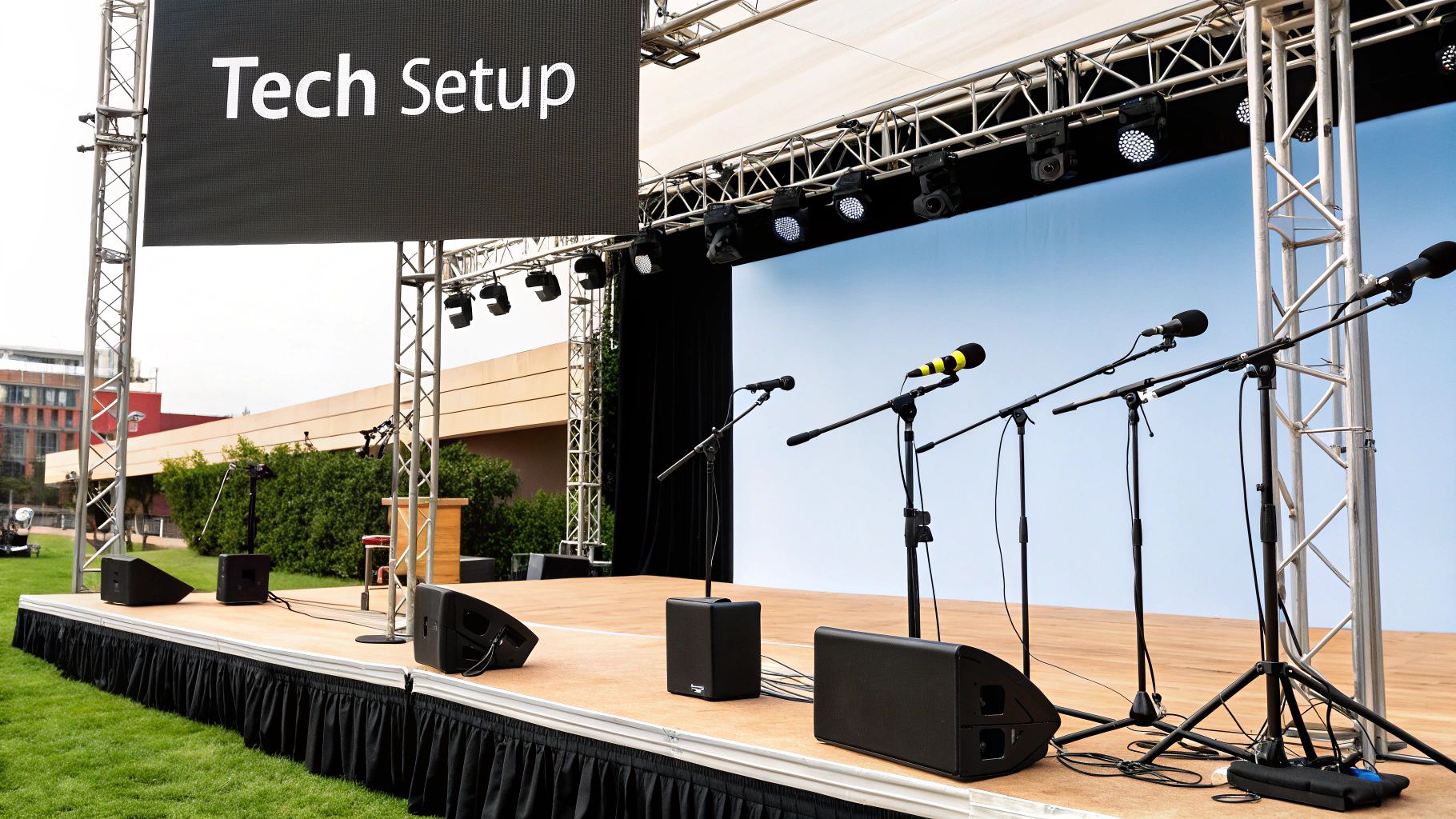
Defining Your Tech and AV Needs
The first step is to create a comprehensive list of all technical requirements based on your event's format and objectives. This inventory should be detailed and specific to avoid last-minute surprises.
- Audio: Specify the number and type of microphones needed (e.g., handheld, lavalier, podium), speakers, and sound mixers. Consider the room's acoustics and whether you need sound reinforcement for different zones.
- Visual: List all screens, projectors, LED walls, and monitors required. Note the necessary resolutions and aspect ratios for all presentations to ensure they display correctly.
- Lighting: Plan for stage lighting to highlight speakers, ambient lighting to set the mood, and branded lighting (gobos) to reinforce your company's presence.
- Connectivity: High-speed, reliable Wi-Fi is non-negotiable. Determine if you need a dedicated network for production staff and presenters, in addition to a guest network with sufficient bandwidth.
- Hybrid/Virtual Elements: If your event includes a virtual component, detail your needs for cameras, live streaming platforms (like Hopin or ON24), and encoding equipment.
Tips for Seamless AV Execution
Here are actionable tips to ensure your event's technology runs smoothly:
- Conduct a Full Technical Rehearsal: A "run of show" is not just for presenters. Schedule a full tech rehearsal with the AV team, presenters, and event staff to walk through every cue, presentation, and transition exactly as it will happen on event day.
- Insist on Redundancy: Technology can fail. Have backup systems for critical components like microphones, laptops, projectors, and internet connections. A secondary power source or generator can be a lifesaver.
- Assign Dedicated Support: Have a dedicated AV technician on standby for the entire duration of the event. Ensure presenters and staff know who to contact immediately if an issue arises.
- Test All Presenter Equipment: Before the event begins, test every presenter's laptop and presentation file on the main system to check for compatibility issues, formatting errors, or embedded media that won't play. This simple check prevents awkward delays during the live event.
8. Plan Post-Event Follow-up and Evaluation
A common mistake in a corporate event planning checklist is treating the event's conclusion as the finish line. In reality, the work done after the event is often what secures its long-term value and ROI. A strategic post-event follow-up and evaluation plan is essential for capitalizing on the momentum generated, nurturing new relationships, and gathering critical data to improve future initiatives.
Without this structured approach, the connections made and enthusiasm built can quickly fade. A deliberate follow-up process ensures that leads are converted, attendee feedback is captured, and the event’s impact is accurately measured against the initial objectives you set in step one. This final phase transforms a one-time gathering into a sustained business driver.
Designing a Multi-Channel Follow-up Strategy
An effective follow-up is not a single email blast. It’s a coordinated communication strategy that provides value and keeps the conversation going. The key is to segment your audience and tailor the message to their relationship with the event.
- Attendees: Send a "thank you" email within 24 hours. Include a link to a feedback survey and provide access to valuable content like presentation slides, session recordings, or a photo gallery.
- Leads/Prospects: The sales team should have a clear, pre-assigned plan to follow up within 48-72 hours. This contact should be personalized, referencing conversations or interests noted during the event.
- Sponsors and Partners: Schedule dedicated debrief calls to review their ROI, share attendance metrics, and discuss future collaboration opportunities. This reinforces the value of their investment.
- Non-Attendees: Reach out to those who registered but did not attend. Share a "sorry we missed you" message with a highlight reel or a link to key session recordings to keep them engaged.
Examples of Objectives and KPIs
Here are practical examples for measuring post-event success:
- Product Launch Event:
- Objective: Convert event-generated interest into qualified sales opportunities.
- KPIs: Achieve a 40% open rate on the post-event content email; schedule 50 qualified sales demos from the attendee list within 30 days.
- Annual Industry Conference:
- Objective: Solidify the event's reputation as a thought leader and build a year-round community.
- KPIs: Attain a 25% survey completion rate with an average satisfaction score of 8/10 or higher; increase engagement in post-event online forums by 15%.
- Internal Training Workshop:
- Objective: Ensure knowledge retention and application of new skills in the workplace.
- KPIs: 90% of attendees receive a completion certificate; post-event manager surveys show a 20% improvement in the team's use of the new software within 60 days.
By embedding follow-up and evaluation into your planning from the start, you ensure every event delivers measurable, lasting business results.
Corporate Event Planning Checklist Comparison
| Item | Implementation Complexity 🔄 | Resource Requirements ⚡ | Expected Outcomes 📊 | Ideal Use Cases 💡 | Key Advantages ⭐ |
|---|---|---|---|---|---|
| Define Event Objectives and Success Metrics | Medium – requires stakeholder alignment and ongoing monitoring | Low to Medium – mainly planning & documentation | Clear direction, measurable success, stakeholder buy-in | All events needing focused goals and measurable KPIs | Aligns team, aids budget allocation, supports ROI measurement |
| Establish Budget and Financial Controls | Medium to High – constant monitoring and control workflows | Medium – software tools, financial expertise | Prevents overspend, transparent finances, supports decisions | Events with strict financial oversight, multi-day or complex | Controls costs, improves vendor negotiations, ensures transparency |
| Select and Secure Appropriate Venue | High – venue visits, contract negotiation, availability issues | High – booking and deposits, logistics planning | Enhanced attendee experience, brand image impact | Large conferences, client events, brand-sensitive functions | Sets event tone, provides infrastructure, potential package deals |
| Develop Comprehensive Timeline and Project Plan | High – detailed mapping, updates, dependencies tracking | Medium – project management tools and coordination | Smooth execution, early bottleneck detection, accountability | Complex or lengthy events, multi-team coordination | Prevents oversights, facilitates team alignment, identifies risks early |
| Coordinate Catering and Dietary Requirements | Medium – menu planning, dietary accommodation, timing | Medium – vendor coordination, quality assurance | Higher attendee satisfaction, supports networking | Events with diverse attendees, formal dinners, networking focus | Improves satisfaction, reinforces themes, creates memorable experiences |
| Manage Registration and Attendee Communications | Medium – setup and maintenance of platforms, ongoing updates | Medium – tech platforms, communication management | Streamlined registration, better attendee experience, data insights | Events requiring registration, frequent updates, attendee engagement | Reduces admin burden, improves communication, enhances data collection |
| Coordinate Technology and Audio-Visual Requirements | High – technical setup, rehearsals, specialized staff needed | High – equipment, expertise, on-site support | Professional presentations, hybrid event capability, engagement boost | Hybrid/virtual events, large presentations, content-heavy sessions | Ensures smooth AV delivery, supports live streaming, enhances engagement |
| Plan Post-Event Follow-up and Evaluation | Medium – data collection, analysis, communication | Low to Medium – survey tools, staff time | Maximized ROI, improvement insights, sustained engagement | All events aiming for measurable impact and continuous improvement | Informs future planning, maintains relationships, documents outcomes |
Executing Excellence: Your Blueprint for Success
A truly successful corporate event is far more than a well-executed gathering; it is the physical manifestation of strategic foresight, meticulous planning, and an unwavering commitment to quality. By systematically navigating the comprehensive corporate event planning checklist detailed in this guide, you transform what can often feel like a chaotic and overwhelming undertaking into a structured, manageable, and strategic process. This blueprint is not just a list of tasks to be completed; it is a framework for excellence, designed to empower you to deliver experiences that resonate long after the final guest has departed.
From the foundational steps of defining clear, measurable objectives and establishing rigorous financial controls, to the intricate details of venue selection and technology integration, each phase serves as a critical building block. The success of your event is built upon these interconnected pillars. Overlooking the importance of a detailed project timeline can jeopardize vendor coordination, while failing to manage attendee communications effectively can diminish the overall guest experience, regardless of how impressive the venue or catering might be. This checklist ensures a holistic approach, where every element is given the attention it deserves.
From Checklist to Competitive Advantage
Mastering this process elevates your role from a mere coordinator to a strategic partner within your organization. A flawlessly executed event can directly impact business growth, foster client loyalty, and boost internal morale. The true value lies not just in checking boxes, but in understanding the why behind each step.
- Strategic Impact: Moving beyond logistics to align every decision with core business objectives. Your event becomes a powerful tool for marketing, sales, or team building.
- Financial Acumen: Demonstrating fiscal responsibility through diligent budgeting and tracking, proving a tangible return on investment to key stakeholders.
- Enhanced Reputation: Consistently delivering professional, high-impact events builds a reputation for reliability and excellence, both for you and your company.
Think of this corporate event planning checklist as your trusted co-pilot. It helps you anticipate turbulence, navigate complex logistics, and maintain a clear heading toward your destination. The most seasoned planners understand that unforeseen challenges are inevitable. However, a robust plan, complete with contingency strategies for everything from AV failures to unexpected dietary needs, is what separates a minor hiccup from a major catastrophe. It is this proactive, detailed approach that instills confidence in your leadership and ensures a seamless experience for every attendee.
Actionable Next Steps: Your Path Forward
As you conclude this guide, your journey is just beginning. The real learning happens in application. We encourage you to not simply read this checklist, but to actively implement it. Start by adapting it to your specific needs. Create a customizable template based on the framework provided, adding line items unique to your company’s event types and culture.
Key Takeaway: The ultimate goal of this corporate event planning checklist is to create a repeatable system for success. It frees you from the mental load of remembering every single detail, allowing you to focus on the more strategic and creative aspects of event design that truly elevate the attendee experience.
Your next event is an opportunity to put these principles into practice. Embrace the process, from post-event data analysis to refining your approach for the future. By doing so, you will not only avoid common pitfalls but will consistently deliver professional, impactful events that achieve their objectives and leave a lasting, positive impression. You are now equipped with the blueprint to execute excellence.
When planning transportation for your VIPs, speakers, or executive teams, ensuring a seamless, professional, and luxurious experience is paramount. For reliable, high-end ground transportation that reflects the quality of your event, consider Max's Luxury Rides Inc. We specialize in providing premium vehicles and professional chauffeurs to meet the exacting standards of any corporate function. Visit us at Max's Luxury Rides Inc. to secure transportation that elevates your event from the moment your guests arrive.