
You're staring at a booking screen, or a transportation quote, and the vehicle options look simple until they don't. A sedan. An SUV. Both are premium. Both get you there. But one choice will make the trip feel effortless, and the other can make it feel cramped, awkward, or unnecessarily expensive.
That's the difference between Sedan and SUV decisions in luxury transportation. It's not about which body style is more popular. It's about how the ride feels when you're stepping out in a suit, carrying presentation materials, arriving with a wedding dress, or trying to stay fresh after a long airport transfer.
The bigger vehicle is often chosen because bigger seems safer and more impressive. Sometimes that's exactly right. Sometimes it's the wrong call. A chauffeured sedan can be the smarter luxury choice when comfort, stability, and clean arrival matter more than cargo height and extra seats.
Choosing Your Ride The Sedan and SUV Dilemma
A corporate traveler flying into Chicago often asks the same question at the last minute. “I'll have one carry-on, one meeting downtown, and maybe a call in the car. Should I book the sedan or the SUV?” That sounds like a basic size question. It isn't.
The answer changes based on how you want the trip to feel. If you need a quiet, composed ride where you can review notes and arrive without feeling jostled, a sedan usually wins. If you're traveling with coworkers, bulky luggage, or you need easier entry and exit in formalwear, the SUV starts making a stronger case.
That tension exists because the market has shifted hard toward SUVs. In 2025, nearly four SUVs were sold in the United States for every single sedan purchased, reversing the 2005 ratio when sedans outsold SUVs by more than 2 to 1, according to U.S. sales trend reporting on SUVs versus sedans. That tells you what buyers prefer in broad terms. It doesn't tell you what's best for a specific airport run, roadshow, wedding pickup, or executive transfer.
The most expensive mistake in luxury transportation isn't booking the wrong brand. It's booking the wrong format for the trip.
A sedan and an SUV serve different jobs. The sedan is the polished tool for focused, efficient passenger travel. The SUV is the adaptable tool for groups, gear, and higher entry. If you treat them as interchangeable, you'll miss the practical trade-offs that affect the ride.
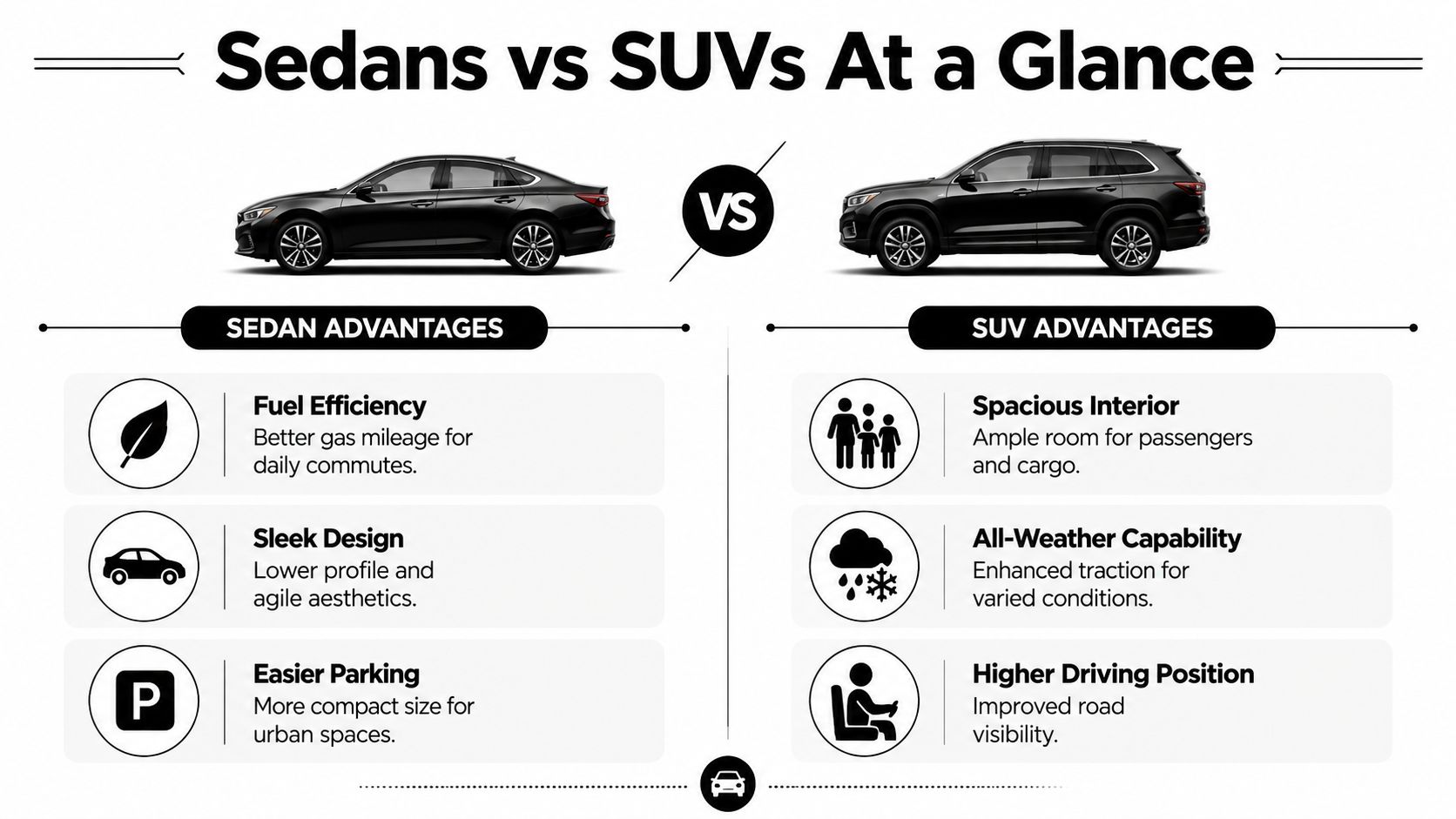
Sedans vs SUVs At a Glance
A sedan and an SUV may cover the same route, but they do not deliver the same passenger experience.
The difference starts with the body style. A sedan uses a three-box design with a separate trunk. A SUV uses a two-box design with one larger cabin and cargo area. That basic layout shapes how the ride feels, how luggage is handled, and how easily passengers get in and out.
Here's the quick comparison.
| Category | Sedan | SUV |
|---|---|---|
| Basic design | Three-box layout with separate trunk | Two-box layout with unified cabin and cargo area |
| Typical passenger use | Best for solo travelers or two passengers who want a quieter, more private ride | Best for small groups, families, and trips with extra bags |
| Seating capacity | Usually up to 5 passengers | More seating options, especially in larger models |
| Cargo setup | Enclosed trunk that keeps luggage out of the cabin | Rear hatch with a wider, easier cargo opening |
| Ride height | Lower to the ground | Higher seating position |
| Passenger feel on the road | More settled at highway speeds, better for reading or working | More open view outward, better for passengers who dislike sitting low |
| Entry and exit in formalwear | Lower seat height can require more bending | Easier for many passengers stepping in and out in suits, dresses, or heels |
| Best use case | Executive airport runs, corporate transfers, couple travel | Group pickups, event transportation, luggage-heavy service |
What the architecture changes
Passengers notice the difference immediately.
A sedan feels more contained and more formal. The separate trunk helps keep bags, garment cases, and loose items out of the passenger space. That matters on executive trips where the cabin should stay quiet, clean, and focused.
An SUV trades some of that cocooned feel for flexibility. The higher seating position makes entry easier for many clients, especially older passengers and anyone wearing formal clothes. The larger rear opening also makes life easier for chauffeurs handling multiple suitcases, presentation materials, or event items.
My recommendation is simple. Book a sedan when the priority is composure, privacy, and arriving sharp. Book an SUV when the priority is easier access, more people, or more gear.
That is the at-a-glance difference. Sedans refine the ride. SUVs widen your margin for logistics.
A Detailed Comparison for the Discerning Passenger
A client steps out of a red-eye, changes into a suit in the terminal lounge, and has 45 minutes to arrive composed for a board meeting. Another arrives with two relatives, three checked bags, and a garment case for an evening event. Both need luxury service. They do not need the same vehicle.
That is the difference between a sedan and an SUV in chauffeured travel. The decision is about how the ride feels, how easily people enter and exit, and how cleanly the trip runs once luggage, formalwear, traffic, and highway time are part of the equation.
Ride quality under real travel conditions
Sedans usually deliver the better highway experience.
Their lower stance helps them stay calmer through fast lane changes, long curves, and broken pavement. Passengers notice that stability when they are reading, reviewing notes, or trying to avoid that slightly queasy feeling that can build during a long transfer. Mazda's sedan versus SUV comparison specifically notes the sedan advantage in high-speed stability and points to lower motion sickness and fatigue on longer drives.
That matters more than buyers guides admit. In luxury and corporate service, arriving clear-headed is part of the product.
SUVs create a different kind of comfort. The higher seat height gives passengers a better outward view, and many clients prefer not to sit low. That can feel more relaxed on shorter city trips, especially for riders who want a broader sightline or dislike the cocooned feel of a sedan cabin.
My recommendation is straightforward. If the route is mostly highway and the party is one or two passengers, choose the sedan first.
Space, cabin flow, and what passengers actually feel
Cargo capacity matters, but cabin discipline matters too.
A sedan keeps luggage in a separate trunk, which preserves a quieter, more orderly passenger compartment. That is a better fit for executive transfers where the back seat needs to feel private, clean, and focused. No bags shifting behind the third row. No event materials crowding the cabin. No visual clutter.
An SUV earns its keep when the trip has more moving parts. Three adults in the rear of a sedan can feel tight quickly, especially with airport bags, winter coats, or presentation materials in play. An SUV handles those variables with less compromise and less last-minute reshuffling at the curb.
Choose a sedan for:
- Solo or two-passenger executive travel
- Couples heading to a hotel, dinner, or private event
- Trips where a quiet, contained cabin matters more than extra space
Choose an SUV for:
- Small groups traveling together
- Airport pickups with multiple checked bags
- Transfers involving garment bags, gift boxes, or event materials
- Bookings where easier entry matters as much as ride comfort
Stability versus size
Passengers often frame safety as a simple winner-and-loser question. It is not that simple.
SUVs give many riders a stronger sense of protection because they sit higher and ride in a larger vehicle. That feeling is real, and it is one reason families and group travelers often request them. Sedans answer with better planted road manners and less top-heavy movement, which many experienced travelers value more on long highway runs.
For chauffeured service, the practical takeaway is clear. If a passenger is sensitive to body motion, road sway, or fatigue at speed, the sedan is usually the smarter choice. If the group wants a higher seating position and the reassurance of a larger cabin, book the SUV.
Entry, exit, and formalwear
This is one of the most overlooked differences.
SUVs are usually easier for passengers getting in and out in business attire, eveningwear, or heels. The seat height reduces the drop into the cabin and cuts down on awkward bending at the curb. Older passengers also tend to prefer this setup because it feels more natural and less cramped during pickup and drop-off.
Sedans still win on polish. For many corporate arrivals, a sedan projects discretion and control. It suits the tone of executive movement better than a taller vehicle when the goal is a sharp, understated arrival.
If appearance and highway composure lead the priority list, choose the sedan. If access, group practicality, and formalwear convenience matter more, choose the SUV.
The Best Vehicle for Airport and Corporate Travel
A Monday airport pickup sets the tone for the whole day. If the passenger needs to arrive calm, sharp, and ready for a boardroom, vehicle choice matters more than people admit.
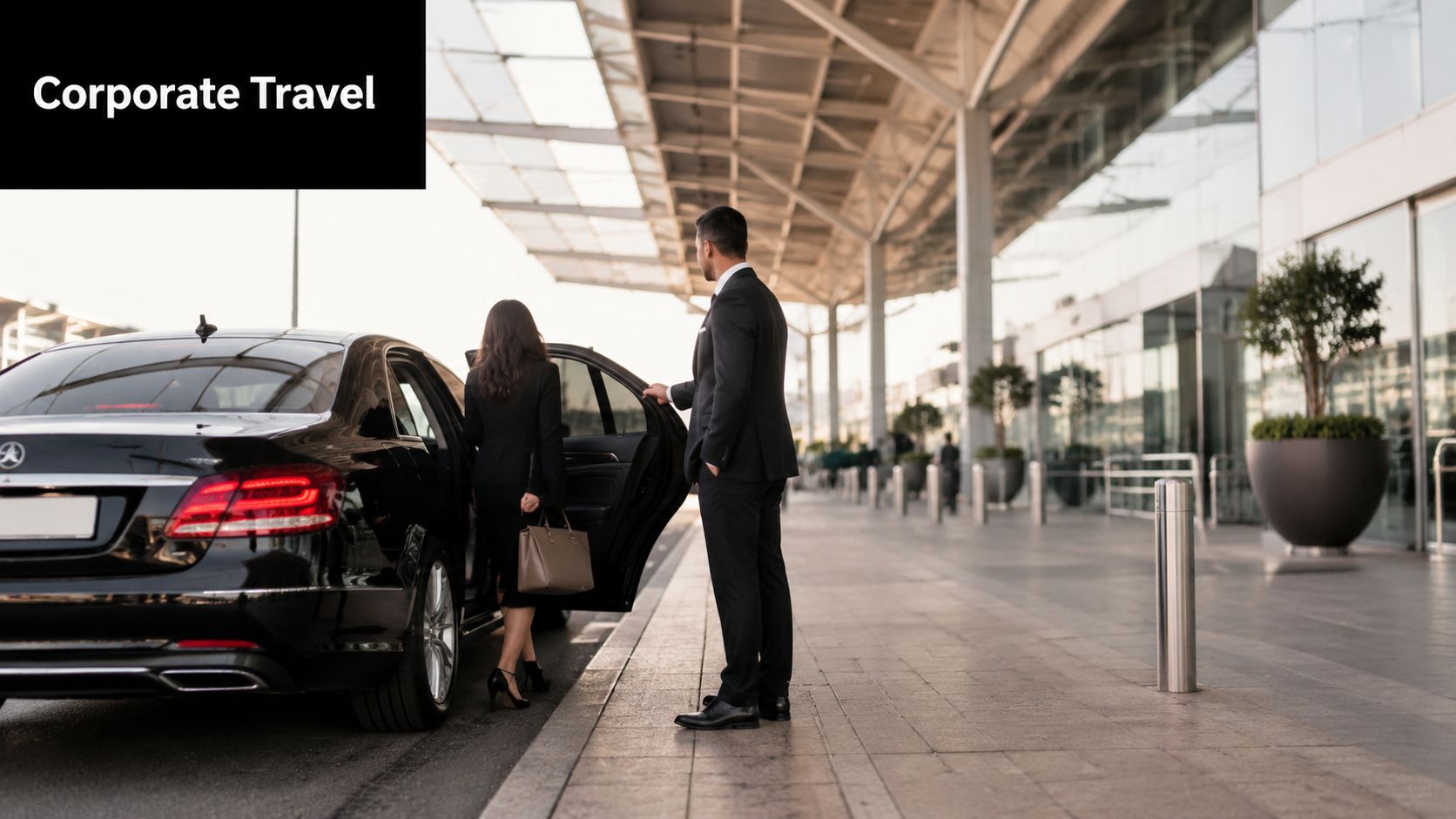
Choose a sedan for solo executives and tight schedules
For one traveler heading from the terminal to a hotel, office, or dinner, the sedan is usually the right call.
It keeps the trip focused. The ride feels more settled at highway speed, which matters for passengers who get tired, distracted, or slightly queasy from body motion on longer transfers. It also gives executives a quieter, more private environment for reviewing notes, answering email, or taking a call without feeling like they are riding in excess space.
A sedan is the better airport and corporate car when the priority is:
- One passenger with light luggage
- A calm ride before a meeting or presentation
- Fast curbside loading in dense business districts
- A discreet arrival that looks polished rather than oversized
For corporate travel, that combination usually wins. The vehicle fits the assignment, and the day runs cleaner.
Choose an SUV when the itinerary is less controlled
An SUV earns its place when the reservation involves extra people, extra bags, or extra friction.
Corporate passengers often feel the difference immediately at pickup. A higher seat makes entry and exit easier for clients in suits, heels, or long coats. That matters at airport curbs, hotel entrances, and conference venues where nobody wants to wrestle with a low seat while holding a laptop bag and carry-on.
Book the SUV when:
- Two or more colleagues are traveling together
- Checked luggage, garment bags, or presentation cases are part of the load
- A client or senior guest will appreciate easier entry and exit
- The vehicle needs to function as staging space between stops
The SUV also handles the messy parts of business travel better. Delayed flights, added bags, last-minute route changes, and multiple pickups are easier to absorb when the cabin and cargo area are not already at their limit.
Here's a useful visual on airport transfer standards and expectations:
My recommendation for corporate bookings
Choose the sedan for one executive, a clean itinerary, and minimal luggage.
Choose the SUV for shared rides, airport baggage, client hosting, or multi-stop schedules.
Status should not drive the booking. Passenger condition and trip logistics should. A corporate car is successful when the rider steps out composed, on time, and ready to work.
Choosing the Right Vehicle for Weddings and Events
A wedding pickup is where the sedan versus SUV choice stops being theoretical. One vehicle has to protect the outfit, keep the schedule intact, and deliver an arrival that looks right in person and in photos.
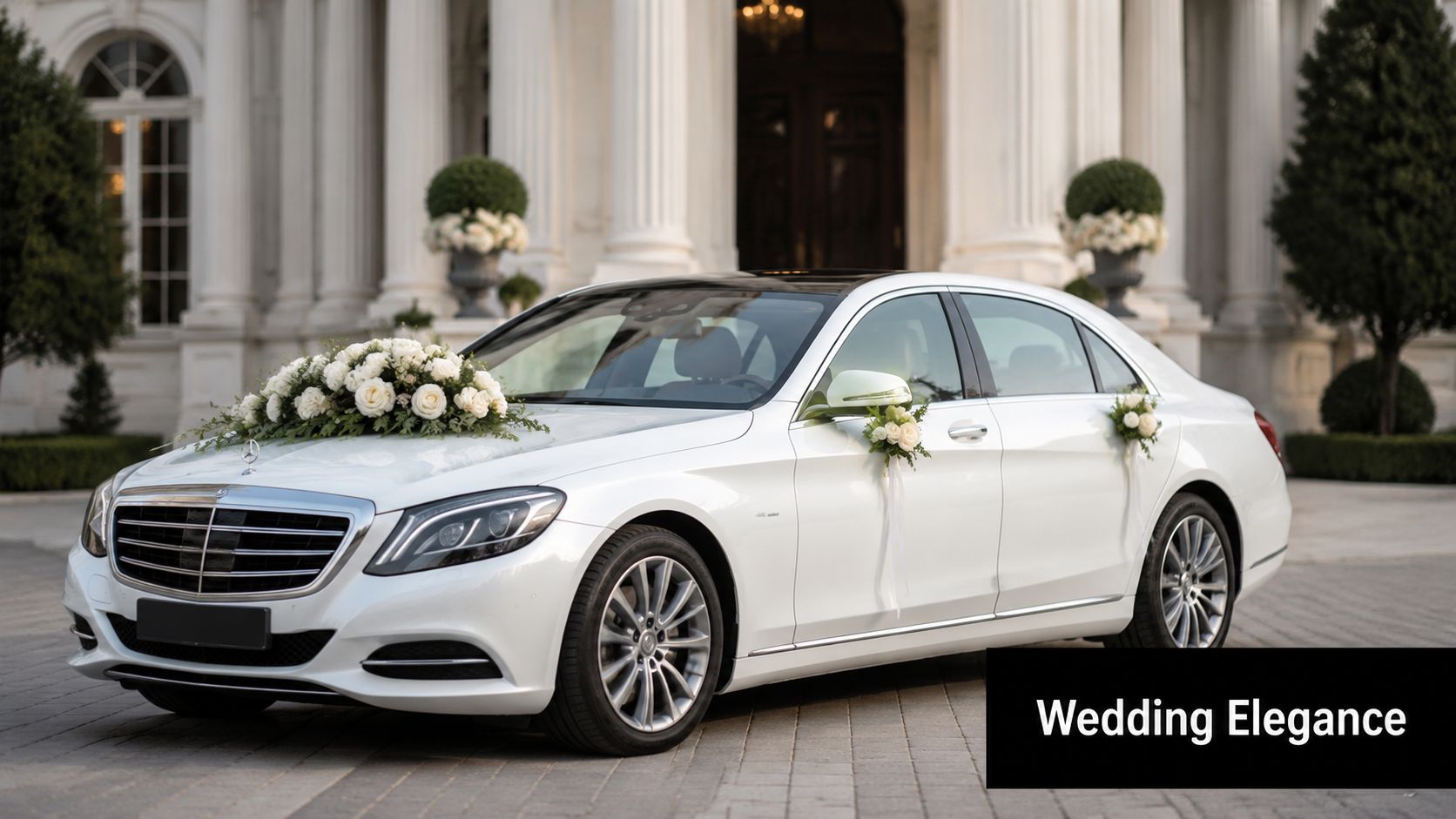
When the sedan is the right event car
For the couple or a single VIP, a luxury sedan is usually the better call. It looks formal without trying too hard, and the lower, more planted ride helps passengers stay composed between the hotel, ceremony, and reception.
That matters more than many planners expect. On faster roads, a sedan usually feels calmer and more settled, which helps with motion sensitivity, nerves, and last-minute makeup checks. If someone needs to arrive looking unruffled, the sedan has a real passenger-comfort advantage.
Choose a sedan when:
- The couple wants a classic, photo-friendly arrival
- One principal passenger or a VIP guest is the priority
- The trip is short, direct, and on paved roads
- Composure, quiet, and presentation matter more than extra cargo room
When the SUV is the smarter wedding move
The SUV is the practical winner for formalwear logistics.
A higher step-in height makes a real difference for guests in gowns, heels, tuxedos, or traditional dress. Passengers can slide in and stand up with less folding, less tugging, and less risk of wrinkling fabric. That is the SUV's best event advantage, especially for older family members, bridal party passengers, and anyone managing a structured outfit.
Space matters too. Garment bags, bouquets, emergency kits, spare shoes, gift bags, and overnight items add up quickly. An SUV handles those extras without turning the cabin into storage.
Safety should not be reduced to one simple winner. As noted earlier, SUVs generally offer a bigger, higher-riding feel, while sedans benefit from a lower center of gravity and more settled cornering. For event bookings, that means choosing based on passenger needs, road conditions, and who has to arrive calm and comfortable.
Choose an SUV when:
- Passengers are wearing formal or restrictive clothing
- Older relatives need easier entry and exit
- You are carrying dresses, garment bags, flowers, or event supplies
- Several family members or bridal party riders are sharing the trip
The strongest event plan usually uses both
For weddings and large formal events, the best setup is often not one vehicle type. It is a split fleet with a clear job for each car.
Use a sedan for the couple or top-tier VIPs who need the best ride quality and the most polished arrival. Use an SUV for family or bridal party transport where easier entry, extra cabin space, and wardrobe protection matter more.
That approach is efficient. It also feels more thoughtful. The people being photographed get the right backdrop, and the people managing dresses, bags, and timing get a vehicle that functions properly.
Your Quick Decision Checklist
If you need the difference between sedan and suv in one minute, use this.
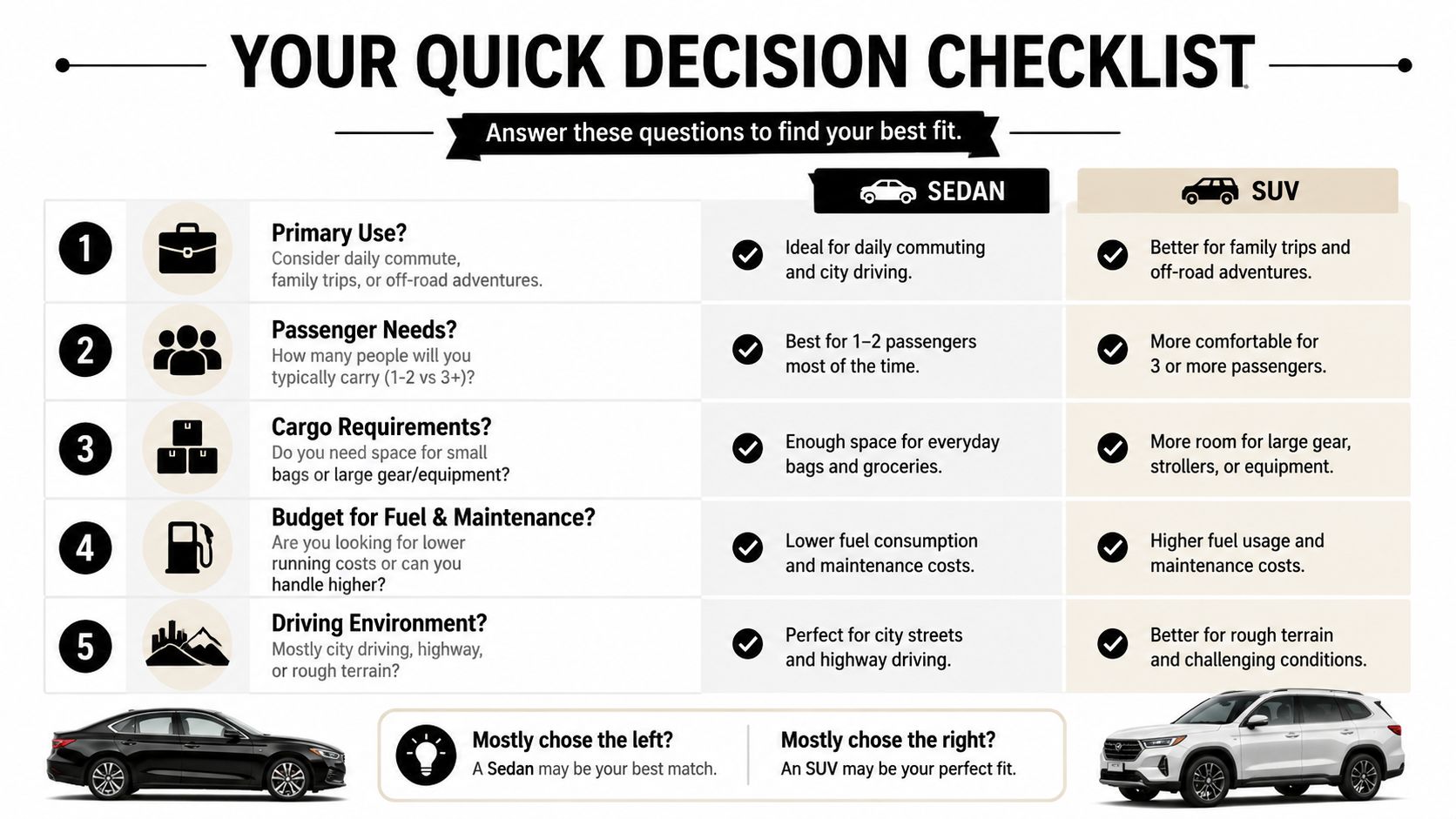
Pick a sedan if these sound like you
- Traveling solo or as a pair and don't need oversized cargo space
- Taking airport or corporate transfers where a calm ride matters more than extra seats
- Wanting the smoothest highway feel for reading, calling, or arriving less fatigued
- Preferring a classic executive look over a larger road presence
Pick an SUV if these are the priority
- Carrying more passengers or coordinating a group arrival
- Bringing luggage, garment bags, presentation materials, or event items
- Needing easier entry and exit for formalwear, heels, or older passengers
- Wanting a higher seating position and a more spacious cabin feel
If you're asking whether you “might need the extra room,” you probably do. If you're asking whether you really need a large vehicle for one person and one bag, you probably don't.
Frequently Asked Questions for Our Clients
A client steps out in a suit during sleet, or arrives after a two-hour highway run feeling either fresh or queasy. That is the sedan versus SUV decision. In luxury and corporate travel, the better vehicle is the one that protects comfort, timing, and presentation.
Which vehicle is better for unpredictable Chicago weather
For snow, slush, and messy curbside conditions, choose the SUV. Clients usually feel more secure with the higher ride height, and it is easier to get in and out without dragging a coat, dress, or trouser hem through wet pavement.
Choose the sedan if the trip is mostly expressway and city streets, and the priority is a calmer ride. In bad weather, vehicle maintenance, tire quality, and chauffeur judgment matter just as much as the body style.
Can a sedan handle airport luggage for business travel
Yes, for one traveler or a couple with normal business luggage. A sedan works well for standard suitcases, briefcases, and a carry-on or two.
Move to an SUV if the reservation includes oversized bags, garment bags, golf clubs, product samples, or event materials. That is usually the point where a sedan stops being efficient and starts becoming a packing exercise.
Which is better for a corporate roadshow with multiple stops
For one executive with a packed meeting schedule, book the sedan. It stays composed through a long day, looks sharp at every arrival, and gives a better environment for calls, reading, or closing your eyes between stops.
Book the SUV for a small team, extra materials, or any itinerary where people are getting in and out repeatedly in formalwear. The higher seat height makes entry and exit easier, which matters more than many clients expect by the third or fourth stop.
Which vehicle is more comfortable for long highway transfers
The sedan usually wins. At highway speed, it feels more planted, with less body movement and less side-to-side sway. That matters for passengers who want to work, read, or avoid the mild motion sickness that often shows up during longer transfers in a taller vehicle.
If you need the extra room, take the SUV and accept the trade-off. If comfort in motion is the priority, take the sedan, as noted earlier.
Are SUVs always the premium choice
No. The premium choice is the right assignment fit.
A luxury sedan is often the stronger corporate vehicle for solo travelers, couples, and airport runs where ride quality matters most. A luxury SUV is the stronger choice for groups, formal events, older passengers, and any trip with bulky luggage or clothing that should not be folded into a tight trunk.
If you want the right vehicle instead of the biggest one, Max's Luxury Rides Inc. can help you match the trip to the proper service, whether you need an executive sedan for a polished airport transfer or a luxury SUV for a group arrival, wedding, or event day with more moving parts.