
From chaos to coordination, that's the difference between an event that feels polished and one that feels improvised. Guests can forgive a packed agenda, but they won't forgive late speakers, missing shuttles, or a curbside pickup plan that leaves everyone guessing. A strong event program does more than list sessions, because it ties timing, arrival flow, accessibility, and departure logistics into one workable plan. That's why the best event program examples in 2026 don't stop at the agenda. They connect every program block to a transportation plan, a vehicle mix, and a day-of communication rhythm that keeps people moving.
The industry makes that level of structure hard to ignore. Event programs are now measured with KPIs like attendance rate, cost per attendee, NPS, session attendance, lead generation, and event ROI, with straightforward formulas used to track them over time. Industry guidance cited by Events Air notes that strong corporate events often target 70 to 85% attendance rates and NPS above 50, while lead-generation goals may aim for 10 to 20% of attendees becoming qualified leads (Events Air event KPI guidance). Bigger market trends tell the same story. The global event industry was valued at about $890 billion in 2020 and is projected to reach roughly $2.19 trillion by 2028, with a 13.48% CAGR (Zippia event industry statistics). The result is simple. A great program is now a business tool, not just a schedule.
1. Corporate Event Transportation Program
A corporate event program works best when it treats transportation as part of the executive experience, not an afterthought. For shareholder meetings, product launches, and off-site retreats, the schedule has to account for airport arrivals, staggered VIP pickups, and the fact that different attendee tiers should not all move the same way. That usually means assigning executive sedans for C-level guests, luxury SUVs for small teams, and Mercedes vans or sprinter limousines for group movement, so the ride matches the role and the timing.
The best programs also build in control points. Send the chauffeur team a final attendee list, arrival windows, and hotel or venue access notes before the event, then assign one dispatcher to handle day-of changes. A short pre-event briefing matters because corporate guests often care more about punctuality and discretion than showmanship.
Practical rule: if the executive calendar is tight, keep separate vehicles for leaders and broader attendee groups. One delayed pickup can ripple through the entire program.
For airport-heavy events, the transportation plan should include buffer time for arrivals and a backup contact for every movement. That's especially useful when the event spans multiple buildings or ends with dinner at a second venue. Corporate programs work when every leg is named, timed, and owned by a person who can respond fast.
2. Wedding and Special Events Package
Wedding transportation has a different job than corporate logistics. It has to feel refined, and it also has to keep the ceremony on schedule. The strongest event program examples for weddings map out bridal party arrivals, guest shuttles, ceremony timing, and the exit sequence in the same document, so nobody is guessing who rides where. For black-tie receptions, destination weekends, and vow renewals, that coordination matters as much as the vehicle choice.
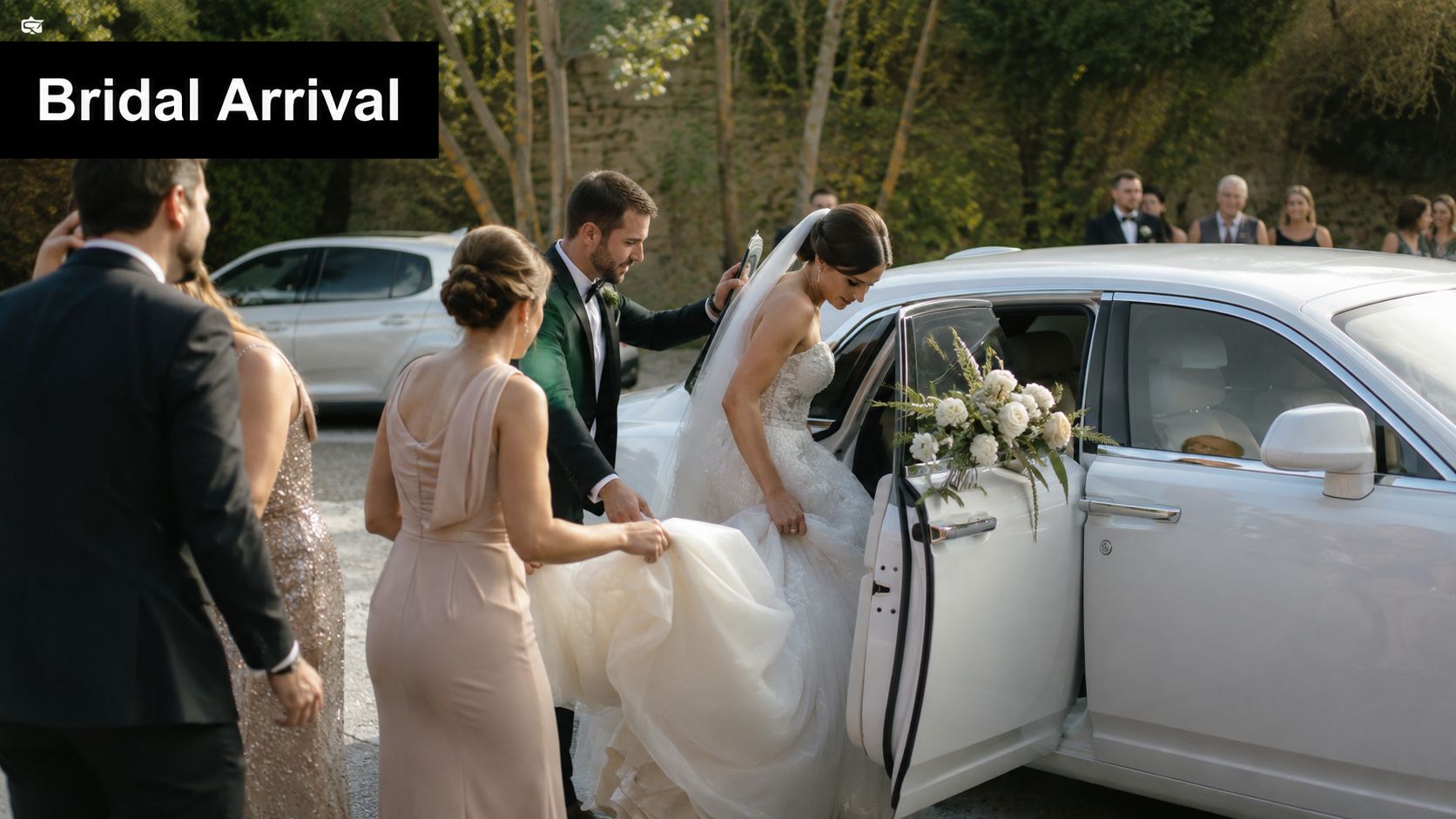
A wedding program works best when transportation is built into the timeline from the start. The planner should own the master schedule, the transportation coordinator should confirm addresses and contact numbers, and the chauffeur team should receive a run sheet that lists the ceremony start, the photo window, and the reception transfer. Stretch limousines still make sense for ceremonial arrivals, but only after curb space and loading time have been checked in advance. For detailed timeline tips from PlanSeats, see their sample wedding itineraries.
What works on wedding day
The strongest runs follow a simple chain of planning. The wedding planner keeps the timing in one place, the transportation coordinator verifies pickup points and hotel notes, and the driver team gets the final sequence before wheels start turning. Guest shuttles work well for larger groups, while luxury SUVs and executive sedans fit smaller wedding parties that need privacy and a cleaner curbside arrival. Stretch limousines still work for a formal entrance, but only when the venue has room for them and the boarding process will not slow the ceremony.
- Book early for destination weddings: Lock the vehicle plan months ahead, because travel-heavy celebrations create more moving parts and less room for last-minute changes.
- Confirm guest counts late: A final guest manifest close to the event helps prevent underbooking and keeps shuttle sizes aligned with the headcount.
- Add comfort, not clutter: Bridal party champagne service and tasteful décor work best when they do not slow loading, boarding, or luggage handling.
- Test the route: A rehearsal run can save the day if the venue has restricted access, multiple entrances, or tight turnaround space.
The strongest wedding programs respect timing first and aesthetics second. Guests remember a graceful arrival, but planners remember whether everyone got from hotel to venue without a scramble.
3. Sports Event and Concert Transportation Program
A packed arena, a stadium lot, and a late-night concert exit all punish vague transportation planning. Game day and show night schedules have to account for parking access, pickup zones, return traffic, and post-event departures before fans start asking staff where to stand. Coach buses and minibuses usually handle group movement better than a loose mix of private cars, especially when the venue is large and arrival windows are tight.
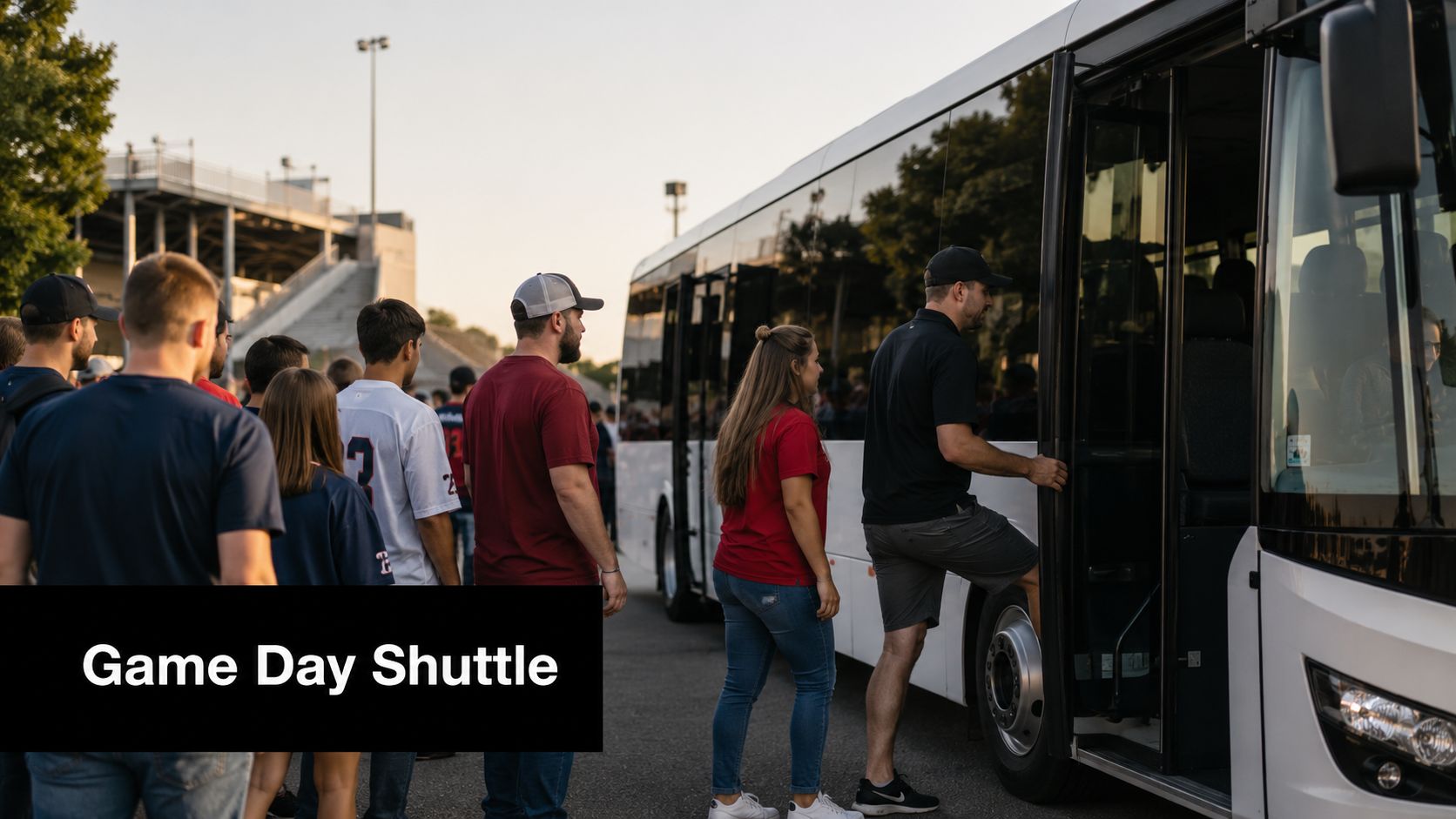
Venue coordination comes first. If the stadium or arena controls parking access, the transportation plan has to fit that system instead of pushing against it. Clear pickup zones, visible signage, and extra dispatchers on event day do more than polished wording in a program booklet. In Chicago, that matters on high-traffic nights near the United Center or Soldier Field, where the wrong curb plan can eat into the whole evening.
A practical sports and concert layout usually includes pre-event pickups so groups arrive together and avoid gate congestion. It also needs post-event buffers so crowds can clear before vehicles stage for departure.
Premium service belongs in the mix too. Luxury SUVs work well for small VIP groups or upgraded seating packages, while mini coaches keep larger parties together without splitting them across multiple cars. Live request handling through a mobile app or dispatch line helps when attendees leave at different times, which is common after a final whistle or an encore.
For Vanta Sports planning advice, visit https://www.vantasports.ai/blog/your-guide-to-unforgettable-sports-event-planning.
The transportation piece should stay visible, not buried in small print. Fans and guests need to know exactly where to go when the final whistle ends or the encore wraps up.
4. Airport Transfer and Ground Transportation Protocol
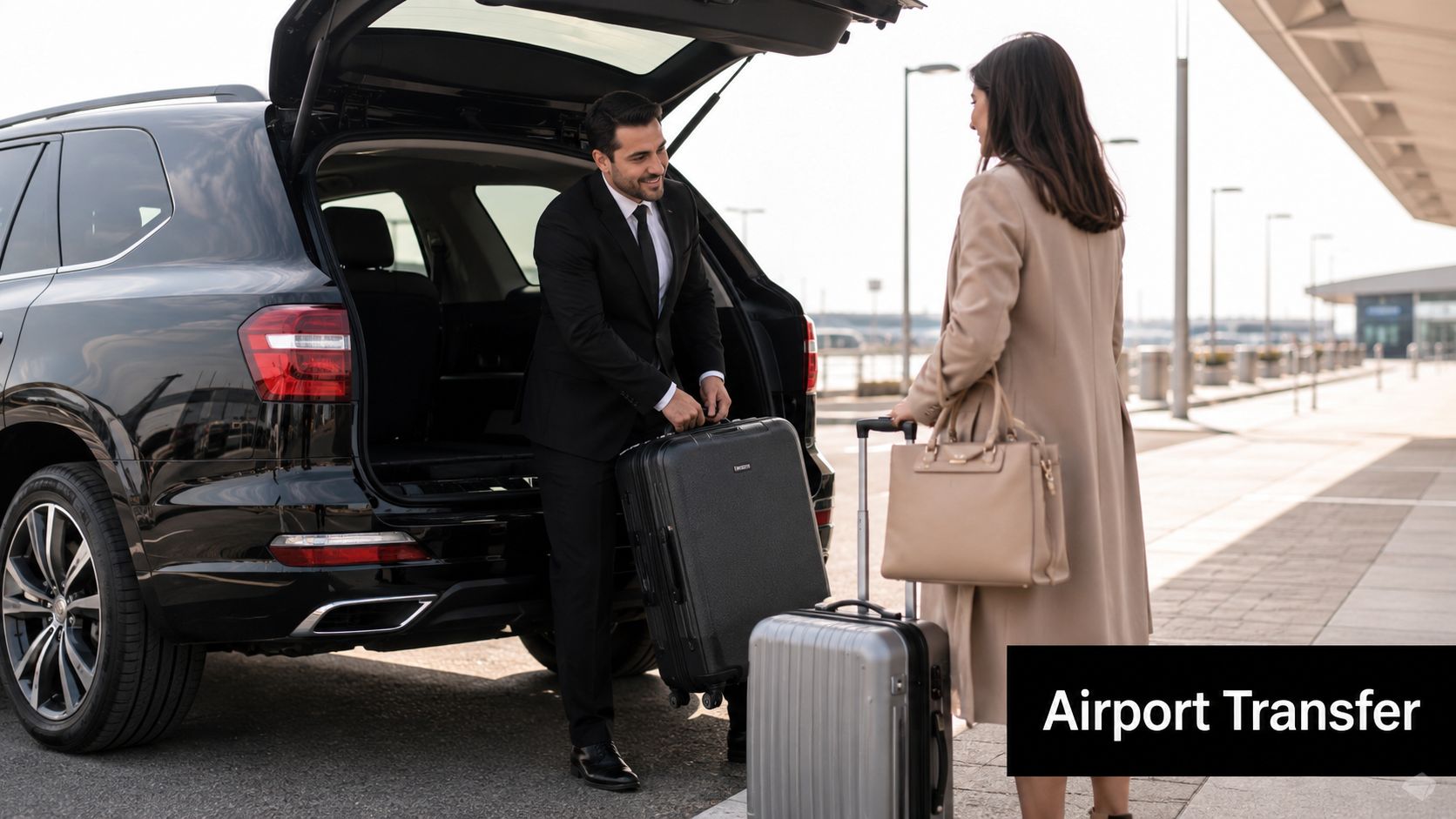
Airport transfer programs are only as good as their timing discipline. For executive airport transfers, family arrivals, and international business travel, the schedule should be built around live flight status, not the original itinerary alone. Flight tracking, meet-and-greet service, and clear luggage instructions turn a stressful arrival into a controlled handoff.
The vehicle choice matters. Luxury sedans fit most business travelers well because they keep the transfer quiet and efficient. Luxury SUVs give families and small teams more space for bags, and they're often the better choice when an arrival includes multiple suitcases or an unpredictable pickup window. For group transfers, a Mercedes van or mini coach keeps everybody together and avoids splitting the party across multiple cars.
A good airport protocol starts before landing:
- Collect flight details early: Request flight information about 48 hours before arrival.
- Track in real time: Adjust for delays without forcing the passenger to call twice.
- Stage the driver ahead of landing: Positioning the chauffeur before arrival gives you a cushion if baggage claim moves slowly.
- Confirm the destination twice: One address check before dispatch and one before pickup cuts down on wrong-turn errors.
The strongest airport programs make the passenger feel expected. The weakest ones make the passenger do the work.
For Chicago O'Hare, Midway, and FBO transfers, the operational standard should be the same. The guest should know exactly who is meeting them, where to meet, and how the vehicle will handle the final leg.
5. VIP and Executive Travel Management System
VIP travel requires more than a premium car. It requires discretion, predictability, and the kind of continuity that makes a repeat traveler feel known without feeling exposed. For board meetings, investor visits, and high-profile negotiations, the transportation schedule should be built around privacy, route flexibility, and chauffeur consistency.
The best VIP programs keep preference profiles on file. That might include favorite pickup points, temperature preferences, preferred vehicle type, or the request to use the same chauffeur whenever possible. Those details are small individually, but together they create a travel experience that feels controlled instead of transactional. For dignitaries or politically sensitive moves, the routing plan should be shared only with the people who need it.
A strong VIP framework usually depends on three habits. First, confirm every itinerary change with one direct contact, not a long email chain. Second, check the vehicle before every assignment, because interior condition and presentation matter at this level. Third, offer route alternatives so the passenger can choose between speed and discretion depending on the day.
Discretion is part of the service. If the guest notices the transportation more than once, the program is probably too noisy.
This type of program works best when the operator thinks like a personal logistics desk. The goal isn't just to arrive. The goal is to arrive without friction, delay, or unnecessary attention.
6. Multi-Day Event and Conference Logistics Program
Multi-day conferences need transportation that can breathe with the schedule. A single shuttle plan rarely survives a 3-day or 5-day event unless it includes daily updates, hotel coordination, and a person on the ground who can solve problems before attendees feel them. Medical conferences, trade shows, technology summits, and legal conventions all benefit from a transportation calendar that mirrors the event agenda day by day.
The clearest programs use shuttle loops for routine movement and reserve premium vehicles for keynote speakers or special guests. That keeps the budget efficient without making the event feel cheap. It also helps to create a printed transportation guide for welcome packets, because not every attendee will check a digital update while rushing from a breakout session.
Daily control points that matter
- Morning briefing: Review pickups, delays, and any room block changes.
- Midday check-in: Reconfirm speaker returns and off-site dinner transfers.
- Evening debrief: Capture issues before they repeat the next day.
This is also where venue communication becomes critical. If one building entrance closes early or a hotel changes its valet lane, the transportation team needs to know before the first shuttle rolls. A 15-minute buffer between pickups gives dispatchers room to absorb small delays without collapsing the rest of the schedule.
Multi-day programs work because they reduce uncertainty. Attendees focus on content, and planners focus on flow.
7. Group Tour and Family Event Package
Family reunions, alumni outings, and church trips ask a different question than corporate events. They don't just need a vehicle, they need a comfortable moving space where people of different ages can stay together. That's why minibuses and mini coaches are usually the best fit. They give you room for luggage, mobility needs, and the inevitable extra bag of snacks or strollers that shows up at the last minute.
The transportation program should start with the passenger list, not the route. If there are grandparents, children, or guests with mobility limitations, those details need to be known before the vehicle assignment is finalized. Bathroom stops matter on longer routes, and so does the tone of the driver. Group outings run smoother when the chauffeur understands how to manage mixed-age conversation, loading speed, and frequent head counts.
A practical family or tour package should include:
- Passenger list review: Collect names ahead of time so boarding is organized.
- Mobility notes: Flag accessibility needs early so vehicle selection is appropriate.
- Child comfort planning: Keep entertainment and snacks available for longer rides.
- Route pacing: Add rest stops on drives that stretch past a couple of hours.
The best programs avoid overcomplication. Families want reliability, not a complicated itinerary they have to decode in the parking lot. When everyone boards together and arrives together, the event already feels more successful.
8. Destination Wedding and Resort Event Transportation
A resort wedding can look effortless to guests while the transportation plan is working hard behind the scenes. Airport pickups, resort shuttles, rehearsal dinner transfers, and excursion runs all need to fit together across several days, and each leg has to match the tone of the event. The schedule has to line up with the resort, local drivers, and the wedding planner so guests experience one coordinated plan instead of a pile of separate rides.
The strongest destination programs start with a shared itinerary and a backup for the parts that shift. Guests should get transportation details in the welcome packet, including pickup windows, meeting points, and the person to contact if a flight changes. If the resort handles some transfers and an outside provider handles the rest, the two teams need clear handoff times so nobody is waiting at the curb.
Guest-facing communication matters as much as the vehicle assignment. A simple note that explains where to meet, what time to be ready, and which transfer covers each event keeps the trip easy to follow, especially for travelers who are arriving from different cities or on different flights. For planners who need a resort-level service model, Solana EV resort transport options are a useful reference point for matching wedding-day movement with property logistics.
Luxury vehicles still have a place here, especially for ceremony arrivals and departure moments. A resort wedding may use shuttles for guest movement, then switch to sedans or SUVs for the couple's arrival and late-night exit. That approach keeps the event polished while avoiding oversized vehicles for every transfer.
Flight delays, weather changes, and guest preferences show up quickly at destination events. The program has to absorb those shifts without creating confusion at the resort desk or at the venue entrance. For Caribbean, Mexican, Hawaiian, or European events, the strongest transportation plan is the one that keeps guests informed and cuts down on decisions they do not need to make.
9. Milestone Celebration and Special Occasion Program
Milestone celebrations need transportation that feels personal. A 50th birthday, retirement party, graduation, or bar or bat mitzvah should have a vehicle plan that supports the mood of the day, whether that means a stylish arrival, a family shuttle, or a surprise pickup for the guest of honor. The best programs use the transportation element as part of the celebration rather than treating it like a background task.
Timing still leads the way. If the venue has a narrow arrival window or the family wants a photo stop before dinner, the vehicle schedule should make room for that. It also helps to confirm guest names and contact details early, because milestone events often involve relatives who are not in the same group chat and may need extra direction.
The strongest programs think about memory as much as movement. A themed vehicle choice can reinforce the event tone, and a well-timed arrival creates a moment people remember. That works best when the car is clean, the chauffeur is briefed, and the route has been checked against the venue's loading rules.
For surprise celebrations, discretion becomes part of the planning. If the guest of honor should not know the destination, the communication chain has to stay tight. One careless text can undo the whole reveal.
Milestone transportation works when it feels effortless to the family and invisible to the rest of the room.
10. Integrated Event Planning and Day-of Coordination System
The most effective event program examples now behave like command centers. They pull transportation, venue timing, stakeholder updates, and contingency planning into one operating system, so the event team can react in real time instead of switching between texts, spreadsheets, and guesswork. That matters for large corporate conferences, multi-venue festivals, sports operations, and wedding weekends where several moving parts can break at once.
A strong integration plan starts well before event day. Staff need training on the platform, the chain of command has to be clear, and backup communication channels should be ready before the first guest arrives. If the software connects to registration or agenda updates, it becomes easier to adjust rides when a session ends early or a keynote runs long.
The practical benefit is speed. Dispatch, venue staff, planners, and chauffeurs all work from the same picture, which cuts down on repeated calls and conflicting instructions. The system also creates a useful record after the event, so future transportation plans can be improved instead of rebuilt from scratch.
What a real command structure needs
- One owner for the day: A single person should make final calls on transport changes.
- Live monitoring: Keep an eye on vehicle movement throughout event day.
- Fallback options: Have backup vehicles and secondary contact methods ready.
- Post-event review: Capture delays, bottlenecks, and guest feedback before they fade.
This is the cleanest way to move from planning to execution. The event feels organized because the logistics are organized.
Top 10 Event Program Comparison
| Program | Complexity 🔄 | Resources ⚡ | Expected Outcomes 📊 | Ideal Use Cases 💡 | Key Advantages ⭐ |
|---|---|---|---|---|---|
| Corporate Event Transportation Program | High, multi-vehicle & real-time coordination 🔄 | Extensive fleet, dispatch staff, GPS/ops platform ⚡ | Seamless arrivals/departures; higher attendee satisfaction 📊 | Large corporate meetings, product launches, conferences 💡 | Centralized logistics, VIP prioritization, 24/7 adjustments ⭐ |
| Wedding and Special Events Package | Medium, timeline-sensitive, ceremonial timing 🔄 | Luxury vehicles, chauffeurs, decor options, planning staff ⚡ | Memorable arrivals; reduced day-of stress; photo-ready moments 📊 | Weddings, anniversaries, bridal parties, destination ceremonies 💡 | Customizable themes, coordinated bridal logistics, elegant presentation ⭐ |
| Sports Event and Concert Transportation Program | High, mass-movement coordination, venue integration 🔄 | Coach buses, minibuses, large dispatch team, venue liaisons ⚡ | Efficient crowd flow; reduced parking congestion; higher satisfaction 📊 | Stadium games, concerts, multi-day festivals, playoff events 💡 | Scalable capacity, queue/parking management, fan-focused communication ⭐ |
| Airport Transfer and Ground Transportation Protocol | Medium, flight-tracking + meet-and-greet logistics 🔄 | Sedans/SUVs/Sprinters, flight APIs, meet-and-greet staff, luggage handling ⚡ | Predictable transfers; luggage assistance; reliable first/last mile 📊 | Executive airport transfers, group arrivals, FBO/private terminal pickups 💡 | Flight-aware pickups, baggage service, 24/7 availability ⭐ |
| VIP and Executive Travel Management System | Medium-High, discretion and security needs 🔄 | Premium vehicles, vetted chauffeurs, route optimization, confidentiality tools ⚡ | Privacy, time optimization, elevated executive experience 📊 | C-suite travel, dignitary transport, high-profile meetings 💡 | Personalized service, enhanced security/privacy, consistent executive standards ⭐ |
| Multi-Day Event and Conference Logistics Program | High, ongoing multi-venue scheduling & staff rotation 🔄 | Shuttles, hubs, daily briefings, dedicated coordinators, vehicle maintenance ⚡ | Streamlined multi-day movement; efficient vehicle utilization 📊 | Multi-day conferences, trade shows, conventions, summits 💡 | Day-by-day coordination, hotel integration, operational consistency ⭐ |
| Group Tour and Family Event Package | Low-Medium, accessibility & multi-gen needs 🔄 | Minibuses/mini-coaches, child seats, accessibility features, group escort ⚡ | Safe, comfortable travel for all ages; reduced family logistics stress 📊 | Family reunions, organized tours, alumni trips, community outings 💡 | Accessibility support, family-focused amenities, flexible seating ⭐ |
| Destination Wedding and Resort Event Transportation | Very High, cross-border & multi-day coordination 🔄 | Full fleet access, local partners, concierge coordination, backup vehicles ⚡ | Seamless guest transfers across airport/resort/excursions 📊 | Destination weddings, resort events, multi-day guest itineraries 💡 | End-to-end coverage, local coordination, high-touch concierge service ⭐ |
| Milestone Celebration and Special Occasion Program | Medium, themed customization and timing precision 🔄 | Specialty vehicles, decoration options, chauffeur services ⚡ | Personalized memorable experiences; photo-worthy moments 📊 | Anniversaries, milestone birthdays, graduations, retirement events 💡 | Themed customization, celebration enhancements, stress-free logistics ⭐ |
| Integrated Event Planning and Day-of Coordination System | Very High, system integration, real-time command center 🔄 | Event software, mobile apps, trained ops staff, ongoing maintenance ⚡ | Centralized control, reduced errors, actionable post-event analytics 📊 | Large multi-venue events, festivals, conference weekends, concert series 💡 | Full transparency, contingency planning, data-driven optimization ⭐ |
Your Blueprint for Flawless Event Execution
These event program examples make one thing clear, a successful event isn't built from the agenda alone. It's built from the relationship between timing, guest movement, venue access, and the vehicles that make each transition possible. When transportation is baked into the program from the start, the attendee experience becomes smoother, the staff workload drops, and the event is easier to measure with real KPIs like attendance, engagement, and post-event feedback.
The trade-off is simple. Programs that look polished on paper can still fail if the arrival plan is vague, the pickup zones are unclear, or the departure schedule ignores crowd flow. The strongest event planners know that the schedule and the shuttle plan have to work together, especially for corporate functions, weddings, concerts, destination events, and multi-day conferences. That's where the program shifts from being descriptive to operational.
A transportation-first mindset also makes the rest of the event easier to manage. Guests arrive calmer, vendors know where to stage, speakers get where they need to be, and planners spend less time chasing missing details. In practice, that's what separates a decent event from one people trust you to repeat.
If you're building a corporate off-site, wedding weekend, airport transfer plan, or multi-venue event, the next step is to map every guest journey from pickup to drop-off. Max's Luxury Rides Inc. can help you turn those moving parts into a dependable transportation plan with the right vehicle mix, professional chauffeurs, and day-of coordination that fits the program you're building. Visit Max's Luxury Rides Inc. to start planning transportation that supports your event instead of complicating it.
Max's Luxury Rides Inc. provides reliable, worry-free transportation for airport transfers, corporate travel, special occasions, and event shuttling. If you're turning an event program into a real arrival and departure plan, their fleet and chauffeur team can help you match the right vehicle to the right moment. Visit Max's Luxury Rides Inc. to explore service options and build a transportation plan that keeps your event moving on time.