
Before you even think about tasting menus or scouting venues, you have to lay the groundwork. A successful corporate event isn't just a party—it's a strategic investment. Getting the foundation right from the start is the only way to ensure you see a real return on that investment.
Establishing Your Event Foundation
Jumping straight into logistics without a clear strategy is a classic rookie mistake. It’s like trying to build a house without a blueprint. You might end up with four walls and a roof, but it probably won’t be the house you needed or wanted. A great event is purpose-built to achieve very specific business goals.
And it's big business for a reason. The global corporate events industry was valued at a staggering $736.8 billion in 2021 and is on track to hit $2.5 trillion by 2035. This isn't just frivolous spending; it's a reflection of the tangible value that well-run events deliver. With 74% of event marketers planning to increase their budgets in 2025, the pressure is on to create experiences that truly count. You can dive deeper into these event marketing trends and statistics on Bizzabo.
To give you a clearer picture of what's involved, let's break down the core components of event planning.
Core Pillars of Corporate Event Planning
This table outlines the essential stages every event planner navigates, from initial concept to post-event analysis.
| Pillar | Key Objective | Primary Tasks |
|---|---|---|
| Strategy & Foundation | To define the event's purpose and scope. | Set clear objectives, establish a budget, and assemble the planning team. |
| Venue & Vendors | To secure the physical space and necessary partners. | Research and book the venue, source caterers, A/V technicians, and other suppliers. |
| Logistics & Execution | To manage the operational details for a seamless experience. | Create a timeline, coordinate transportation, manage registration, and plan the agenda. |
| Marketing & Promotion | To drive attendance and build excitement. | Develop a communications plan, create marketing materials, and engage with attendees. |
| Post-Event Follow-Up | To measure success and nurture relationships. | Send thank-you notes, analyze survey feedback, report on KPIs, and follow up on leads. |
Each pillar builds on the last, creating a comprehensive framework for success.
Define Your Purpose And Objectives
First things first: why are you even having this event? If the answer is, “Because we always do,” you need to dig deeper. The purpose has to be tied directly to a larger business goal. Are you trying to fill the sales pipeline, celebrate a product launch, or stop your top talent from leaving? Each of those goals demands a wildly different event.
Once you know your "why," you need to get specific with your objectives. "Increasing brand awareness" is a nice sentiment, but it's impossible to measure. You need tangible targets.
- Lead Generation: Instead of just hoping for leads, aim to generate 150 qualified leads with a projected pipeline value of $500,000.
- Product Launch: Your goal could be to secure media coverage in five key industry publications and hit 1,000 pre-orders.
- Employee Appreciation: Target a 90% or higher satisfaction score on post-event employee surveys.
These are the KPIs (Key Performance Indicators) that will not only steer your planning but also prove the event's value to the C-suite when all is said and done.
Assemble Your Core Planning Team
Trust me, no one pulls off a great event alone. You need a dedicated planning committee to spread the load and bring different perspectives to the table. Pull in people from various departments—marketing, sales, HR, IT—to get a more rounded view of what success looks like.
Give everyone a clear role. One person owns the budget, another handles vendor contracts, and someone else is in charge of all marketing communications. This isn't just about delegating; it's about ownership. When one person is accountable for a specific area, things don't fall through the cracks. Regular check-in meetings are non-negotiable to keep everyone in sync.
One of the biggest mistakes I see is when event planning is tacked onto someone's already-full plate. For a high-stakes event, this is a full-time job. If you don't have the bandwidth internally, it's often smarter to bring in a professional event management agency.
Create A Realistic And Detailed Budget
Your budget is the single most important document you'll create. It's the roadmap for every decision you make, from the venue down to the canapés. Start by brainstorming every conceivable expense—don't leave anything out.
Your list will likely include major categories like:
- Venue Rental: The cost for the space itself.
- Food and Beverage: Catering, drinks, taxes, and gratuity.
- A/V and Technology: Mics, projectors, Wi-Fi, and maybe an event app.
- Speakers and Entertainment: Their fees plus travel and lodging.
- Marketing and Promotion: Social media ads, email campaigns, and signage.
- Staffing: On-site coordinators, security, and registration staff.
Here’s a pro tip: always, always build in a contingency fund of 10-15%. Something will go wrong. A speaker will demand a last-minute flight change, a banner will need reprinting, or you'll need extra security. That buffer is your safety net, preventing a small surprise from turning into a full-blown financial crisis.
Navigating Budgets and Vendor Negotiations
Once you've locked in your event's core purpose, it’s time to tackle the money. A well-managed budget is the single most important tool in your arsenal; it’s the guardrail that keeps your vision from spiraling into financial chaos. Every decision you make from here on out, from the venue to the caterer, hinges on it.
This isn't just a hypothetical problem—it's the biggest headache for most planners. A staggering 40% of professionals point to budget management as their top challenge. The pressure is mounting, too, with 65% of planners struggling with high A/V expenses and a massive 75% fighting to control food and beverage costs. You can dig into more of these event industry statistics at Remo.co. Knowing where others stumble is the first step to staying on your feet.
Uncovering Those Hidden Event Costs
One of the classic rookie mistakes is budgeting only for the big, obvious expenses. The real danger isn't the venue fee; it's the dozens of smaller, overlooked costs that can quietly torpedo your entire financial plan. You have to learn to see beyond the initial quote and anticipate the charges hiding in the fine print.
I’ve seen these pop up time and time again. Be on the lookout for:
- Taxes and Gratuity: That catering quote looks great until you realize the final bill will have an extra 20-30% tacked on for taxes and service fees. It’s almost never included upfront.
- A/V "Gotchas": The venue might offer a projector, but what about the screen? The extension cords? A dedicated tech to make sure it actually works? Those are almost always extra.
- Wi-Fi Upcharges: Sure, basic Wi-Fi might be "included," but if you need a reliable, high-speed connection for hundreds of attendees streaming content, get ready for a hefty premium.
- The Cost of Running Late: If your event goes even 30 minutes over, you could be hit with overtime fees for venue staff, security, and every vendor on site. These rates are not cheap.
- Permits and Insurance: Depending on your event's location and activities, you might be on the hook for special permits or extra liability insurance that the venue's policy doesn't cover.
My advice? Always ask for a fully itemized, "all-in" quote before you sign a single document. This simple request forces transparency and saves you from those heart-stopping financial surprises down the road.
Mastering the Art of Vendor Negotiation
Negotiating isn't about strong-arming someone into a lower price. It's about building a partnership and finding a solution that works for everyone. Remember, vendors want your business, and most are willing to be flexible if you approach the conversation as a collaborator, not an opponent.
"Your goal in a negotiation is to create a win-win scenario. A vendor who feels valued and respected is more likely to go the extra mile for you on event day. Treat them like a partner, not an adversary."
Before you even pick up the phone, do your homework. Get at least three detailed quotes for every major service—catering, A/V, photography. This gives you a realistic view of the market rate and provides some serious leverage. When you start talking, don’t just fixate on the bottom-line number; look for other ways to find value.
For instance, if a caterer’s per-head price is firm, maybe they can waive the cake-cutting fee or throw in a complimentary coffee station. If a venue won't budge on the rental fee, ask if they can include free parking or waive the charge for using their in-house A/V gear. It all adds up.
The Power of Great Vendor Relationships
Honestly, one of the smartest long-term strategies is to build a network of trusted, reliable vendors. A vendor who knows you and has worked with you before is far more likely to give you better rates, add in a few extras, and be a lifesaver when you have a last-minute crisis.
Think of it as an investment in your own success. Pay your invoices on time, communicate clearly and respectfully, and leave a glowing review when they knock it out of the park. That goodwill pays for itself tenfold. When you have a go-to list of proven partners, you streamline your entire process, cut down on stress, and deliver a consistently excellent experience every single time. That network is your secret weapon.
Now that your budget is locked in, it’s time to shift from the numbers to the people. A truly great corporate event isn't just about smooth logistics; it's measured by the experience it creates for every single person who walks through the door. This is what turns a forgettable meeting into an inspiring gathering that actually strengthens relationships and elevates your brand.
The corporate events industry is thriving for a reason. People crave connection, and the data backs it up. A solid 59% of attendees prefer in-person events over any virtual or hybrid format. It’s that power of a shared physical space that makes all the difference. In fact, after attending a live event, two-thirds of people report a stronger, more positive perception of the brand. If you want to dive deeper, there are some great event marketing statistics on Bizzabo worth exploring.
The best events today blend seamless technology with thoughtful, human-centric design. This infographic breaks down how all the different touchpoints come together to shape that journey.
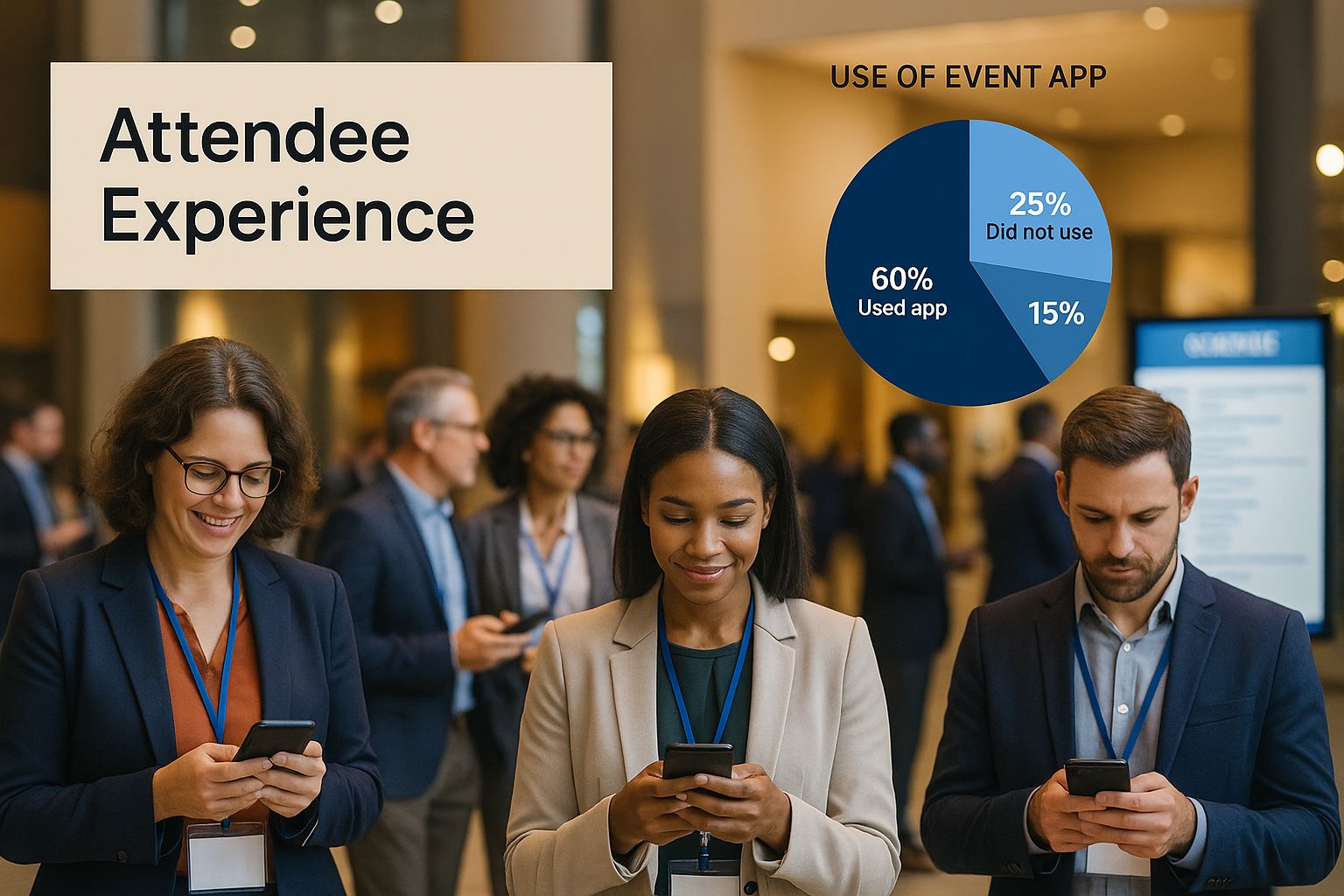
As you can see, keeping attendees engaged from their first interaction to the final farewell requires a mix of smart tools and genuine hospitality.
Crafting a Compelling Theme and Agenda
Your event's theme is so much more than a catchy phrase or a color palette. It’s the central story that connects every single element, from your marketing emails to the speaker lineup and the overall vibe in the room. A product launch might use a theme like "Innovate and Elevate" to signal forward momentum. For an internal awards ceremony, "Celebrating Our Champions" feels personal, motivating, and genuine.
With your theme in place, you can build an agenda that balances substance with connection. Let’s be honest, nobody enjoys being talked at for eight hours straight. A great agenda has a rhythm. It should flow naturally between high-energy keynotes, smaller interactive breakouts, and—crucially—plenty of time for networking.
A packed agenda isn't an effective agenda. White space is your friend. Build in unstructured time for attendees to grab coffee, check emails, or have spontaneous conversations. Often, the most valuable connections happen in these moments.
Think about your audience's energy, too. It’s usually best to schedule the more intense, brain-heavy sessions for the morning. Save the lighter, more dynamic content for that classic post-lunch slump when you need to re-energize the room.
Choosing The Perfect Venue
The venue is where your event comes to life. It's the physical backdrop for your theme and a massive part of the attendee experience. When you're scouting locations, it's easy to get fixated on capacity and cost, but the real magic is in the details.
A venue sets the tone before a single speaker takes the stage. The checklist below covers the big-ticket items and the subtle-but-critical details that can make or break an event.
Venue Selection Checklist
| Criteria | What to Look For | Pro Tip |
|---|---|---|
| Atmosphere & Vibe | Does the space match your theme? A historic theater has a totally different feel than a sleek, modern hotel ballroom. | Visit the venue at the same time of day as your event to check the natural lighting and ambient noise. |
| Tech Infrastructure | Is the Wi-Fi robust enough for hundreds of users? Check for ample power outlets, A/V hookups, and cell service. | Ask for the Wi-Fi password during your site visit and run a speed test on your phone. Don't take their word for it. |
| Accessibility | How easy is it to get to? Consider public transit, ride-sharing drop-off points, and parking availability and cost. | Walk the path from the entrance to your event space. Are there stairs, long hallways, or other hurdles for guests? |
| Flexibility | Can you bring in your own A/V team and caterers, or are you locked into their "preferred" (and often pricier) vendors? | Get a list of all restrictions in writing. Surprises on this front are always expensive. |
Choosing the right space is about finding a partner in your event's success, not just renting four walls.
Streamlining Registration and Engagement
Believe it or not, the attendee experience starts the moment someone decides to sign up. A clunky, confusing registration form is the first impression you make, and a bad one can lead to people giving up before they even finish. Use a modern event management platform like Cvent or Bizzabo to create a clean, mobile-friendly page that takes just a few minutes to complete.
That smooth, tech-forward feeling needs to continue on-site. Nothing kills the initial buzz like a long, stagnant check-in line. QR code scanning or mobile app check-ins are standard now for a reason—they get people inside and mingling in seconds.
To keep that energy going, a dedicated event app is a game-changer. It becomes the central command for your attendees, offering things like:
- Personalized Agendas: Let guests build their own schedule and focus on what matters most to them.
- Live Q&A and Polling: Get people involved during sessions instead of just passively listening.
- Networking Tools: Help attendees find and connect with others who have similar interests or job titles.
- Push Notifications: Send out quick reminders about the next session or announce last-minute room changes.
By meticulously planning every touchpoint—from the theme to the tech—you’re not just hosting a corporate gathering. You’re creating a memorable and valuable experience that people will be talking about long after it’s over.
Bringing It All Together: Logistics and Marketing
You’ve got your strategy nailed down and a budget signed off. Now the real work begins. This is where you pivot to the two engines that will drive your event's success: a marketing plan that puts people in seats and a logistics plan that ensures they have an incredible experience.
A brilliant event with poor attendance is just a well-decorated empty room. On the flip side, a sold-out event with chaotic logistics can do more harm to your brand than good. It's all about finding that perfect harmony between promotion and execution.
Don't underestimate the marketing lift required. In fact, marketing often consumes the largest share of corporate event budgets, sometimes even more than the venue or catering. There's a good reason for this—even with the rise of virtual options, a recent comprehensive event marketing report found that 59% of attendees still crave the energy of a live, in-person gathering. Your marketing needs to capture that excitement and make your event a can't-miss affair.
Crafting a Marketing Campaign That Builds Buzz
The days of a single "email blast and pray" strategy are long gone. Today's event promotion is a multi-channel marathon, not a sprint. The idea is to build a narrative around your event, creating a steady drumbeat of excitement that gets louder as the date gets closer.
I've found a phased approach works best. You start broad and get more specific and urgent over time.
- 12-16 Weeks Out: This is your "Save the Date" moment. Get the basic landing page live and send out an initial announcement to your core audience.
- 8-12 Weeks Out: Start teasing content on social media, especially LinkedIn. Announce a keynote speaker, hint at a major theme, or share some early-bird registration details.
- 4-8 Weeks Out: Now it's time to ramp up. Your email marketing should kick into high gear with agenda details, speaker spotlights, and a strong push for early-bird deadlines.
- 1-4 Weeks Out: Shift into urgency mode. "Last chance" reminders, behind-the-scenes glimpses of the setup, and final logistical details help seal the deal for any procrastinators.
Mastering the On-the-Ground Experience
While your marketing team is filling the pipeline, your operations team needs to be obsessed with the details of the day itself. A truly great event feels effortless to an attendee, but we know that feeling is the result of relentless, behind-the-scenes planning.
The mark of a truly professional event planner isn't how they handle success, but how they handle the inevitable hiccup. A detailed logistics plan is your playbook for troubleshooting in real time without letting attendees see any of the chaos.
This is where your master production schedule becomes your bible. It's a minute-by-minute breakdown of everything, from the first vendor arrival to the final truck loading out. It needs to have contact info for everyone—the catering lead, the A/V tech, your keynote's assistant, everyone.
Your Final Logistics Checklist
As you head into the final weeks, a solid checklist is the only way to keep your sanity and ensure nothing falls through the cracks. Here’s what should be on it.
- Vendor Lock-In: Call every single vendor—catering, A/V, security, rentals—and confirm their arrival times, setup needs, and final payment details. Get it in writing.
- Speaker & VIP Handling: Confirm travel and hotel for anyone coming from out of town. The golden rule? Get their final presentation slides at least 48 hours early so your A/V team can test everything. No exceptions.
- Materials Prep: Get all your physical items ready. This means name badges, printed agendas, directional signs, and any swag bags. Organize them for a fast, smooth check-in experience.
- Transportation & Parking: Are you providing shuttles with a service like Max's Luxury Rides Inc.? Confirm the vehicle count and pickup schedule. If not, send painfully clear instructions to attendees on where to park or what public transit to use.
- The All-Hands Briefing: The day before the event, get your entire on-site team together. Walk them through the master schedule, assign clear roles (Who's the runner? Who handles registration problems?), and make sure everyone knows the communication protocol for when things go sideways.
Bringing It All Together: Event Day and Beyond
After months of careful planning, the big day is finally here. This is where your role shifts from architect to orchestra conductor. All the pieces are in place, and your job is to make sure they play in perfect harmony. The energy is electric, but you have to be ready for anything. Success on event day isn't about just reacting to problems; it's about managing the flow proactively.
Your day should start long before the first guest walks through the door. Get your entire on-site team together for a final, thorough briefing. This is non-negotiable. Run through the master schedule, make sure everyone is crystal clear on their roles, and set up a rock-solid communication plan. A dedicated messaging channel, for example, is perfect for real-time updates and quick fixes. This way, everyone from the registration crew to the A/V techs knows what to do and who to call when—not if—a small issue pops up.
Technology is your best friend on event day. Smart planners are leaning on it more and more to keep things running smoothly. In fact, 50% of meeting planners are now using AI-based tools for logistics, and a staggering 70% of global meeting professionals report using AI in their workflows. We're also seeing a huge shift toward digital tools like paperless solutions and mobile event apps—used by 72% and 91% of planners, respectively. These not only make things more efficient but also significantly boost attendee engagement. You can dive deeper into how technology is shaping the events industry over at Remo.co.
From Blueprint to Reality: Executing on the Day
Once the team is briefed and your tech is humming, it's time to think like a guest. Do a final walkthrough of the venue, but see it through their eyes. Is the signage easy to follow? Are the check-in stations fully staffed and ready to handle the morning rush? A smooth, welcoming arrival experience sets a positive tone for the entire event.
Make a point to be visible throughout the day. Don't hide behind a clipboard in the command center. Mingle with attendees, chat with your speakers, and check in on your sponsors. These quick conversations are gold; they give you a real-time pulse on the event's atmosphere and are a great source of informal feedback. It's also how you spot little things—like a breakout room that’s freezing or a coffee station that’s about to run dry—before they become big problems.
The Post-Event Playbook: Sealing the Deal
Believe it or not, some of the most important work happens after the last person leaves. The energy and connections you've just created have a shelf life, so you need to act fast. Don't let post-event fatigue rob you of this critical opportunity.
The most overlooked part of event planning is the first 48 hours after it ends. This window is your golden opportunity to solidify relationships, gather honest feedback, and demonstrate that you value your attendees' time and input.
First things first: say thank you. Get personalized thank-you emails out to every attendee, speaker, sponsor, and vendor within 24 hours. It’s a simple act of professionalism that goes a long way in strengthening relationships for the future. This email is also the perfect vehicle for deploying your post-event feedback survey.
Proving Your Worth: Measuring Success and ROI
To truly demonstrate the value of your event, you have to circle back to the goals you set on day one. Your post-event analysis is all about connecting the dots between your plan, your execution, and the bottom-line business objectives.
Start by pulling all your data together.
- The Hard Numbers: This includes final attendance figures, session registration data, social media engagement metrics, and any leads captured in your CRM.
- The Human Element: Comb through those survey responses. Look for patterns and common themes. What did people love? Where did you miss the mark? This qualitative feedback is priceless.
- The Bottom Line: Reconcile every single invoice and expense against your budget to get your final cost.
With all this information in hand, you can finally calculate a meaningful ROI. If your goal was lead generation, track how many event leads converted into sales over the next three months. If you were aiming for better employee engagement, look at the difference between pre- and post-event satisfaction scores. Pulling this all into a comprehensive report for your stakeholders is what closes the loop. It not only proves the event's success but also builds an undeniable case for your next one. This is what separates the good event planners from the great ones.
Your Top Corporate Event Planning Questions, Answered
Even the most seasoned planners hit a few road bumps. Over the years, I've found that the same questions tend to pop up, whether you're planning a small internal workshop or a massive industry conference. Getting these fundamentals right from the start is what separates a smooth, successful event from a frantic, stressful one.
Let's dive into some of the most common questions I hear and break down the answers based on real-world experience.
How Far in Advance Should I Really Start Planning?
This is the big one, and the answer completely depends on the size and scope of your event. There’s no single magic number, but there are some solid industry benchmarks.
If you’re orchestrating a large-scale conference for over 500 attendees, you need to be thinking 10 to 12 months out. Seriously. The best venues and most compelling keynote speakers are often booked a year or more in advance, so a long runway is non-negotiable.
For something more mid-sized—think a regional sales meeting or a company-wide summit for 100 to 500 people—a six to nine-month timeline is a good, safe bet. This gives you enough breathing room to negotiate with vendors, lock in favorable rates, and really build out a marketing plan that generates buzz. For smaller, internal events like team-building days or workshops under 100 people, you can typically pull it off in three to four months.
My best advice? Start earlier than you think you need to. A longer lead time is your best negotiating tool. It gives you more options, more leverage with vendors, and a much-needed cushion for when things inevitably go sideways.
What Hidden Costs Should I Watch Out For?
Ah, the budget-busters. The first quote you get is almost never the final price, and knowing where to look for hidden fees is crucial. A huge one is taxes and service fees, especially on catering. These alone can tack on an extra 20% to 30% to your food and beverage bill.
Here are a few other common culprits I always tell people to anticipate:
- Staff Overtime: Your event runs 30 minutes late? You could be looking at some hefty overtime charges for the venue staff, A/V crew, and security team.
- Decent Wi-Fi: The "free" Wi-Fi offered by most venues is fine for checking email, but it will crumble under the pressure of hundreds of people trying to connect at once. A dedicated, high-speed connection is a significant upcharge, but often a necessary one.
- Permits and Licenses: Depending on where you are and what you're doing, you might need special permits for your event, a separate liquor license, or even a sign-off from the fire marshal. Each comes with its own price tag.
Always, always ask for a fully itemized, all-inclusive proposal. Read the fine print on every contract before you sign anything. It’s the only way to protect your budget from those nasty surprises.
How Do I Actually Measure Event ROI?
Measuring your return on investment (ROI) circles all the way back to the goals you set at the very beginning. Without clear, measurable objectives, you're just guessing.
If your event was all about lead generation, the most important metric is the value of the sales pipeline it created. You’ll need to work with your sales team to track how many of those event leads actually converted into customers over the next few months. For an internal event focused on employee morale, the ROI is measured differently—you’d use post-event surveys to track changes in satisfaction and engagement scores.
A few other key metrics to track include:
- Cost Per Lead: Simply divide your total event cost by the number of qualified leads you captured.
- Attendee Satisfaction (CSAT): A quick survey question like, "Overall, how satisfied were you with the event?" on a 1-5 scale can give you a great snapshot.
- Social Media Buzz: Keep an eye on your event hashtag, mentions, and overall impressions to see how much brand visibility you generated.
By lining up the value you created (whether that’s in dollars, morale, or brand awareness) against what you spent, you can paint a very clear picture of your event's true ROI.
What's the Best Way to Promote an Event and Fill Seats?
There's no single "best" way—a great promotional strategy uses multiple channels working together. The foundation of it all should be a clean, professional event landing page. Make it easy to navigate, provide all the key details, and ensure the registration process is dead simple. This page is the destination for all your marketing efforts.
Once that’s live, it’s time to layer your approach. Targeted email campaigns are perfect for sharing updates, speaker announcements, and early-bird deadlines with your audience. For the professional crowd, LinkedIn is invaluable. Use it to post speaker spotlights, share behind-the-scenes glimpses of your planning, and build a real sense of community before the event even starts.
And don't underestimate your most powerful marketing asset: your own people. Arm your employees, speakers, and sponsors with pre-written social posts and email copy. When they share the event with their networks, it provides a level of credibility and organic reach that you just can't buy.
Planning the transportation for your next Chicago event? Let Max's Luxury Rides Inc. handle the logistics with our professional black car and limousine services, ensuring your guests arrive in style and comfort. Learn more about our corporate event services.