
You're at arrivals with a stroller, a suitcase, and two kids who are already over it. One child needs a car seat, one needs a snack, and the driver's name isn't even on the sign yet. That's exactly why booking a kids car service should feel like procurement, not guesswork. You're not buying a vibe. You're buying a driver, a verified vehicle, the right restraint, and a clean handoff.
What a Kids Car Service Does
A kids car service handles child and family transport in a vehicle that is prepared before pickup, not patched together at the curb. That means a chauffeur, a booked vehicle class, and car seats or boosters matched to the child's age and size. It is a controlled arrangement, not a gamble on whether a rideshare driver knows how to install a seat in a hurry.
Parents should treat this like a procurement checklist. Ask who is driving, what child restraint is installed, and how the pickup works if flight timing changes or a child has a breakdown at baggage claim. If a provider cannot answer those questions clearly, move on.
The key question is not whether the car looks nice, it's who is driving, what seat is installed, and what happens if something goes wrong.
Use these services for airport pickups, summer camp transfers, birthday parties, weddings, and other trips where you need tighter control than a standard taxi gives you. If you need recurring family transport, a resource like find a household driver can help you compare what a dedicated driver relationship looks like against a one-off ride.
Do not confuse this category with a school bus, a ride-hailing app, or emergency medical transport. Those are different operating models with different rules and different limits. If the ride is for a child, verify the workflow, not just the vehicle.
The Safety Reality Behind Child Passenger Rides
The reason this market keeps getting more structured is blunt. The global kid transportation service market was valued at USD 1,477.6 million in 2023 and is projected to reach USD 2,941.4 million by 2030, a 10.3% CAGR over the review period, according to the market forecast. That's not a niche side business anymore. More providers means more choice, but it also means more variation in how seriously safety is handled.
Child passenger safety data explains why parents have become pickier. In 2023, the Insurance Institute for Highway Safety reported 781 children younger than 13 died in motor vehicle crashes, and almost three-quarters of those deaths were children riding in passenger vehicles. The same source reported a child passenger death rate of 11 deaths per million children, a 64% reduction from 1975. It also found that 88% of child passengers under 13 were restrained in 2023, with use ranging from 96% for infants to 84% for ages 8 to 12. Those numbers make one thing obvious, restraint selection and installation are not optional details. They're the service.
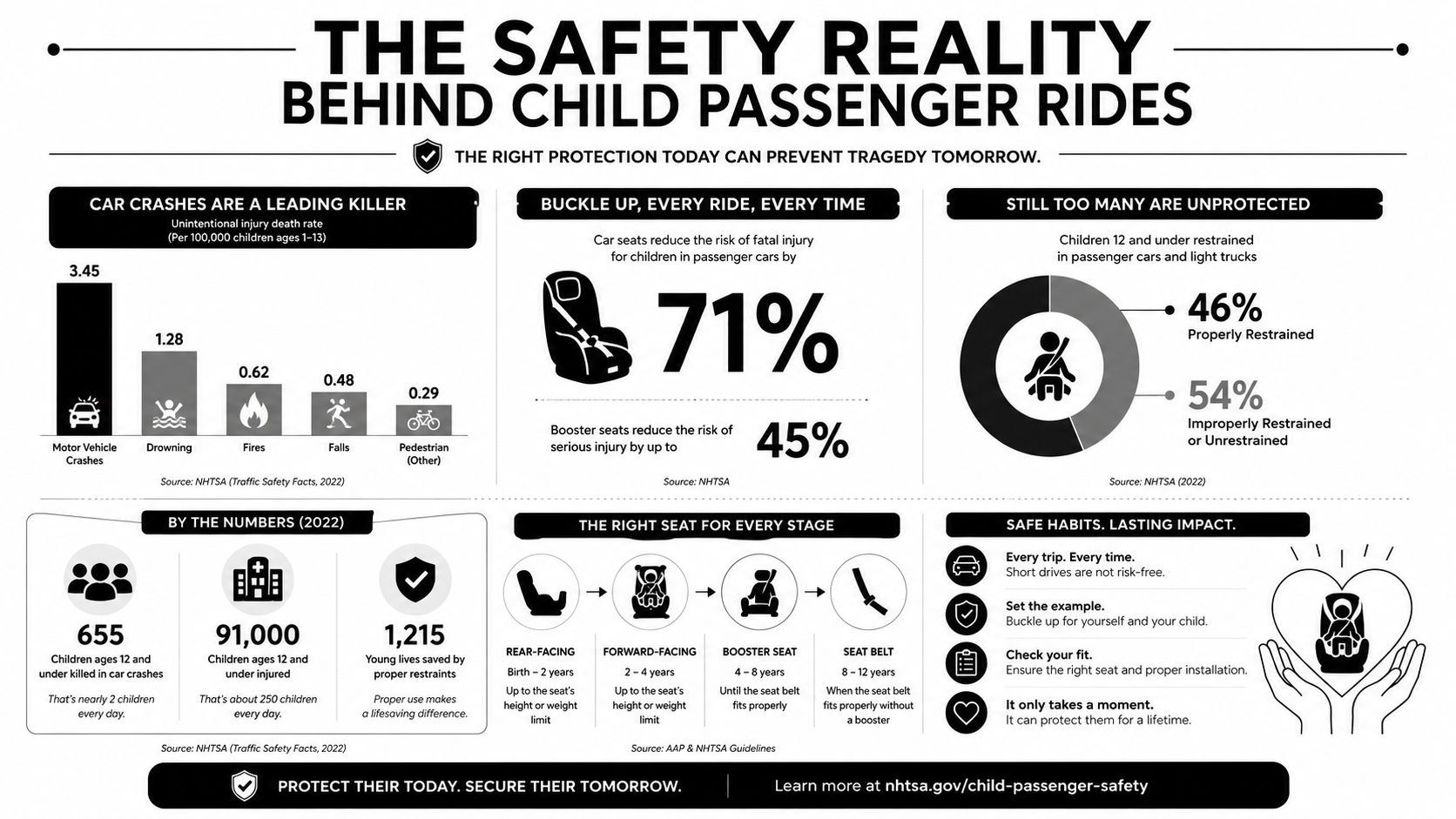
The operational takeaway is harsh but useful. A provider that stocks seats, installs them before pickup, and verifies fit is solving a real problem. A provider that says, “We'll figure it out when we get there,” is pushing the risk back onto you.
Car Seat Selection, Weight Limits, and the 65-Pound Anchor Rule
Car seat choice should be treated like a load-bearing decision, because it is one. HealthyChildren.org says all lower anchors are rated for a maximum of 65 pounds total combined weight of the child plus the car safety seat, and you should switch to seat-belt installation once the combined load exceeds that threshold. That one rule changes how you book. If the child plus seat is too heavy for lower anchors, the provider needs to know that before dispatch, not after the driver opens the trunk.
The practical banding matters too. Kid Car's stated example seats cover rear-facing from 5 to 45 lb, forward-facing from 20 to 65 lb in a five-point harness, and booster use up to 120 lb, which is the kind of product-specific thresholding dispatch teams should use. Buckle Up for Life also emphasizes that belt fit matters, the lap belt should sit on the upper thighs, and the shoulder belt should cross the shoulder and chest, not the stomach or neck. For many parents, the booking mistake is not ordering a car. It's assuming any seat will do.
Common pitfall, moving a child out of rear-facing too early. Keep children rear-facing until they reach the seat's maximum height or weight limit, as noted in the American Academy of Pediatrics guidance cited by Buckle Up for Life.
Here's the booking logic I'd use.
| Car Seat Mode by Child Weight | Seat Mode | Weight Range | Install Method | Provider Should Confirm |
|---|---|---|---|---|
| Infant and small toddler | Rear-facing | 5 to 45 lb | Lower anchors or seat belt, depending on combined load | Exact seat model and whether it fits the child today |
| Preschooler | Forward-facing harness | 20 to 65 lb | Lower anchors or seat belt, depending on combined load | Harness stage and tether use |
| Bigger child | Booster | Up to 120 lb | Vehicle seat belt | Belt fit and seating position |
For a toddler, I'd ask for a rear-facing convertible seat by name and make the provider confirm the child's approximate weight in the booking note. For a school-age child, I'd ask whether the seat is still a harness seat or a booster, because that difference affects both fit and pickup time. Don't leave seat choice to the driver's memory.
Vetting Drivers, Vehicles, and Inspection Cadence
A “vetted chauffeur” is meaningless unless you can test the claim. Start with the person, then the vehicle, then the maintenance rhythm. If a company can't tell you how often vehicles are inspected, what systems are checked, and how drivers are trained to install seats, you're trusting marketing copy instead of operations.
Kid Car gives a useful benchmark here. It says its driver-owned vehicles undergo a licensed DMV inspection every 4 months and that the vehicles are inspected 3x more frequently than a personal vehicle. It also says its vehicles are checked for the engine, brake pads, and signal lights, and that drivers are trained to properly install the seats. That's the standard to look for, a preventive model, not a reactive one.
If you want a parallel example of what driver screening language should feel like, the same mindset applies to Background checks for youth-club volunteers. You're not comparing industries. You're comparing diligence. The point is to ask whether the provider can show you a process, not just say they care.
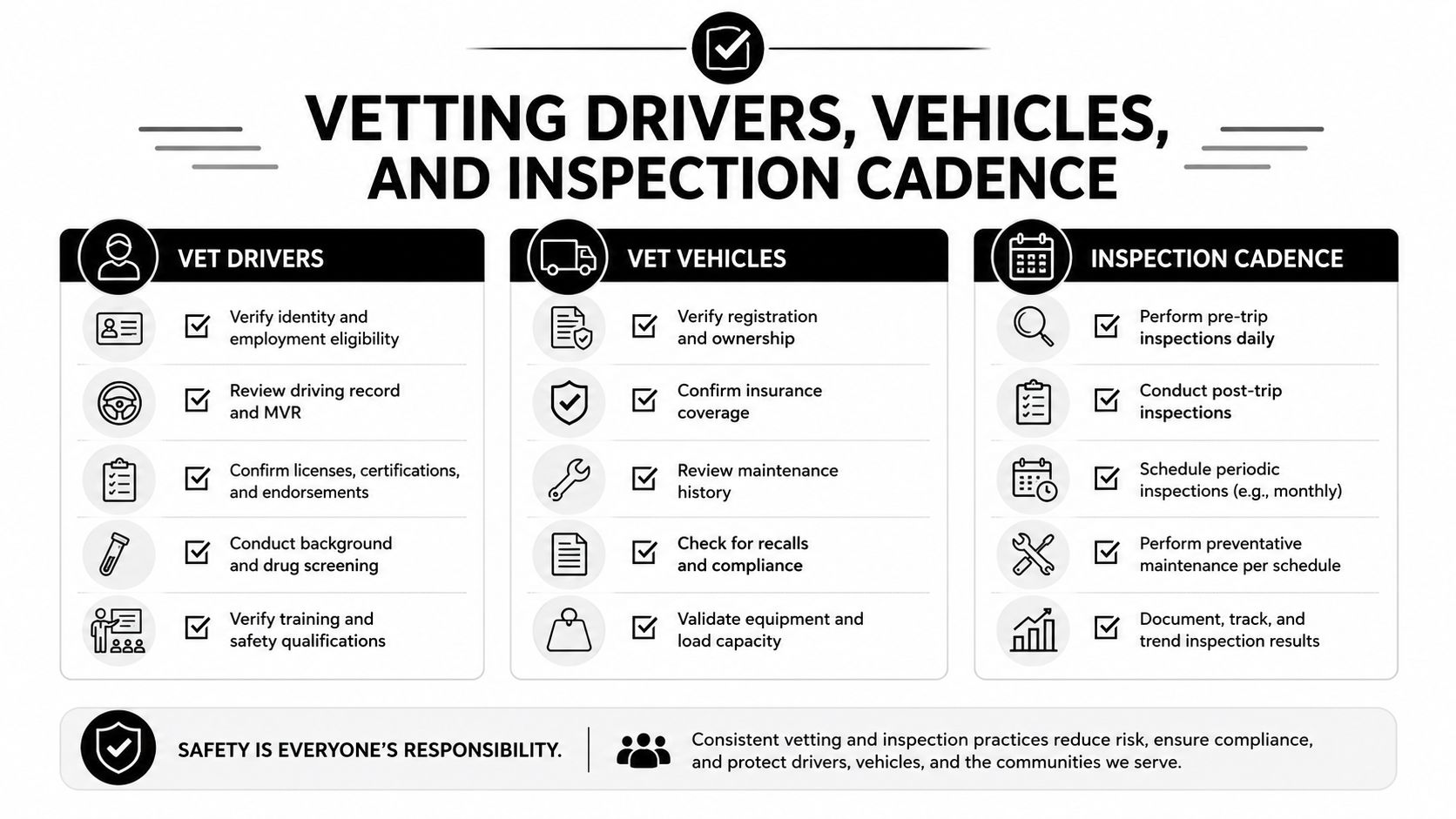
Send these questions before you book.
- Driver screening: “What background checks do your chauffeurs pass before they drive children?”
- Installation training: “Who trains your drivers on car-seat installation, and how do you verify they're current?”
- Inspection cadence: “How often are your vehicles inspected, and what do you check each time?”
- Seat inventory: “Which child seats are stocked in the vehicle class I'm booking?”
- Substitution plan: “If the assigned driver changes, do you guarantee the same child-seat setup?”
If the answers are vague, keep shopping. A clean answer is worth more than a glossy fleet photo.
Matching Vehicle Class to Your Family
Vehicle selection is logistics, not status. Count the children, count the seats that need to be installed, count the luggage, and only then pick the vehicle. Most booking mistakes happen because a family books by image, not capacity.
A sedan works when it's one parent, one infant, and light bags. A luxury SUV makes more sense when you've got two parents, a toddler, and a car seat that needs room to install correctly. A Mercedes Sprinter starts to make sense when the family gets bigger or the luggage gets bulky. A minibus is the right call for birthday parties, sports teams, or anything where gear starts to dominate the cabin.
Max's Luxury Rides Inc. is a concrete example of a fleet that covers that spread, from executive sedans and luxury SUVs to Mercedes vans, Sprinter limousines, minibuses, mini coaches, and full-size coach buses. That doesn't make it the only option, but it does show what a properly staged operator can offer when the ride has to match the group instead of the other way around.
The most common mismatch is still the same. A sedan gets booked for a family that really needed a Sprinter, then everyone spends the trip negotiating legroom and luggage placement.
Use this decision rule. If the child seat needs to be installed, if the stroller is coming, or if you have more than one large bag per adult, move up a class. Don't hope the trunk works out. Measure the trip accurately, then book the vehicle that fits the actual load.
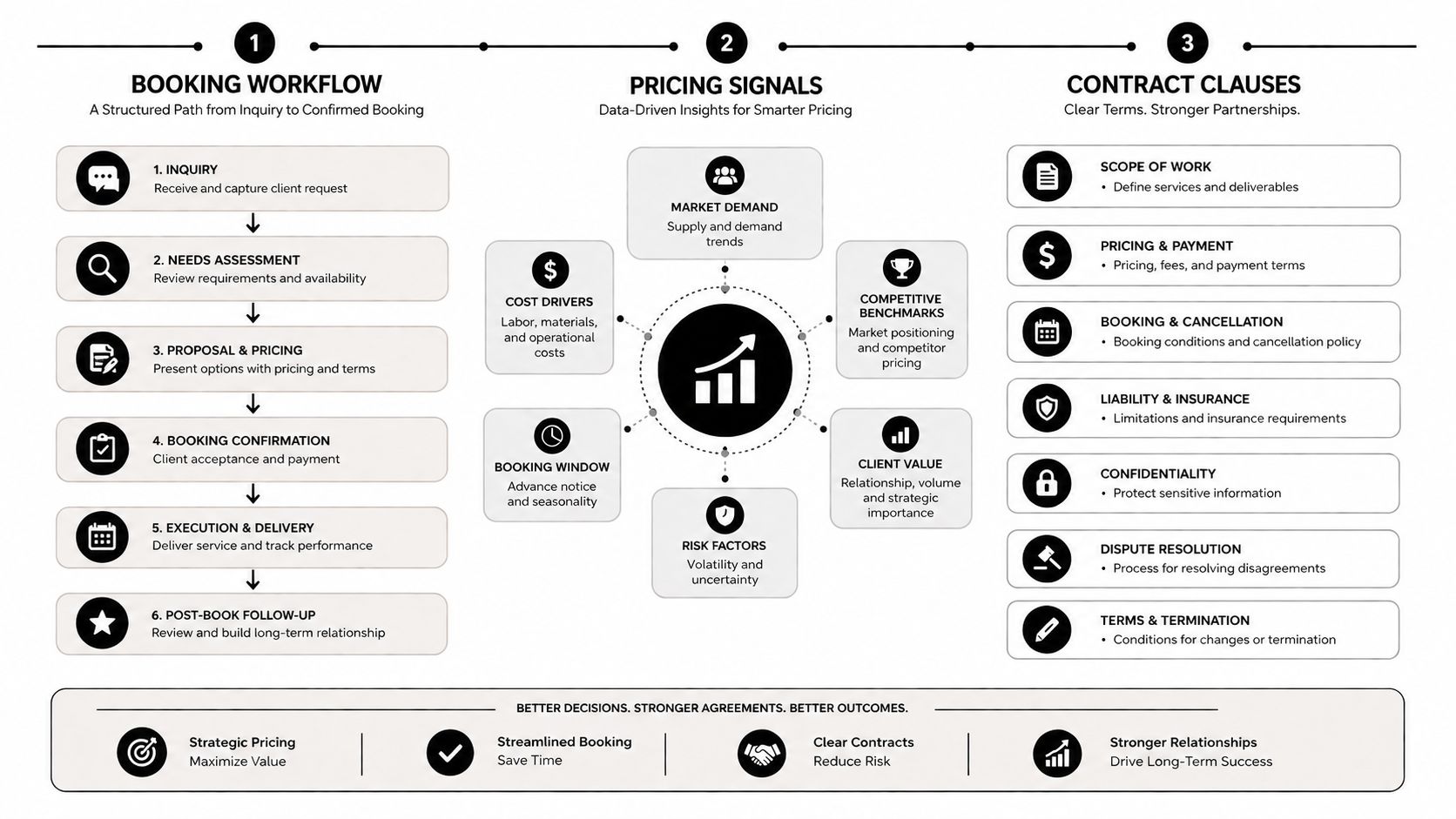
Booking Workflow, Pricing Signals, and Contract Clauses
Good booking starts with a quote that captures the whole job. The provider should tell you whether pricing is flat, hourly, or mileage-based, and whether child-seat provisioning is included or billed separately. If there's a surcharge for late-night pickup, extra seat installation, or gratuity, you want to see that before you confirm, not in a surprise invoice later.
Treat the confirmation like a mini contract. Ask for the cancellation window in writing, the exact seat type guarantee, the driver substitution protocol, and damage responsibility if a car seat is lost or mishandled. If the provider won't write those down, they're asking you to absorb all the risk.
Use this first message to get a clean quote.
Initial quote request: “I need transport for [number] adults and [number] children on [date]. Please confirm vehicle class, exact child-seat type, seat count, pricing method, pickup timing, cancellation window, and whether the same seat configuration is guaranteed if the driver changes.”
Then lock it down with a confirmation email.
Confirmation note: “Please confirm in writing the booked vehicle class, child-seat type and count, pickup location, driver assignment or substitution process, total price with any surcharges, and who is responsible if the child seat is unavailable or damaged.”
You're not being difficult. You're preventing an avoidable mess at the curb. A precise booking note saves time, protects the child, and gives the operator less room to improvise.
Airport, Wedding, and Event Logistics in Practice
A family of four lands at O'Hare for a Chicago wedding. One parent has the toddler, the other has the diaper bag, and the bag claim line is already slow. The winning move is boring: pre-book the vehicle class, pre-confirm the car seat, and make the pickup script crystal clear before wheels touch down.
If you're packing for that kind of trip, a practical checklist like packing for a baby trip helps you keep the diaper bag, seat accessories, and spare clothes in one place before the chauffeur arrives. That matters more than most parents admit. A smooth handoff starts with what you can find fast.
For airport pickup, flight tracking should drive the timing adjustment. The chauffeur should know whether the pickup is curbside or meet-and-greet, and the family should know exactly what the sign or contact script will say. I'd insist on a simple message chain, driver texts when parked, parent replies with the terminal door or baggage claim point, and the child seat is already installed before the handoff.
For weddings, the friction is different. The child might need a pre-installed seat for the ceremony ride, then a later return trip when tiredness hits and everyone wants a quick exit. That's where a provider with 24/7 operation and Chicago airport coverage, like Max's Luxury Rides Inc., can cover a whole event day without you juggling multiple vendors.
Concerts and sporting events need a different rhythm. Group shuttles should drop at a designated point, and parents of teens should use a pickup text loop instead of assuming everyone will drift back to the same curb at the same time. Unaccompanied child rides also deserve direct scrutiny. Reviews of HopSkipDrive note service for children ages 6 and older, which highlights the issue, age cutoffs, custody handoff, and verification matter as much as the ride itself.
A few other use cases are easy to miss. Non-emergency medical transport can matter for prenatal appointments and pediatric visits, especially when families need a more structured ride than a standard car service. Green Cars for Kids describes transport for transportation-disadvantaged children and expectant mothers to medical, dental, and mental health care, and that's the right kind of niche to know exists before you need it.
Keep the booking checklist tight.
- Confirm the child's current seat stage and don't assume the next stage is fine.
- Lock the pickup method as curbside or meet-and-greet.
- Verify the driver handoff script so no one is guessing at the airport door.
- Ask about day-of changes and who texts whom if the flight shifts.
- Save the confirmation with the vehicle class and seat details in one thread.
Copy-paste scripts help when your hands are full.
Initial inquiry: “Please quote a vehicle for [date], [time], [pickup location], [drop-off location], [adult count], [child count], and [seat count]. Confirm the child-seat type, pickup method, and whether you track flights for airport service.”
Confirmation: “Please confirm the final vehicle class, child-seat configuration, driver contact process, change policy, and total price in writing.”
Day-of change: “Our arrival has shifted to [new time]. Please confirm the updated pickup plan and whether the child-seat setup remains unchanged.”
If you treat the booking like operations instead of hope, the ride becomes predictable. That's the whole point.
If you want a provider that handles family transport with the same discipline you'd expect from an airport transfer, wedding shuttle, or event car, Max's Luxury Rides Inc. offers that kind of structured service. Visit Max's Luxury Rides Inc. if you want to compare a real fleet, book child-friendly transport, and stop improvising at the curb.