
You're standing at a curb, watching other passengers load their bags while your own ride still hasn't appeared on the screen. The driver may be five minutes away or stuck behind a terminal loop you can't see, and that uncertainty is what makes the wait feel longer than it is. Real-time vehicle tracking solves that problem by turning a vague promise into a visible, accountable arrival.
For a luxury transport operator, that matters just as much as it does for the passenger. It keeps dispatch informed, gives chauffeurs clearer instructions, and reduces the back-and-forth that usually starts when someone says, “Where are you?” As adoption has spread, 80% of fleets overall now use GPS tracking, up from 69% the year before, an 11-point increase in a single year, according to the 2026 industry survey cited in the vehicle tracking overview (vehicle tracking system adoption data). That shift shows the technology has moved from a nice-to-have to a standard expectation in serious operations.
Why Your Next Ride's Location Matters
A client lands after a long flight, opens the terminal app, and sees no clear sign of the car that's supposed to be waiting. That's when stress starts to build, not because the ride is necessarily late, but because nobody can tell what's happening. A visible vehicle position changes that moment completely, because the client can judge the situation instead of imagining the worst.
For premium travel, that transparency is part of the service, not an extra feature. When the passenger knows the car is nearby, the experience feels controlled, calm, and professional. When the operator can see the same trip in motion, the team can spot delays early and make better decisions before the customer ever notices a problem.
The market has been moving in that direction for years. A 2026 estimate placed the global vehicle tracking device market at USD 3.27 billion for 2026 and projected it to reach USD 8.20 billion by 2034, a 12.20% CAGR over the forecast period, which points to broad operational adoption across logistics, fleets, and passenger transport (vehicle tracking market estimate). That growth matters because it reflects a simple business truth, customers expect visibility, and operators need a cleaner way to provide it.
Practical rule: if the passenger can't confirm the car's progress, they'll often assume the worst long before the driver is actually late.
Luxury service raises the stakes even further. A missed airport pickup or an unclear terminal handoff can damage trust faster than a small delay ever would, and that's why location visibility has become part of the premium standard. Real-time tracking doesn't remove every delay, but it does remove the guesswork that turns a manageable issue into a service failure.
Decoding Real-Time Vehicle Tracking Systems
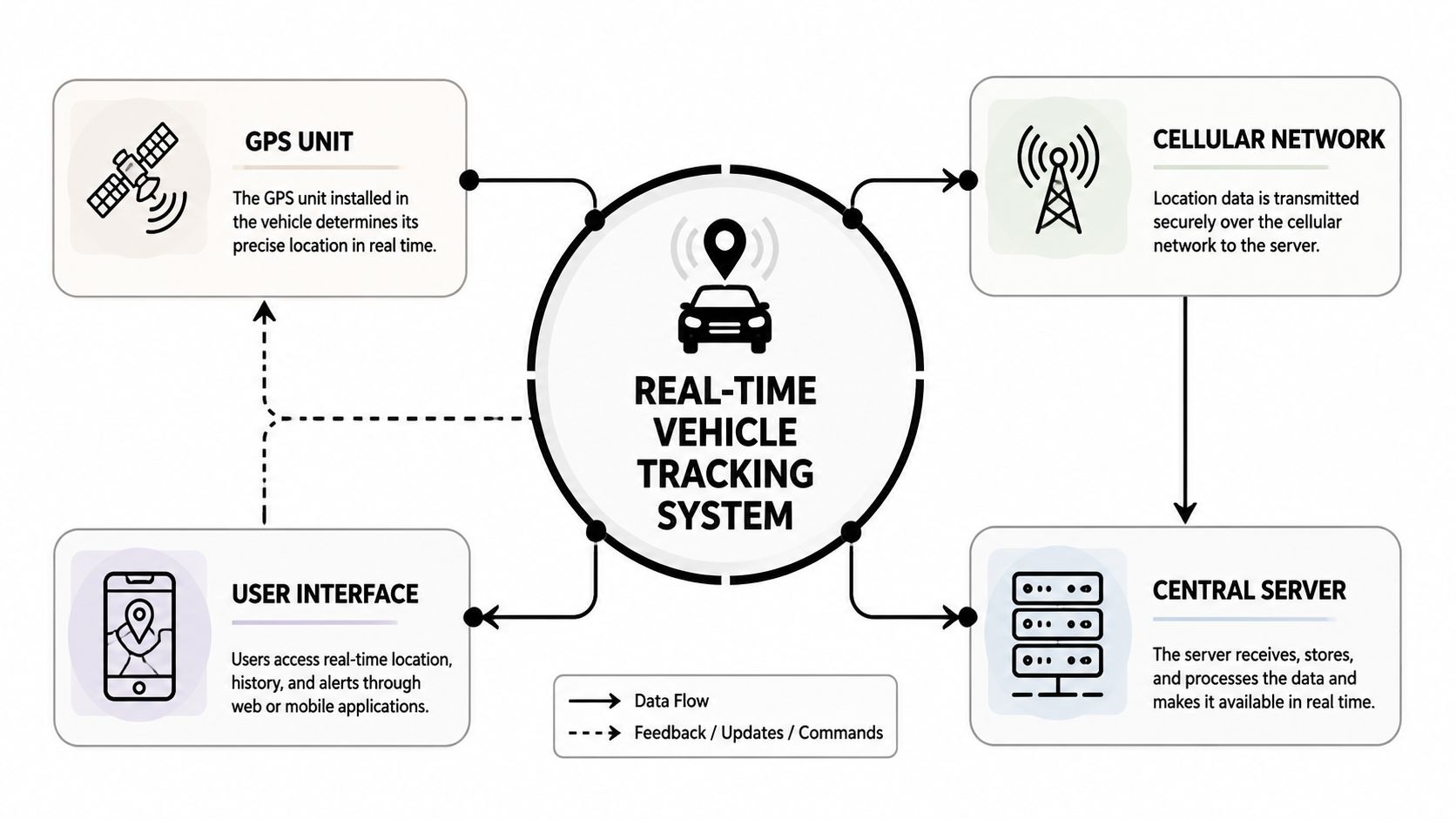
Think of real-time vehicle tracking as a nervous system for a fleet. One part senses where the vehicle is, one part sends that information, and one part turns the data into something a dispatcher or passenger can use. If any one of those pieces fails, the whole experience feels slow, incomplete, or unreliable.
The three parts that matter
The first part is the in-vehicle unit, usually a GPS or telematics device mounted inside the vehicle. It gathers the vehicle's position and related operational data, then keeps sending updates while the trip is in progress. The second part is the cellular network, which moves that data from the vehicle to the platform without waiting for the ride to end. The third part is the software dashboard, where a dispatcher, manager, or customer service rep can see the trip in a readable format.
That three-part setup is what turns tracking into an operating tool rather than a passive map view. A modern system can support live monitoring, dispatching, geofencing, and route-history playback, and the value comes from the closed loop, someone sees a deviation and can respond while the trip is still happening (technical requirements for vehicle tracking systems%20DTZS%20Vehicle%20Tracking%20Systems%20%E2%80%93%20Requirements.pdf)).
Why the dashboard matters
The screen is where operational clarity appears. A good dashboard doesn't just show a dot on a road, it lets the team read status, compare trips, and confirm whether the vehicle is behaving the way it should. That's why the software side matters as much as the hardware, because the best data in the world is useless if nobody can turn it into a decision.
The strongest tracking setup is the one that helps a human act faster, not the one that looks most technical.
For readers who want a practical adjacent example, this same architecture shows up in logistics use cases like truck visibility, where location and trip status need to be readable at a glance. A useful reference is GPS for haulage operators, since the underlying challenge is the same, keep the trip visible and keep the team informed.
The Technology Behind the Live Map
GPS gives the starting point
GPS is what makes the map useful in the first place. It estimates where the vehicle is by using satellite signals, then feeds that position into the tracking workflow. In daily operations, that means a dispatcher isn't guessing based on a phone call, the team is looking at a location update.
Telematics adds context
A telematics device does more than place a pin on a screen. Modern systems can collect operational details such as speed and vehicle status, which helps managers understand whether a delay is caused by traffic, a stop, or something else entirely. That broader data set is why telematics is so valuable in premium service, because location alone rarely answers the full question.
Cellular connectivity keeps the feed moving
The live map depends on data reaching the platform quickly and consistently. Independent and vendor-neutral standards emphasize real-time performance, update latency, continuous connectivity, and positioning accuracy, because the system's usefulness falls apart if the information arrives too late (real-time GPS tracker performance focus). In practice, 4G-based trackers with high-precision GNSS are used to cut down on stale location data and support time-sensitive work like fleet dispatch and theft recovery.
That's also why a modern tracking stack is never just one device. The vehicle sends data through the network, the platform stores and displays it, and the operator decides what action to take. A chauffeur can be moving perfectly, but if the signal is delayed, the customer still experiences uncertainty.
Operational takeaway: the system only feels “real time” when the update arrives fast enough to change a decision.
The same logic applies in any fleet where visibility has to survive actual road conditions. For operators who want a broader business view of tracking and route data, there's also value in comparing how one fleet platform frames the workflow with software for trucking compliance, since compliance tools and live tracking often overlap in practice.
Essential Features That Enhance the Travel Experience
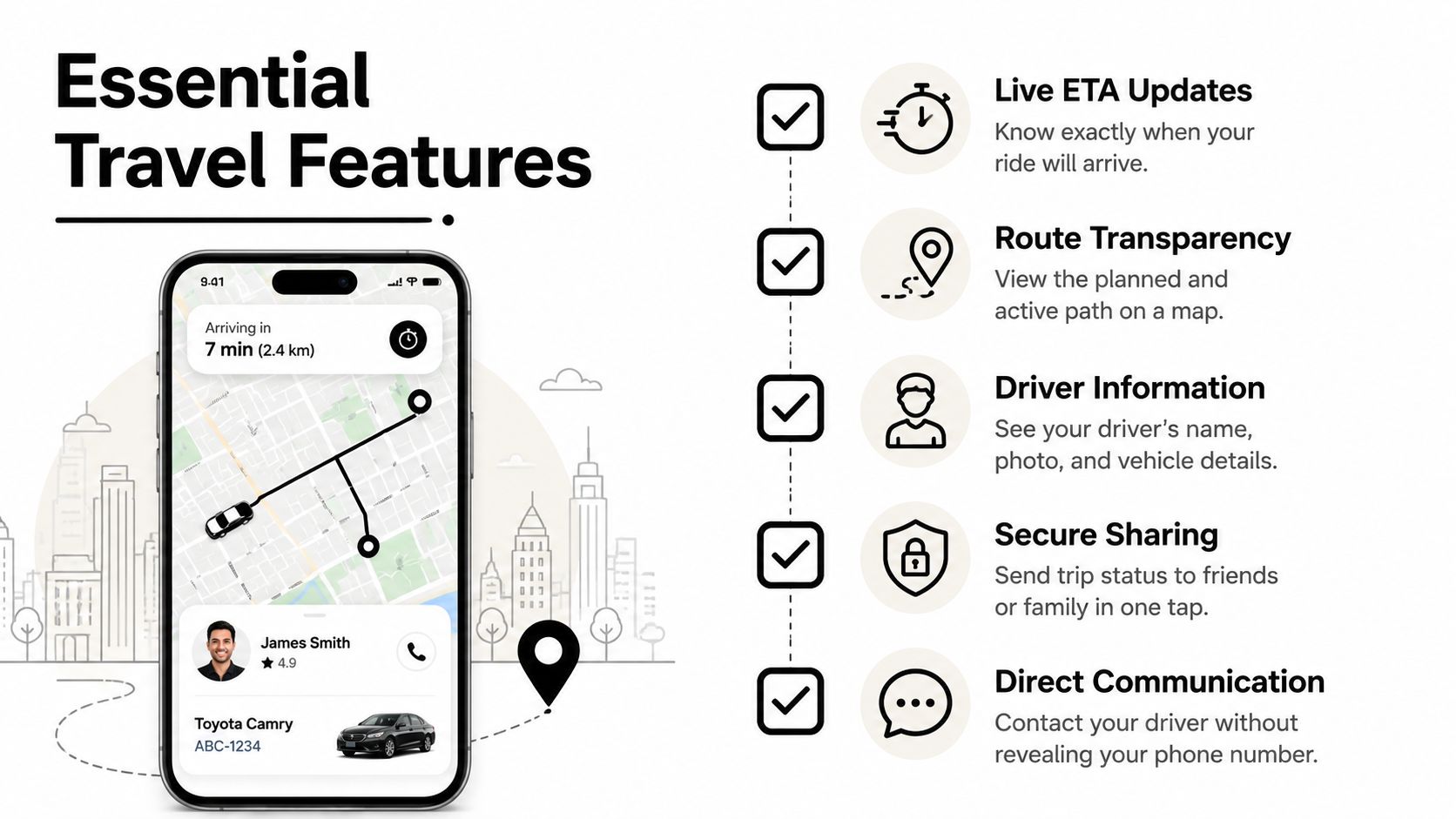
Passengers usually don't care about the technical stack. They care about whether the car will arrive when promised, whether the route looks sensible, and whether they can share the ride status with someone else. The best tracking features solve those problems without forcing the client to think like an operator.
Live ETA updates
A live ETA turns a rough estimate into a moving answer. If traffic changes, the ETA can change with it, which reduces the awkward gap between what dispatch believes and what the passenger is experiencing. That matters most for airport pickups, where timing is often tied to baggage claims, curb access, and pickup rules.
Route transparency
Route visibility helps the customer understand what the driver is doing and why. If the vehicle takes a different road, the passenger can see that it's a deliberate choice, not a mistake. It also gives the operator a cleaner way to explain delays without sending long messages or asking the chauffeur to narrate every turn.
Secure sharing and direct contact
Travel often involves more than one person who wants updates. A family member, assistant, or event coordinator may need status without being pulled into every call, and secure sharing solves that neatly. Direct communication matters too, because it lets the passenger reach the driver without exposing a personal number.
The features below are the ones most passengers feel in use:
- Live ETA Updates: Know exactly when your ride will arrive.
- Route Transparency: View the planned and active path on a map.
- Driver Information: See the chauffeur's name, photo, and vehicle details.
- Secure Sharing: Send trip status to friends or family in one tap.
- Direct Communication: Contact the driver without revealing your phone number.
The core idea is simple. Each feature removes one small point of friction, and together they make the ride feel reliable instead of improvised.
The Dual Benefits of Fleet Visibility
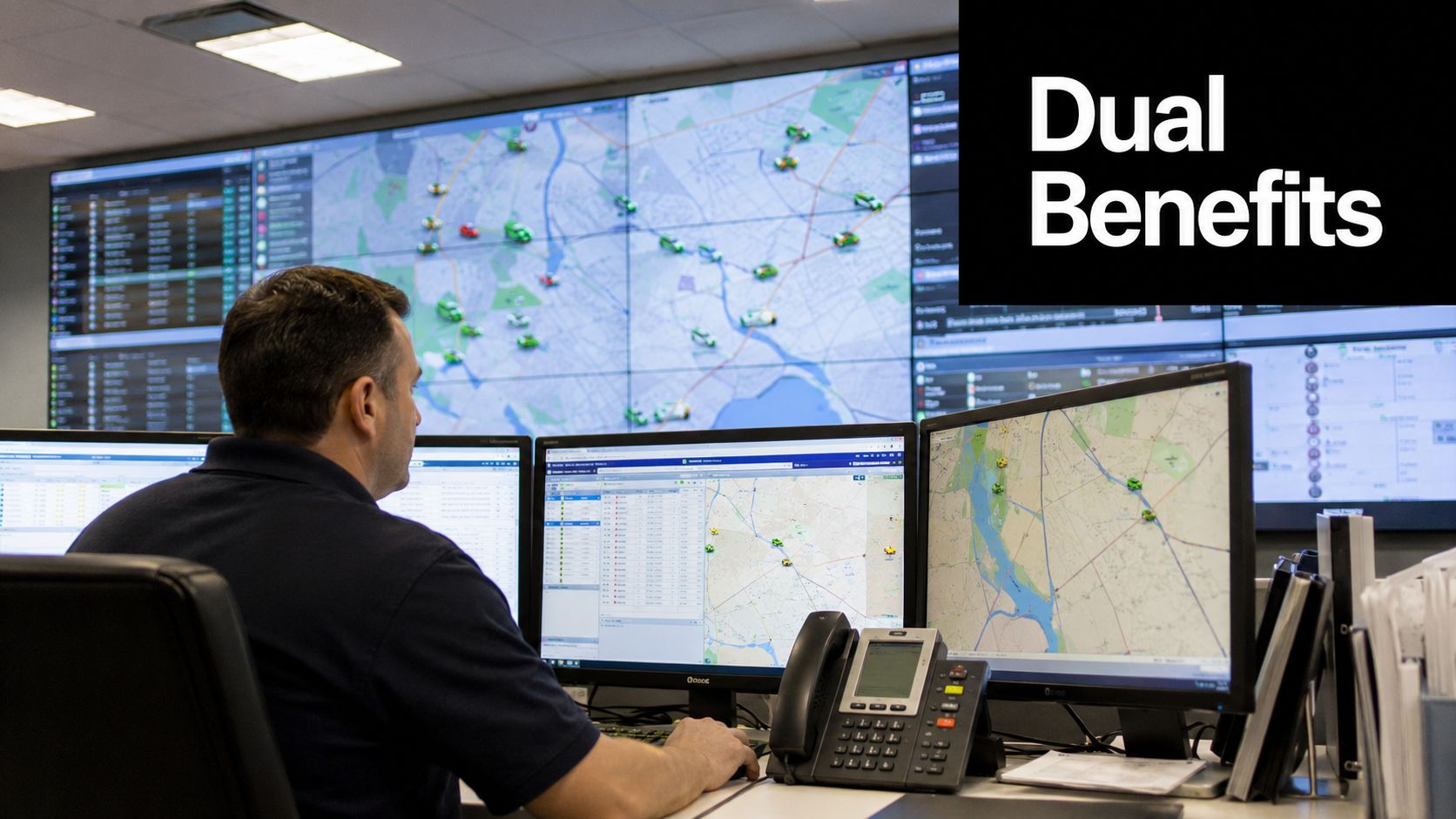
From the operator's side, fleet visibility reduces the need to chase information by phone. Dispatch can see where vehicles are, which trips are moving normally, and where attention is needed before a delay becomes a complaint. That kind of control matters in luxury transport, where the service promise includes consistency, discretion, and on-time execution.
What the business gains
Real-time monitoring improves coordination, especially when multiple rides overlap. It helps teams respond faster to changes, keep clients informed, and support drivers without overloading them with calls. In a broader fleet context, telemetry data can also help with route discipline, vehicle care, and behavior monitoring, which is why tracking is increasingly treated as operational infrastructure rather than a map feature.
For operators who need to think about records and oversight as well as location, the challenge overlaps with monitoring workflows in gate access API. Access control and trip visibility both depend on knowing who is allowed to see what, and when.
What the customer gains
The client feels the benefit in a simpler way, less uncertainty. If the car is delayed, the passenger sees it early. If the vehicle is close, the passenger knows when to head downstairs, step outside, or wait comfortably inside. That's especially valuable for corporate travelers and event guests, where timing is tied to schedules that don't leave much room for confusion.
Business reality: transparency isn't only a convenience feature, it's a trust feature.
The strongest service teams use tracking to reduce the number of moments where the customer has to ask for reassurance. That doesn't just protect the trip in progress, it shapes how the entire brand feels over time.
Smart Implementation Beyond the Basics
A basic tracker can show a car on a map. A well-run tracking program has to answer a harder set of questions, who can see the data, what happens when the signal weakens, and how the system fits into real service conditions. Those are the issues many guides skip, even though they're the ones that decide whether the technology helps or frustrates the client.
GPS blind spots are real
Dense downtown streets, parking structures, airport terminals, and underground pickup zones can make location data less reliable. Signals can weaken, bounce, or disappear for short periods, and that's where operators need a fallback process instead of blind faith in the pin. A peer-reviewed indoor vehicle tracking system exists precisely because real-world positioning gaps are still a practical problem in enclosed environments (indoor vehicle tracking research).
That's why professional teams don't rely on a single reading. They combine live tracking with driver communication, terminal knowledge, and arrival workflows so the client still gets a clear answer even when the map gets fuzzy.
Privacy and governance need real rules
Tracking data can become sensitive very quickly. Once a system records speed, engine status, or trip patterns, the information is no longer just about location, it's also about behavior and usage. That creates privacy and governance questions for corporate travel, family transport, and chauffeur-managed vehicles, especially when different clients expect different levels of visibility.
The safest approach is to define access, retention, and purpose up front. Who can view live trips? How long are trip records kept? Which trips are shareable, and which aren't? Those questions matter because a luxury service is judged not only by convenience, but also by how carefully it handles client data.
Build for the service, not the demo
A good implementation plans for real pickups, not ideal ones. It should handle uncertain signal areas, make driver handoffs clear, and keep the right people informed without flooding everyone with alerts. That's the difference between a tracking system that looks impressive in a sales pitch and one that supports premium service every day.
Putting It All Together A Ride with Max's Luxury Rides
A corporate traveler books an airport transfer and receives confirmation with the trip details already organized. Before the car arrives, the client can see progress rather than wonder whether the chauffeur is on the way, and dispatch can watch the same ride from the office side. When the vehicle reaches the terminal area, the system helps the team confirm the approach and keep the pickup smooth.
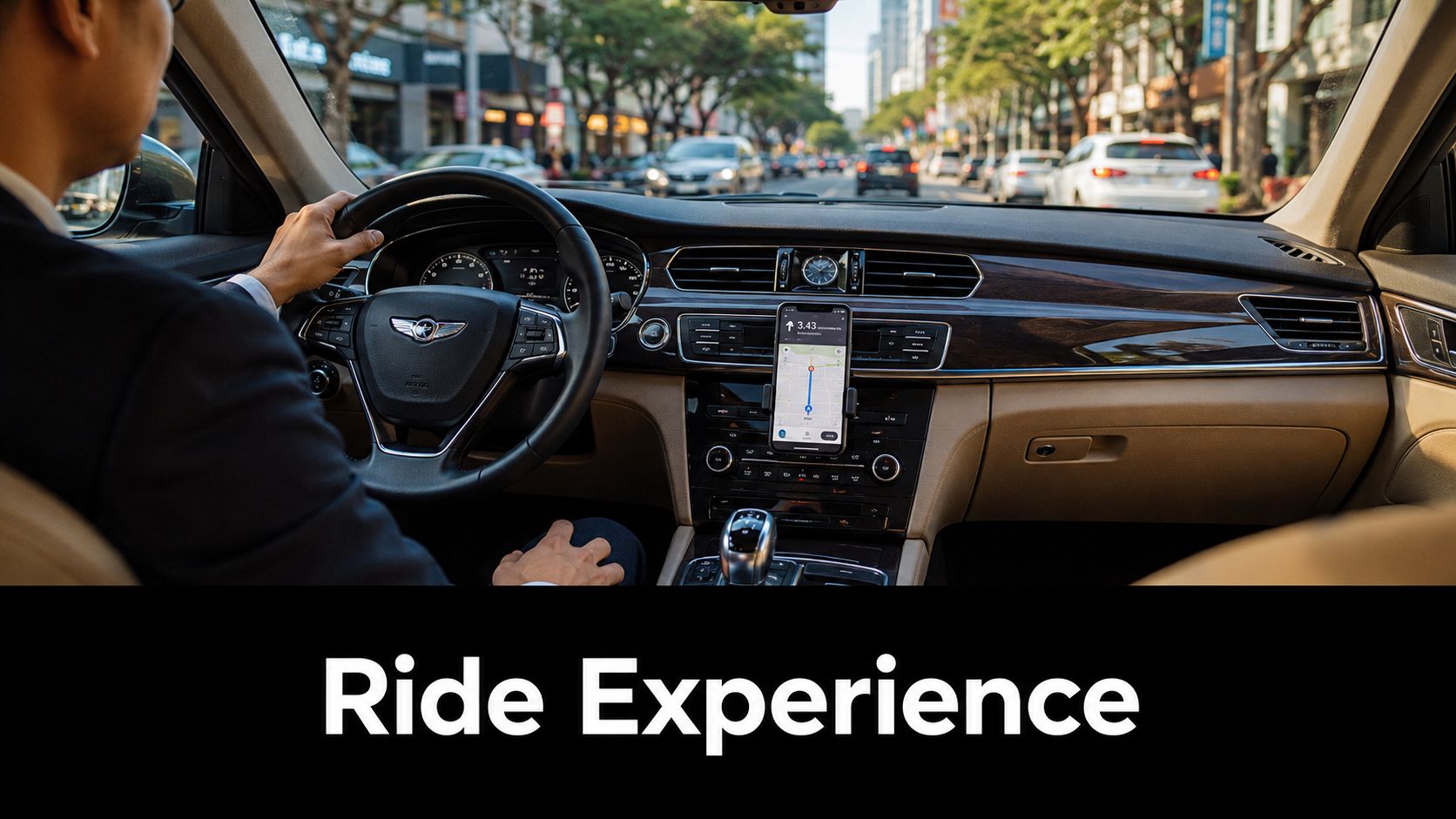
That kind of service feels simple to the client because the hard work happens behind the scenes. The chauffeur stays focused on the road, the office stays informed, and the passenger gets a ride that feels coordinated instead of improvised. Real-time tracking is what makes that level of calm possible.
If you're looking for luxury transportation that treats timing, visibility, and client privacy as part of the experience, visit Max's Luxury Rides Inc. to book airport transfers, corporate travel, and special event service. Their approach fits the standards discussed here, with service built around reliability, communication, and a premium client experience.