
When it comes to the Mercedes-Benz Sprinter, the cargo dimensions can vary dramatically, offering anywhere from 223 to over 530 cubic feet of usable space. The real difference comes down to two key factors: the wheelbase (either 144-inch or 170-inch) and the roof height (Standard or High). These combinations are what ultimately determine the van's total interior volume, whether you're using it for logistics, passenger transport, or a custom build-out.
Your Quick Reference Guide To Sprinter Van Dimensions
If you're a fleet manager, an event coordinator, or anyone who moves people and gear for a living, getting a handle on Sprinter van cargo dimensions is essential. These aren't just numbers on a spec sheet. They directly answer the important questions: How many suitcases can I actually fit for that airport run? Will my trade show display clear the ceiling? Can I load a standard pallet without wrestling with it?
This guide is designed to give you that data in a clear, scannable format so you can make the right call, fast.
The Sprinter's adaptability is really its defining feature. Since it first hit the market, it has continuously evolved to fit a huge range of commercial needs. We've seen cargo capacity grow from a practical 7.5m³ in the smaller vans to a massive 17.0m³ in the largest models. To put that in perspective, a long-wheelbase Sprinter gives you a cargo floor length of 3,487mm and an interior width of 1,787mm. Critically, it offers 1,244mm between the wheel arches, which makes loading pallets a breeze.
Payload is just as impressive, with some configurations handling up to 2,105kg. Certain U.S. models are even rated for up to 6,700 lbs, cementing the Sprinter's reputation as a true workhorse. You can dig deeper into these specs by checking out a detailed Mercedes-Benz Sprinter dimensions overview.
Key Dimensions At a Glance
When you're trying to figure out if a Sprinter will work for your needs, it helps to zero in on three core measurements that define its practical use.
- Cargo Length: This tells you the maximum length of an item you can transport. It's the critical number for anyone hauling lumber, pipes, or long equipment cases.
- Interior Height: This determines if you or your crew can stand up straight inside the van—a make-or-break feature for mobile workshops, camper conversions, and passenger comfort.
- Payload Capacity: This is the total weight the van is engineered to carry safely. It’s absolutely vital for logistics professionals and anyone moving heavy equipment.
This graphic gives you a great visual summary of how these primary dimensions come together.
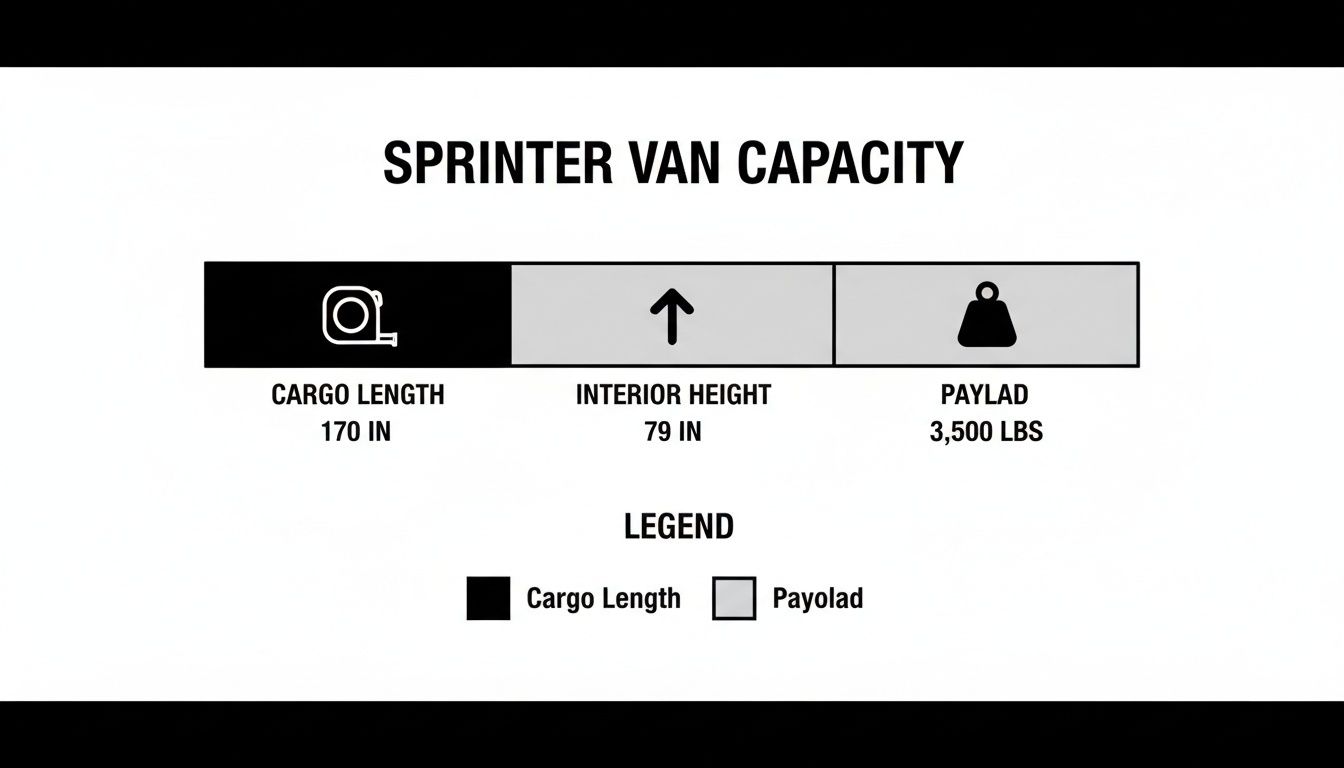
As you can see, it's the interplay between these three figures that truly defines what a specific Sprinter model can handle for any given job.
Sprinter Van Model Dimension Cheat Sheet
To make things even easier, here’s a cheat sheet that puts the most important cargo dimensions for common Sprinter configurations side-by-side. This table is perfect for quickly comparing models to find the one that fits your exact requirements.
| Sprinter Model (Wheelbase/Roof) | Max Cargo Length (in/mm) | Max Interior Height (in/mm) | Max Cargo Volume (cu ft/m³) | Max Payload (lbs/kg) |
|---|---|---|---|---|
| 144" WB / Standard Roof | 132.9 in / 3375 mm | 67.7 in / 1720 mm | 319 cu ft / 9.0 m³ | 3,924 lbs / 1780 kg |
| 144" WB / High Roof | 132.9 in / 3375 mm | 79.1 in / 2009 mm | 374 cu ft / 10.6 m³ | 3,858 lbs / 1750 kg |
| 170" WB / High Roof | 173.6 in / 4410 mm | 79.1 in / 2009 mm | 488 cu ft / 13.8 m³ | 3,726 lbs / 1690 kg |
| 170" Ext WB / High Roof | 190.4 in / 4836 mm | 79.1 in / 2009 mm | 533 cu ft / 15.1 m³ | 3,395 lbs / 1540 kg |
Whether you're prioritizing sheer volume, payload, or the ability to stand upright, this table gives you a clear snapshot to guide your decision. Having these numbers handy removes the guesswork and helps ensure the van you choose is perfectly suited for the task.
Understanding Sprinter Models, Configurations, and Specs
Before you can even begin to compare cargo dimensions, you need to get a handle on the language Mercedes-Benz uses to define its Sprinter models. Think of terms like "wheelbase" and "roof height" as the fundamental building blocks of any Sprinter van's size and capability. They aren't just numbers on a spec sheet; they're the key to understanding exactly what a van can do.
Getting these two concepts down is the first and most important step. The specific combination of wheelbase and roof height is what ultimately determines everything from total cargo volume and floor length to whether you can comfortably stand up inside. Nailing this from the start helps you avoid the classic, costly mistake of ending up with a van that’s too short for your gear or too low for your crew.
Breaking Down Sprinter Wheelbase Options
Simply put, the wheelbase is the distance measured from the center of the front wheels to the center of the rear wheels. This single measurement is the best indicator of the van's overall length and, more importantly, its internal cargo floor length. A longer wheelbase means more floor space, but it also creates a wider turning circle, which is something to consider if you're navigating tight city streets.
Mercedes-Benz builds the Sprinter around three main wheelbase options:
- 144-Inch Wheelbase: This is the standard, more compact version. It offers a great mix of usable cargo space and nimbleness, which is why it's so popular with service techs, local delivery businesses, and anyone working in congested urban areas.
- 170-Inch Wheelbase: The long-wheelbase model gives you a major boost in cargo floor length. This is the one you want for hauling longer materials, tackling ambitious camper conversions, or any job that demands maximum internal storage.
- 170-Inch Extended Wheelbase: While it shares the same 170-inch wheelbase as the long model, this version adds a longer rear overhang. That extra length in the back delivers the absolute largest cargo floor and volume available, making it the top choice for logistics pros and anyone moving seriously bulky items.
Why Roof Height Matters
If wheelbase defines a van's length, then roof height defines its vertical space. This dimension is absolutely critical for both utility and basic comfort, especially in any scenario where people need to move around inside the vehicle.
Sprinter vans come in a few different heights, but these are the two you’ll see most often:
- Standard Roof: This gives you an interior height of around 67.7 inches (a bit over 5' 7"). It's perfectly fine if you're just hauling cargo, but most adults will have to crouch inside.
- High Roof: With an interior height of roughly 79.1 inches (about 6' 7"), the high roof is a complete game-changer. It allows most people to stand up fully straight, which is non-negotiable for mobile workshops, passenger shuttles, and camper builds where comfort is a priority.
For many, the combination of a 170-inch wheelbase and a High Roof is the perfect sweet spot. It provides an enormous amount of floor space along with comfortable standing height, making this the go-to configuration for everything from executive airport shuttles to high-end custom conversions where space is at a premium.
By understanding how to mix and match these wheelbase and roof options, you can zero in on a Sprinter with the exact cargo dimensions you need for the job.
The Sweet Spot: The 144-Inch Standard Wheelbase Sprinter
When people talk about the most versatile Sprinter, they're usually referring to the 144-inch wheelbase model. It really hits the sweet spot, offering a massive amount of cargo space while still being nimble enough for city driving. Its shorter frame gives it a much tighter turning radius than its bigger siblings, which is a lifesaver when you're trying to navigate crowded event venues, tight airport loops, or dense urban streets. This is exactly why it’s become a go-to for final-mile delivery services and mobile tradespeople.
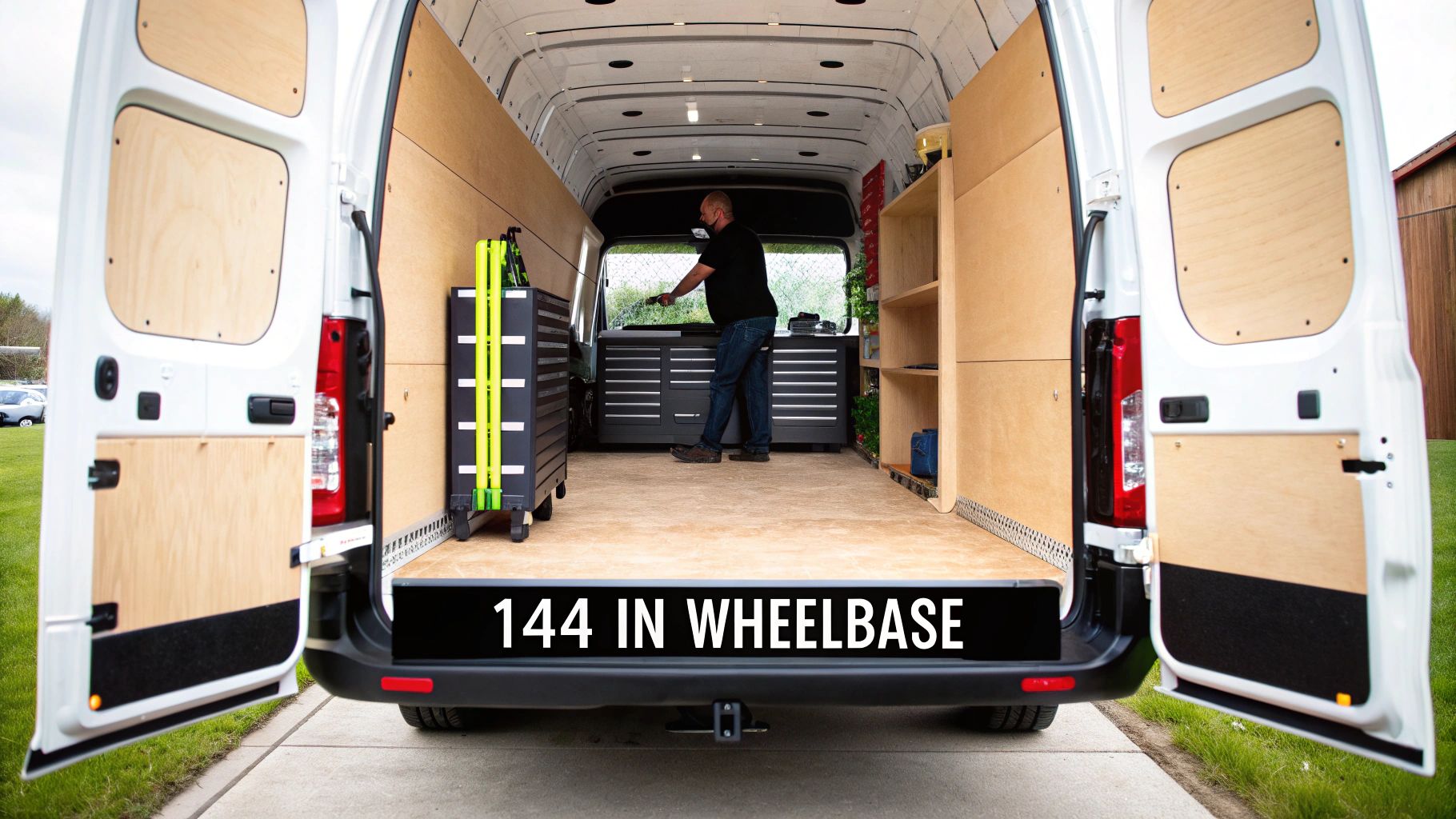
But don't let its agility fool you—this van is anything but small. Once you step inside, you’re working with a cargo floor that stretches a full 132.9 inches. That's over 11 feet of clear, usable space from the back of the front seats to the rear doors. This kind of length means you can easily haul bulky equipment, a dozen passenger suitcases, or custom shelving for parts and tools without ever feeling like you're running out of room.
How Roof Height Changes The Game
Your choice between the Standard and High Roof will completely define how you use the van. The 144-inch model with a Standard Roof gives you 319 cubic feet of volume and an interior height of 67.7 inches. This setup is perfect for straight cargo hauling where you don’t need to stand up and walk around inside.
Stepping up to the High Roof is a total game-changer. It pushes the interior standing height to a much more practical 79.1 inches (that's about 6' 7"), making it comfortable for most people to move around. This not only boosts the total cargo volume to 374 cubic feet but also opens the door for camper conversions, mobile workshops, or passenger shuttles where interior mobility is a must.
There's a good reason this wheelbase is a powerhouse in the commercial van market. Its unique blend of capacity and maneuverability solves a huge range of business challenges, from logistics and trades to high-end passenger transport.
The numbers back this up. The U.S. cargo van market, which was valued at USD 26.5 billion in 2023, is dominated by vans with wheelbases between 120 and 140 inches, holding 42% of the market share. The Sprinter's 144-inch platform is perfectly placed to capture this demand. For a deeper dive, you can explore the cargo van market dynamics and find additional insights.
Putting The Cargo Space Into Perspective
It helps to visualize what you can actually fit inside a 144-inch Sprinter. Here are a few real-world examples to paint a clearer picture:
- Airport Transfers: You can comfortably load 10 to 12 large suitcases along with several carry-on bags. It’s an ideal setup for small group shuttles.
- Event Logistics: It can swallow several large roadie cases (think standard 30"x30" flight cases), speaker stands, lighting rigs, and other key production gear.
- Trade & Service Fleets: There's enough space to install permanent shelving on both walls while still leaving a wide central aisle for loading ladders, pipes, or heavy tool chests.
Ultimately, this model gives you a highly capable platform for a wide range of professional needs, all without the headaches of handling a longer, more cumbersome vehicle.
A Dimensional Deep Dive Into The 170-Inch Long Wheelbase Sprinter
When you need to move serious volume, the 170-inch Long Wheelbase Sprinter models are the only answer. These vans are built for large-scale logistics, complex mobile workshops, and any job where maximum capacity is non-negotiable. This platform leaves the balanced approach of the 144-inch model behind, focusing instead on one thing: maximizing every square inch of usable interior space.
This extended frame is the starting point for the largest cargo holds Mercedes-Benz offers. It's the go-to choice for businesses hauling oversized equipment, from bulky trade show displays and production gear to multiple pallets of goods. The substantial increase in floor length makes it a true workhorse for demanding commercial jobs where smaller vans just can't keep up.
Unpacking The Dimensions Of The Two Largest Models
The 170-inch platform comes in two different flavors, each delivering a distinct level of extreme capacity. Both are equipped with the High Roof as standard, which gives you a comfortable 79.1 inches of interior standing height right out of the box.
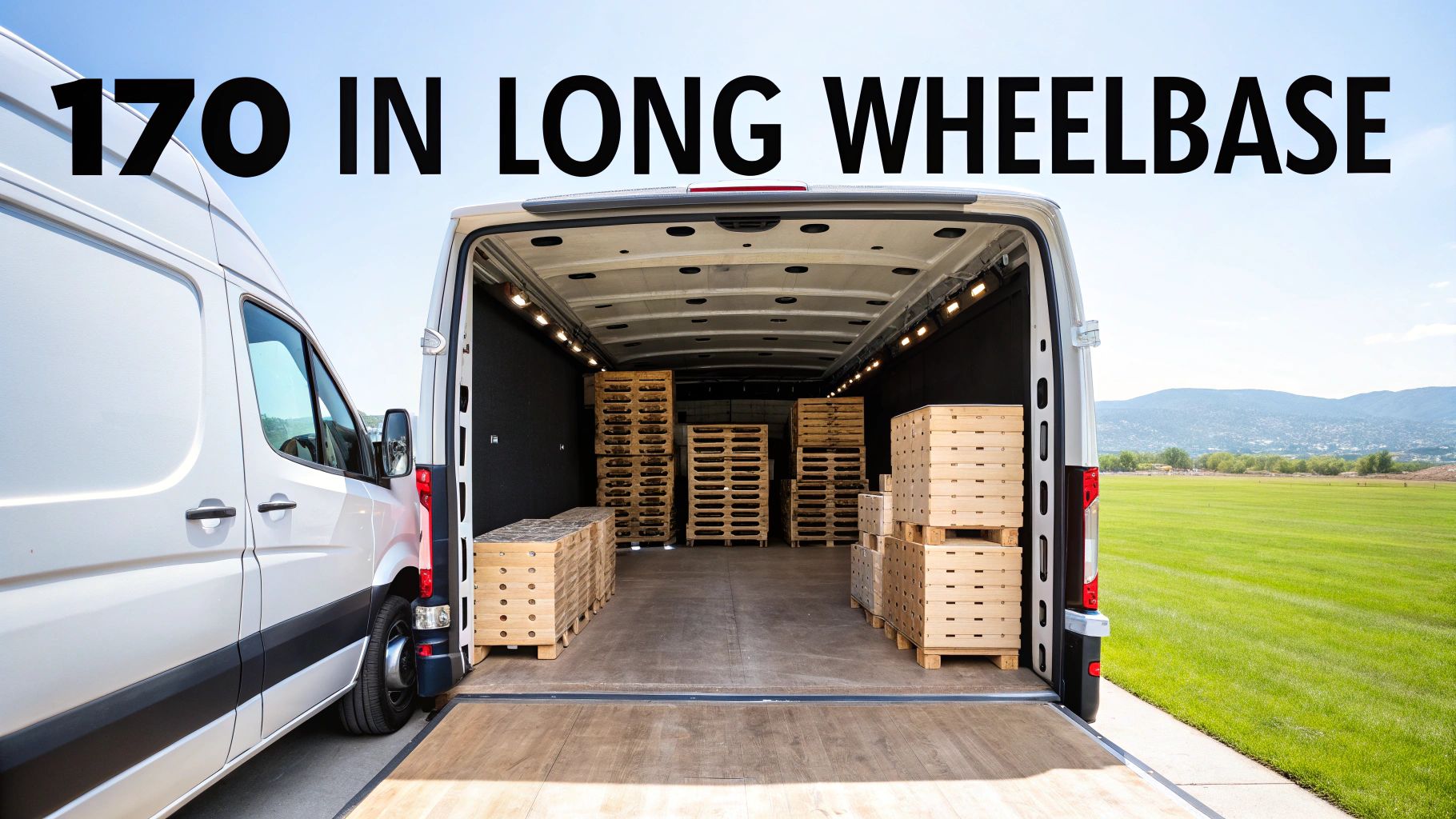
- 170-Inch Wheelbase High Roof: This model offers a massive cargo floor length of 173.6 inches—that’s over 14 feet. It all adds up to a total cargo volume of 488 cubic feet, which is more than enough room for some seriously substantial loads.
- 170-Inch Extended Wheelbase High Roof: For the absolute pinnacle of capacity, the Extended version features a longer rear overhang. This pushes the cargo floor to an incredible 190.4 inches (nearly 16 feet long) and expands the total cargo volume to an enormous 533 cubic feet.
That extra space in the Extended model can be the difference-maker, allowing you to fit one last pallet, accommodate extra-long items like lumber, or simply give your crew more room to work.
Practical Loading Capacity Scenarios
The specs are impressive, but seeing what that space translates to in the real world is what really matters. The table below gives you a solid idea of what you can fit, showing exactly why the 170-inch models are so popular for airport shuttle services, event logistics, and any operation that has to move people and their gear.
| Sprinter Model | Standard Suitcases | Carry-On Bags | Golf Bags | Standard Bankers Boxes |
|---|---|---|---|---|
| 170" WB High Roof | ~20-24 | ~40-45 | ~12-15 | ~150-170 |
| 170" Ext WB High Roof | ~25-30 | ~50-55 | ~16-18 | ~180-200 |
As you can see, the practical advantage is huge. A 170-inch Extended Sprinter can often swallow the luggage requirements of a small minibus, making it an incredibly efficient vehicle for group transport. It effectively bridges the gap between a standard van and a much larger commercial vehicle.
For instance, a mobile production team could easily load an entire portable stage, lighting rigs, and audio equipment into the Extended model. In the same vein, a shuttle operator can confidently handle a large corporate group's airport transfer, luggage and all, without ever worrying about needing a second vehicle. These Sprinter van cargo dimensions provide an operational flexibility that smaller vans simply can't offer.
How Dimensions Influence Passenger And Custom Conversions
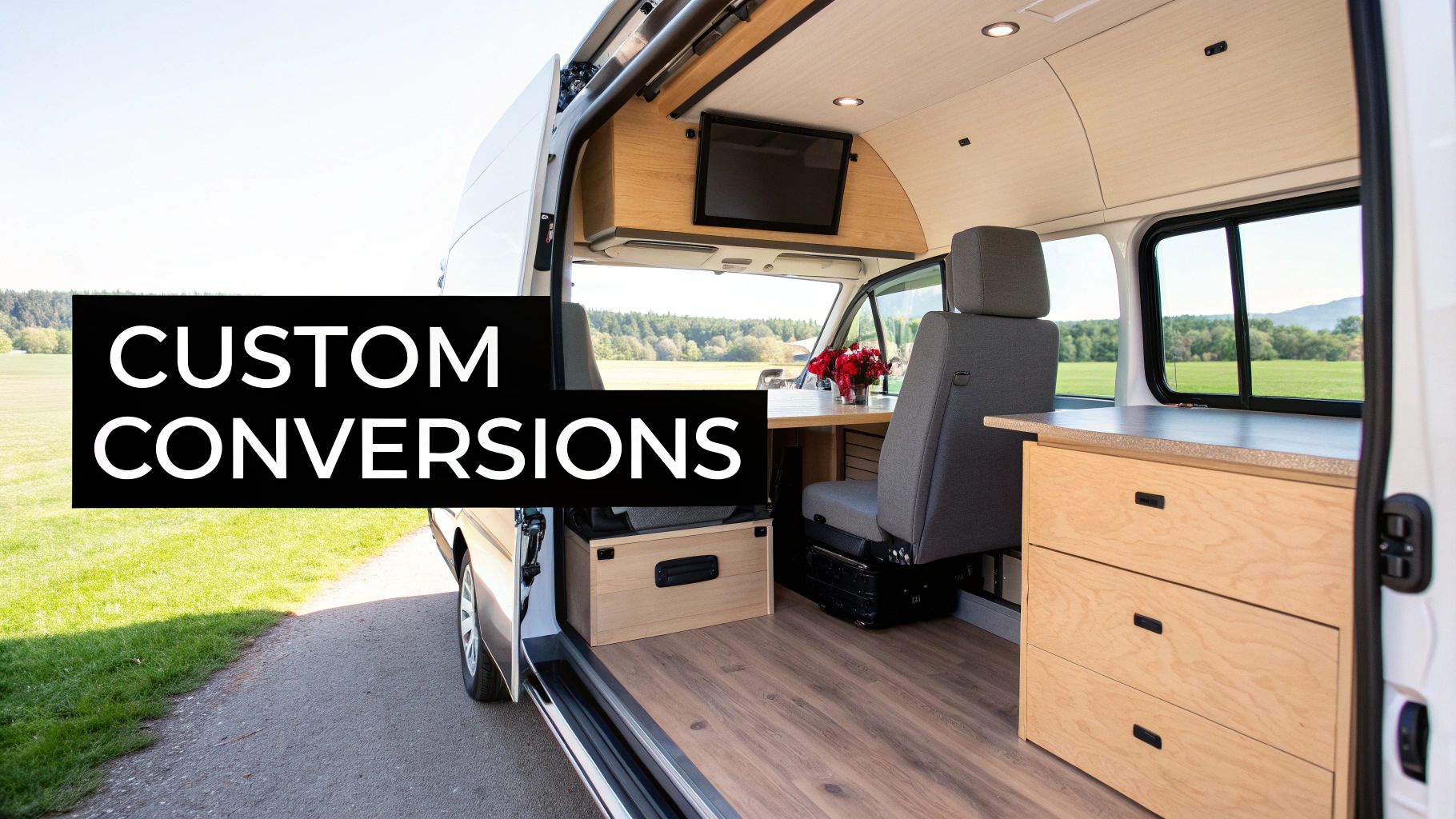
The raw numbers behind sprinter van cargo dimensions only tell half the story. The real magic happens when you see how those specifications translate into the world of custom conversions and luxury passenger transport. A Sprinter van is, for all intents and purposes, a blank canvas. Its generous interior height and length are the foundation for creating everything from spacious executive shuttles to fully-equipped camper vans.
It's this vast interior volume that makes these transformations possible. Unlike a standard van, a Sprinter's cavernous space allows professional upfitters to add premium features without ever making the environment feel cramped. This is where the technical specs on a sheet directly impact functionality, comfort, and the overall passenger experience.
Translating Dimensions Into Luxury Features
The impressive interior dimensions of models like the 170-inch High Roof Sprinter directly enable the installation of features you'd normally only find in much larger vehicles. This one-to-one relationship between space and possibility is a critical factor for any business planning to build out custom fleet vehicles.
Think about these common conversion elements and how they lean heavily on specific dimensions:
- Executive Seating: The sheer length of the cargo area allows for multiple rows of plush captain's chairs with plenty of legroom, effectively turning a cargo shell into a mobile boardroom.
- Workstations and Galleys: The floor space in longer wheelbase models provides more than enough room for integrated desks, countertops, and even small kitchenettes—essential for mobile offices or campers.
- Entertainment Systems: A high roof gives you the vertical space needed for large screen displays, custom lighting, and overhead storage compartments without anyone having to duck.
- Full Standing Room: The 79.1-inch interior height of the High Roof models is a game-changer for comfort. It allows passengers to move around the cabin freely, creating a far more open and luxurious atmosphere.
This ability to build out instead of making compromises is precisely what makes the Sprinter a top-tier platform for custom projects.
When planning a custom Sprinter conversion, understanding the placement of all internal systems is critical to maximizing space. A detailed understanding of the relevant components such as your desired water tanks and pipes can be aided by consulting an accurate, detailed, and comprehensive overview of the RV plumbing system diagram without compromising living or cargo dimensions.
The Impact On Passenger And Cargo Planning
For operations centered around passengers, like airport transfers and corporate shuttles, Sprinter dimensions offer a unique and flexible solution. A custom-built passenger Sprinter, often built on a cargo van chassis, can be configured to perfectly balance guest comfort with luggage capacity.
For instance, a partition wall can be installed to create a dedicated, secure cargo area in the rear. This setup allows a 170-inch wheelbase model to comfortably seat 8-10 passengers in a luxury cabin while still having enough room for all their luggage behind the partition. This dual-purpose functionality is a direct result of the van’s generous length and volume, offering a level of service that smaller vehicles simply can't match.
Choosing The Right Sprinter For Your Business Needs
Knowing the exact sprinter van cargo dimensions is one thing, but translating those numbers into a smart business decision is where the real work begins. If you choose the wrong configuration, you're setting yourself up for daily headaches, from space you can't use to being unable to haul critical equipment. Taking a hard look at your typical cargo, crew, and daily workflow is the only way to land on a model that’s a true workhorse for your fleet.
This is about more than just raw cubic feet. You have to think about how you'll actually use the space. A plumbing business, for instance, might not need maximum length, but a high roof is a game-changer for cutting and assembling pipes inside the van. On the other hand, an event production crew will need every inch of floor length they can get to safely transport long lighting trusses and delicate staging.
Matching Van Models To Common Business Cases
To help you get a clearer picture, let's connect specific Sprinter models to the industries that rely on them. See where your own daily tasks line up with these common examples to find a van that works for you, not against you.
Service and Trade Professionals (HVAC, Plumbing, Electrical): Technicians who need a workshop on wheels consistently find the 144" Wheelbase High Roof to be the sweet spot. Its nearly 80 inches of interior height means they can stand up comfortably, and the cargo length is perfect for installing permanent shelving and tool chests. This setup keeps everything organized and within arm's reach, making every job more efficient.
Event Production and Logistics: When you’re moving bulky, awkward items like sound systems, trade show displays, or A/V gear, volume is king. The 170" Extended Wheelbase High Roof is the go-to choice for a reason. With its nearly 16 feet of uninterrupted floor space, you can load oversized equipment securely, protecting it from damage and often saving yourself from making a second trip.
Airport Transfers and Executive Shuttles: Businesses that prioritize a premium passenger experience alongside serious luggage space will find the 170" Wheelbase High Roof offers the perfect blend. There's plenty of room for a comfortable, high-end seating conversion while still leaving a generous cargo area in the back for suitcases. You get luxury and practicality in one package.
Key Questions To Ask Before You Choose
Before you pull the trigger, run through this quick checklist. Answering these questions honestly can save you from a very expensive mistake and ensure your van is an asset for years to come.
A classic mistake is getting fixated on maximum cargo space while completely forgetting about real-world driving. That massive 170" Extended van is a beast for hauling gear, but it can quickly become a liability in a city with tight streets and no parking. Always weigh capacity against where you'll actually be driving it.
As you narrow down your options, digging into resources like a guide for finding Autotrader vans for business can provide some excellent market perspective.
Think carefully about these points:
- What’s the biggest piece of gear you haul regularly? Get out a tape measure and check its dimensions against the van's cargo length and, crucially, the width between the wheel wells.
- Will your crew be working inside the van? If the answer is yes, a High Roof isn't a luxury—it's a necessity.
- What does your daily route look like? If you’re navigating dense urban centers, the nimbler 144" wheelbase could be a much smarter choice, even if it holds less.
- How much does your typical load weigh? Add it all up—tools, equipment, passengers, materials. You have to make sure the van's payload rating (like a 2500 or 3500 series) can handle it safely.
Sprinter Van Dimensions: Your Questions Answered
Even with all the spec sheets in the world, you’ll always have a few practical questions when it comes time to rent, buy, or build out a Sprinter. Here are some of the most common questions we get about the real-world dimensions you'll be working with.
These are the details that matter day-to-day, whether you're an event planner juggling logistics or a fleet manager trying to get the most out of your vehicles.
What's the Real, Usable Cargo Length Inside?
It’s a classic mistake: confusing the wheelbase with the actual floor space you can use. They're not the same thing. For a 144-inch wheelbase Sprinter, you’re looking at a usable cargo floor length of about 132.9 inches—just a hair over 11 feet. That’s measured from right behind the front seats to the inside of the back doors.
If you go for the 170-inch wheelbase, that floor length jumps to 173.6 inches, or nearly 14.5 feet. Need the absolute maximum? The 170-inch Extended model gives you a massive 189 inches of floor space, which is almost 16 feet long. Just remember, these numbers are for an empty van; a partition or shelving will eat into that space.
How Much Room Is There Between the Wheel Wells?
This is the number that logistics pros live and die by. The space between the interior wheel wells on most modern Sprinters is 53.1 inches (135 cm). That's a very deliberate design choice—it's just wide enough to slide a standard pallet in sideways.
While the van's absolute maximum interior width is a generous 70.4 inches near the floor, the wheel wells are the real choke point for anything wide and flat. You have to plan your loads around that 53.1-inch gap to pack efficiently.
Can an Adult Actually Stand Up Inside?
Yes, but only if you choose the right roof. A Standard Roof Sprinter has an interior height of roughly 67.7 inches, or 5' 8". For most adults, that means stooping or crouching once you’re inside.
To get full standing room, you need to spec a High Roof or Super High Roof model. These give you a much more comfortable interior height of about 79.1 inches, or 6' 7". For camper conversions, mobile workshops, or any shuttle service where people need to move around, this feature is absolutely essential.
The ability to stand up straight completely transforms how you can use the van's interior. It goes from being a simple cargo box to a functional mobile space—that’s a huge reason why High Roof models are so popular for custom builds.
Does a Passenger Sprinter Have Less Cargo Space Than a Cargo Van?
Absolutely. A factory-built Passenger Sprinter dedicates most of its interior to seating, so the cargo area is much smaller than what you'd find in an empty Cargo model. You'll have some room for luggage behind the last row, but it’s a fraction of what a dedicated cargo van offers.
That said, many high-end passenger shuttles are actually built using a Cargo van chassis. These custom conversions typically install a permanent partition to create a separate, dedicated luggage compartment in the back. This gives you the best of both worlds: a comfortable, quiet cabin for passengers and a secure, spacious area for their gear, making it the ideal setup for airport runs and executive transport.
When your group needs reliable, upscale transportation with plenty of room for passengers and luggage, trust the experts. Max's Luxury Rides Inc. offers a premium fleet of Mercedes Sprinter vans and shuttles perfect for airport transfers, corporate events, and special occasions. Book your worry-free ride today.