
When you're looking at a Sprinter van, the big question on everyone's mind is fuel economy. What can you actually expect to get? Across the board, a realistic combined average falls somewhere in the 19-22 miles per gallon (MPG) range.
The workhorse of the lineup, the Sprinter 2500, usually posts the best numbers. As you move up to the heavier 3500 or the capable 4×4 models, that figure will dip a bit, which is a fair trade-off for the extra weight and capability they bring to the table.
What Is The Real-World Sprinter Van MPG
Official EPA ratings for commercial vans like the Sprinter can be surprisingly scarce. That’s why turning to real-world data from actual owners is so valuable—it gives us a much clearer picture of what to expect day in and day out.
While your mileage will definitely vary based on your specific van, engine, and how you drive, a few consistent patterns emerge. Getting a handle on these baseline figures is the first step to really managing your fuel budget.
Comparing Popular Sprinter Models
Let's break down the fuel economy for the most common Sprinter setups to give you a solid starting point. It's no surprise that the standard rear-wheel-drive models are a bit thriftier on fuel compared to their all-wheel-drive cousins.
Here's a look at how different Sprinter models typically perform under real-world conditions.
Here’s a summary of what you can generally expect from each popular model.
Real-World Sprinter Van MPG by Model
| Sprinter Model | Engine Type | City MPG (Est.) | Highway MPG (Est.) | Combined MPG (Est.) |
|---|---|---|---|---|
| Sprinter 2500 | 4-Cylinder Diesel | 21 MPG | 24 MPG | 22 MPG |
| Sprinter 3500 | 4-Cylinder Diesel | 19 MPG | 22 MPG | 20.5 MPG |
| Sprinter 4×4 | 4-Cylinder Diesel | 18 MPG | 21 MPG | 19.5 MPG |
This data gives you a solid foundation for comparing the inherent fuel efficiency of each model before you even factor in your own use and modifications.
Remember, these are just baseline estimates. Think of them as your starting point, not a guarantee. Your actual MPG will change depending on things like how much weight you're carrying, the terrain you're driving on, and your personal driving style—all things we'll dive into next.
Ultimately, the key takeaway is that Sprinters are impressively efficient for their size, but the specific model you drive plays a huge role in what you'll spend at the pump. For more owner insights, you can often discover more insights about Sprinter van gas mileage on forums and specialty sites.
Key Factors That Impact Your Sprinter's Fuel Economy
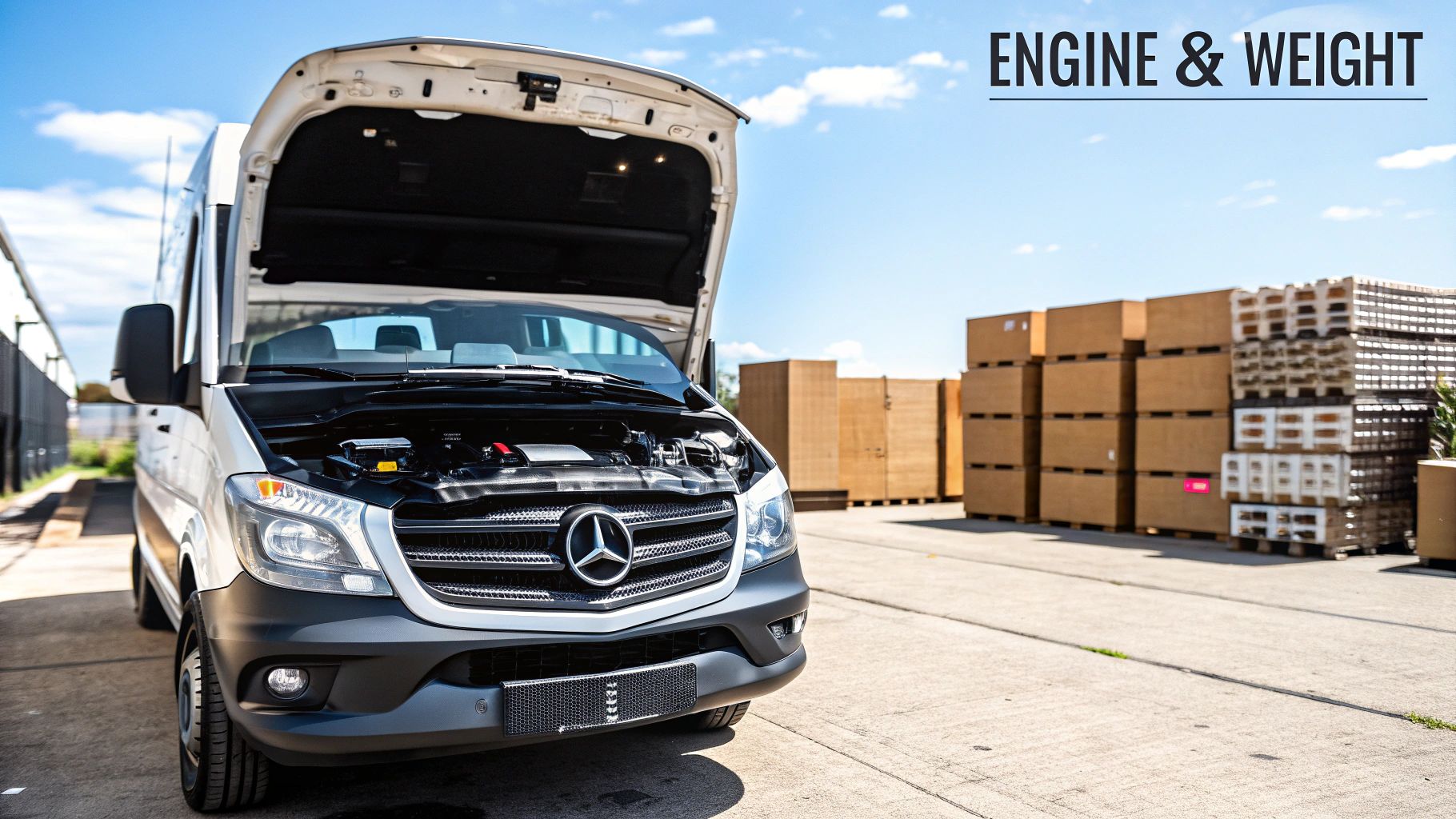
Those baseline MPG figures are a great starting point, but they’re just that—a start. In the real world, your Sprinter's fuel economy is a moving target, influenced by everything from the gear you pack to the way you drive.
Think of it like this: your van is an athlete, and its performance depends on its conditioning, its form, and how hard you push it. Understanding what affects that performance is the first step to getting the most out of every gallon of fuel. Let's dig into the big three.
Weight and Payload: The Heavier the Load, the Harder the Work
If there's one single factor that dominates the fuel economy discussion, it's weight. It all comes down to simple physics: the more mass your engine has to move, the more fuel it needs to burn to get up to speed and stay there.
This isn't just about the cargo you toss in for a weekend trip. The weight of your conversion build itself plays a huge role. A minimalist setup with lightweight materials will always sip less fuel than a fully-loaded rig with heavy hardwoods, big water tanks, and a massive battery bank. A few hundred pounds might not sound like much, but over thousands of miles, the difference in fuel costs really adds up.
Think about hiking with a backpack. A light daypack is easy, but a heavy expedition pack makes you work for every single step. Your Sprinter's engine feels that exact same strain with every extra pound you add.
Aerodynamics and Modifications: Fighting Against the Wind
Let's be honest, a Sprinter van is basically a big, rolling brick. Its boxy shape creates a ton of wind resistance, or aerodynamic drag, that your engine has to constantly fight to overcome. Anything you bolt onto the outside that disrupts the airflow is going to make that fight even harder.
Some of the most common MPG-killers we see are:
- Rooftop Accessories: Roof racks, solar panels, and big storage boxes create a ton of turbulence. A rooftop tent is one of the worst offenders—it’s like having a small parachute permanently deployed.
- Off-Road Add-ons: Those aggressive, knobby all-terrain tires look tough, but they create far more rolling resistance than highway tires. The same goes for bulky aftermarket bumpers and winches that disrupt the van's front profile.
- Lift Kits: Jacking up your van's suspension looks cool, but it exposes more of the undercarriage to the wind, increasing drag and making your engine work harder, especially on the freeway.
Driving Habits: It's All in Your Right Foot
The way you drive has an immediate and massive impact on your fuel consumption. If you have a lead foot—constantly accelerating hard, braking late, and cruising well above the speed limit—you're just pouring fuel down the drain.
On the flip side, a smooth and steady approach can work wonders for your sprinter van fuel efficiency. It's about thinking ahead. Look down the road, anticipate traffic changes, and ease off the gas instead of slamming on the brakes. On the highway, just dropping your speed from 75 mph down to a steady 65 mph can boost your fuel economy by 10-15%. That's a huge return for a little patience.
How Sprinter Fuel Efficiency Stacks Up Against Competitors
When you're in the market for a large van, fuel efficiency is always a hot topic, but it's never the whole story. The Mercedes-Benz Sprinter has earned its reputation for a reason—it blends a premium feel, workhorse diesel engines, and fantastic highway stability into one compelling package.
But how does it really measure up against the competition? It’s not about crowning a single MPG king, but about understanding what each van brings to the table. Some rivals might squeeze out a few more miles per gallon, but the Sprinter’s game is about delivering a holistic experience: solid performance, long-term durability, and respectable fuel economy.
The Competitive Landscape
The large van market is a tight race, and each manufacturer has its own philosophy on power versus efficiency. You've got the Ford Transit, famous for its wide array of engine choices, including gasoline V6s. Then there's the Ram ProMaster, which wins fans with its practical front-wheel-drive layout and great value.
The Sprinter's true value isn't just a number on a spec sheet. Its diesel powertrain is built for the long haul, delivering the kind of high-mileage longevity and serious torque that makes it a go-to for heavy van builds and cross-country journeys where efficiency under load really counts.
It's also worth remembering how much small details can affect your real-world MPG. Things you add to the outside of your van, like roof racks or solar panels, can have a surprisingly big impact on aerodynamics.
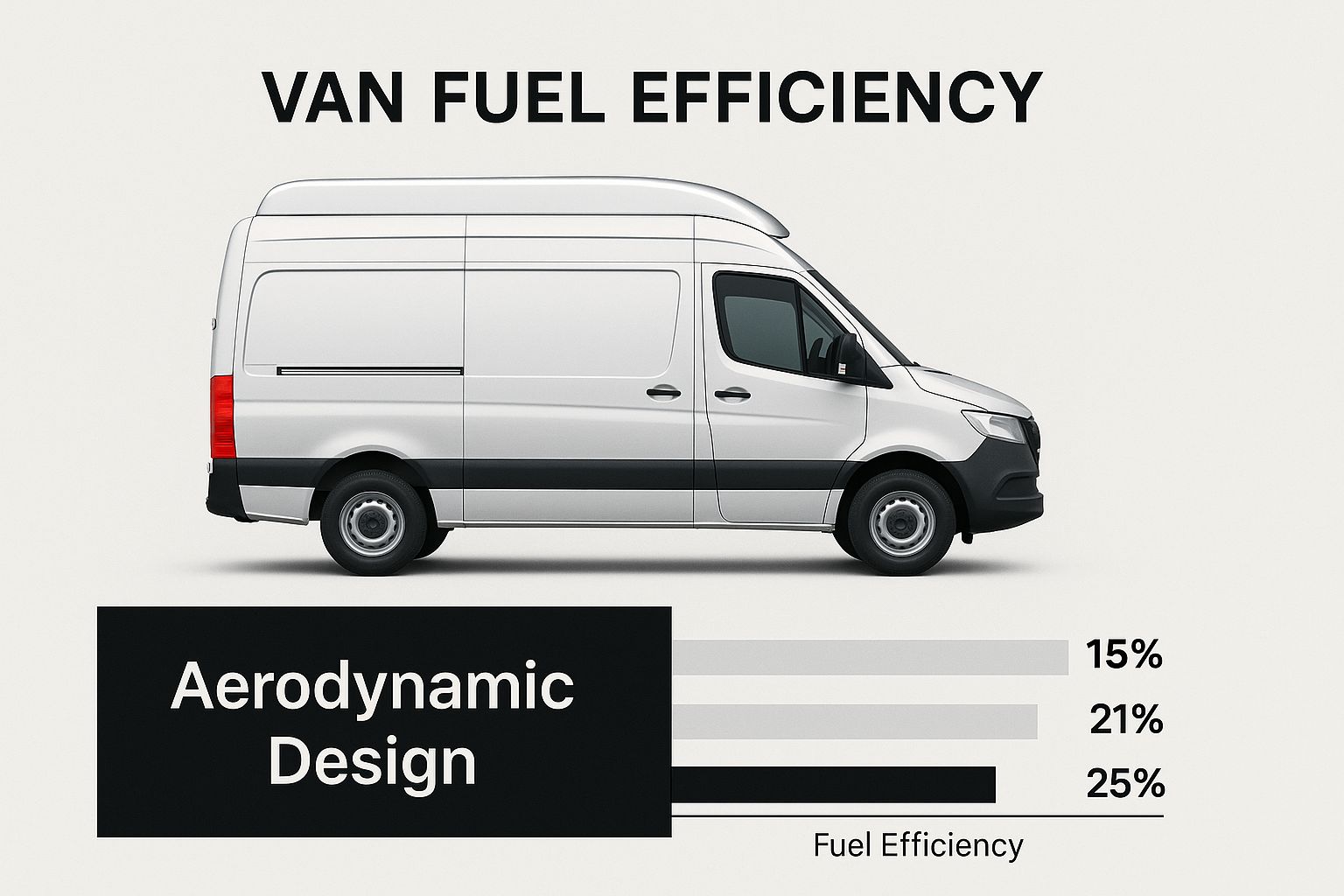
As you can see, anything that disrupts the smooth flow of air over the van creates drag, forcing the engine to work harder and burn more fuel just to maintain speed.
Sprinter vs Competitors A Fuel Efficiency Snapshot
To put things in perspective, let’s look at how the Sprinter stacks up against its main rivals in a side-by-side comparison. This table gives you a quick overview of what to expect from the most popular models on the road.
| Van Model | Typical Engine | Estimated Combined MPG | Key Advantage |
|---|---|---|---|
| Mercedes-Benz Sprinter | 2.0L 4-Cylinder Diesel | 22-25 MPG | High-torque performance and long-term durability. |
| Ford Transit | 3.5L V6 Gasoline | 15-18 MPG | Wide range of configurations and engine options. |
| Ram ProMaster | 3.6L V6 Gasoline | 16-19 MPG | Low load floor and excellent maneuverability. |
| Nissan NV Cargo | 4.0L V6 Gasoline | 13-15 MPG | Body-on-frame construction for heavy-duty use. |
This snapshot makes it clear: the Sprinter's diesel engine gives it a definite edge in fuel economy over its gasoline-powered competitors. While other vans may offer different strengths, the Sprinter consistently delivers strong MPG figures for its size.
Head-to-Head MPG Numbers
When you dig into the data, the sprinter van fuel efficiency story gets interesting. The newer 4-cylinder diesel models are consistently hitting that 23 to 25 MPG range, which is seriously competitive for a van of this size.
Of course, some competitors are pushing the envelope with different tech. For example, some aftermarket Ford Transit diesel hybrid conversions claim to reach an incredible 43.5 MPG by using electric assist. On the other end of the spectrum, smaller vans like the Ram ProMaster City can pull 26-28 MPG from a simple gasoline engine, but you're sacrificing a ton of space. If you'd like to dive deeper, you can learn more about vans with the best gas mileage in this broader comparison.
So, is the Sprinter the undisputed MPG champion? Not in every single scenario. But for anyone who needs a full-size van that masterfully balances cargo capacity, highway comfort, and robust diesel power, its fuel efficiency is a huge part of the appeal. It hits a sweet spot that few others can, making it a top contender for serious vanlifers and commercial operators alike.
Actionable Tips To Maximize Your Sprinter Van MPG

Knowing what affects your van’s mileage is one thing, but actually doing something about it is where the rubber meets the road. The good news is that you have a surprising amount of control over your sprinter van fuel efficiency. By tweaking your habits and staying on top of basic upkeep, you can squeeze more miles out of every single gallon.
Think of these tips as a toolkit for saving fuel. We've broken them down into three core areas: how you drive, how you look after your van, and the smart choices you make about its weight and setup. Let’s jump into the practical steps you can start taking today.
Adopt Smarter Driving Habits
The biggest and most immediate impact on your MPG comes directly from your right foot. Aggressive driving—think hard acceleration, slamming on the brakes, and flying down the highway—is the arch-nemesis of fuel economy. Cultivating a smoother, more deliberate driving style can boost your fuel efficiency by up to 20%. Seriously.
Here are a few simple habits to get you started:
- Drive Smoothly: Ditch the jackrabbit starts and last-second stops. A good mental trick is to imagine you have a full cup of coffee on the dashboard you don't want to spill. This gentle approach keeps the engine from guzzling fuel unnecessarily.
- Maintain a Steady Speed: Your van is most efficient when it's not constantly speeding up and slowing down. On the highway, cruise control is your best friend for maintaining a consistent pace. Just be ready to take over in hilly terrain, where it can sometimes work against you.
- Ease Off the Highway Speed: This one is huge. A Sprinter can comfortably cruise at 75 mph, but dropping that down to a steady 65 mph will work wonders for your MPG. Aerodynamic drag increases exponentially with speed, making that extra 10 mph a very expensive habit.
Prioritize Essential Vehicle Maintenance
A happy, well-maintained van is an efficient van. When you neglect basic upkeep, you force the engine and other components to work harder, burning more fuel to get the same job done. Regular checks are your best defense against this kind of waste.
A proactive maintenance schedule doesn't just prevent breakdowns; it’s one of the most effective long-term strategies for maximizing fuel economy. Each component working at its peak contributes to a more efficient system overall.
Start by making these checks part of your routine:
- Check Tire Pressure Regularly: Underinflated tires create more friction with the road, which is like trying to run in soft sand—it forces your engine to work much harder. Check the pressure monthly and keep them inflated to the manufacturer’s recommended PSI (you'll find it on the sticker inside the driver's door jamb).
- Use the Right Engine Oil: Sticking with the manufacturer-recommended grade of motor oil is crucial. The right oil ensures your engine’s moving parts operate with minimal friction, which is vital for both engine longevity and peak fuel efficiency.
- Keep Up with Air Filter Changes: A clogged air filter is like forcing your engine to breathe through a straw. It restricts airflow, making the engine work harder and burn fuel less effectively. A clean filter lets it breathe easy.
Make Strategic Modifications and Choices
If you're building out a van or just looking for bigger efficiency gains, smart decisions about weight and aerodynamics can pay massive dividends. Every pound you add and every piece of gear you bolt to the exterior has a long-term impact on your fuel budget.
Consider these strategies for a more efficient setup:
- Minimize Weight: When choosing build materials, always lean toward lighter alternatives. Lightweight plywood, aluminum, and modern composite materials are fantastic substitutes for heavy solid woods and can save you hundreds of pounds.
- Reduce Aerodynamic Drag: Be thoughtful about what you mount on your van's roof. If you absolutely need a roof rack, solar panels, or a cargo box, look for low-profile designs. If you can, remove them when they're not in use to restore the van's sleek, factory profile.
- Choose Low Rolling Resistance Tires: When it's time for a new set of tires, ask about options designed for low rolling resistance. These specialized tires can improve your fuel economy by a surprising 4-7% compared to standard ones, all without compromising on safety or performance.
How Engine Choices Shape Your Sprinter's MPG
The engine under the hood is arguably the single biggest factor determining your Sprinter van's fuel economy. Mercedes-Benz has really refined its engine lineup over the years, moving from pure workhorse power to a smarter blend of performance and efficiency.
Initially, many Sprinters came with a beefy V6 turbodiesel. It was known for its sheer grunt, but it was also pretty thirsty. As priorities shifted toward better fuel economy, Mercedes rolled out a smaller 2.0-liter 4-cylinder diesel that struck a much better balance between torque and MPG.
- 3.0L V6 Turbodiesel: This is your power-focused option, pushing out up to 188 horsepower. It's great for heavy loads but expect your fuel economy to hover in the 15–18 MPG range.
- 2.0L 4-Cylinder Diesel: A more modern, efficient choice. It delivers a respectable 161 horsepower but can achieve 23–25 MPG on the highway, thanks in part to its lighter weight.
The Magic of Turbocharging
So, how can a smaller engine keep up? The answer is turbocharging. By forcing more air into the engine, a turbo allows a smaller, 4-cylinder engine to punch well above its weight, delivering the kind of power you'd normally expect from a larger one—all while using less fuel.
Modern Sprinter turbos are even more sophisticated. Many use twin-scroll technology, which helps eliminate that dreaded "turbo lag" and gives you a much quicker response when you hit the gas, which is a lifesaver when you’re carrying a heavy payload.
Think of turbocharging as a way to get big-engine performance out of a small engine, giving you the best of both worlds: power and better fuel efficiency.
A Look Back at Sprinter Diesel Engines
The Sprinter has been a mainstay in the van world for a long time, and diesel has been its go-to. Historically, most diesel models landed somewhere in the 15–22 MPG range, but that varied wildly based on the specific van and how it was driven.
A perfect example comes from a Car and Driver fuel economy test on a 2019 Sprinter 3500XD. Its 188-horsepower turbodiesel V6 managed only about 15 MPG during their 75-mph highway run. It’s a great reminder of how much of a toll high speeds and heavy builds can take on your mileage.
Why Transmissions and Gearing Matter
The engine creates the power, but the transmission's job is to deliver it effectively. Early Sprinters often used a 7-speed automatic transmission, but the newer models have upgraded to a much smoother 9-speed.
Having more gears is a huge advantage. It allows the engine to stay in its "sweet spot"—the most efficient RPM range—for a much longer time. This translates directly to better mileage on the highway and smoother, less strained acceleration.
- More gears mean the engine isn't working as hard when you're cruising at high speeds.
- A lower first gear gives you more pulling power from a standstill, which is essential for towing or hauling heavy cargo.
- Smarter, modern transmissions have refined shift logic, preventing the engine from revving unnecessarily and wasting fuel.
Connecting the Dots: From Specs to Real-World Mileage
When you put all the pieces together, the picture becomes a lot clearer. A newer Sprinter with the 2.0L 4-cylinder engine and the 9-speed transmission can realistically get you a combined 23 MPG if you're not pushing it too hard.
On the flip side, the older V6 paired with the 7-speed transmission will likely see you in the 15–18 MPG range, especially if you're hauling a lot of weight or have a heavy foot. It’s a classic trade-off: more power for more fuel.
Ultimately, understanding these powertrain combinations is key to picking the right van and managing your long-term operating costs.
| Engine Type | Transmission | Estimated Combined MPG | Key Benefit |
|---|---|---|---|
| 3.0L V6 Diesel | 7-Speed Auto | 15–18 MPG | Strong low-end torque |
| 2.0L 4-Cyl Diesel | 9-Speed Auto | 23–25 MPG | Enhanced efficiency |
Even with a solid grasp of the basics, a few specific questions always seem to pop up when people talk about Sprinter van MPG. Let's tackle some of the most common ones head-on so you can get a clearer picture of what to expect from your van in the real world.
Think of this as the practical Q&A session after the main presentation.
How Much MPG Do You Lose with a 4×4 Sprinter?
This is the big question for anyone planning on hitting the backcountry or dealing with snowy winters. The short answer is yes, opting for a 4×4 (or All-Wheel Drive) will cost you at the pump, but that extra capability is often a trade-off many are willing to make.
On average, you can expect a 10-15% dip in fuel efficiency compared to a standard Rear-Wheel Drive (RWD) model. So, if a RWD van is getting a respectable 22 MPG, its 4×4 sibling will likely be in the 19-20 MPG range under the same conditions. This drop comes down to two simple things:
- Extra Weight: That 4×4 system isn't light. It adds a few hundred pounds of hefty mechanical parts.
- Drivetrain Drag: It just takes more energy to turn four wheels instead of two. There's more friction and complexity in the system, and that eats into your efficiency.
The real question isn't just about MPG; it's about what you get for it. If the traction and safety of a 4×4 system mean you can confidently get where you're going, the slight hit to your fuel economy is a small price to pay for peace of mind.
Does a Diesel Engine Always Save Money?
This is where things get interesting. Diesel Sprinters almost always win the MPG battle against their gasoline competitors like the Ford Transit or Ram ProMaster. But better mileage doesn't automatically mean you're saving money.
A diesel engine is a pricey upgrade, often tacking on several thousand dollars to the van's sticker price. Whether it pays off really boils down to how you use it. If you’re a high-mileage driver, crushing long stretches of highway where diesel engines are happiest, you’ll almost certainly make back that initial investment in fuel savings over time. The extra torque is also a huge plus for heavy camper builds or towing.
On the other hand, if your Sprinter is more of a weekend warrior with low annual mileage, the math gets tougher. The higher cost of diesel fuel and potentially more expensive maintenance could easily wipe out any savings you see at the pump. It’s a long-term game, so you have to run the numbers for your own travel plans.
What Is a Realistic Driving Range on a Full Tank?
Knowing how far you can go on a tank is non-negotiable for road trip planning, especially when you're venturing into areas where gas stations are few and far between. Most Sprinter vans come with a standard 24.5-gallon fuel tank.
With that number, we can work out some realistic range estimates:
| Driving Condition | Estimated MPG | Realistic Range |
|---|---|---|
| Highway Cruising | 24 MPG | ~588 miles |
| Mixed Driving | 21 MPG | ~514 miles |
| City Driving/4×4 Use | 18 MPG | ~441 miles |
Of course, these are just benchmarks. A stiff headwind, a mountain pass, or a heavy payload will shorten that range. I always tell people to adopt a simple rule: start looking for fuel when you hit a quarter tank. That usually leaves you a safety buffer of well over 100 miles to find a station, which is a great way to keep road trip stress to a minimum.
When your journey requires reliable and professional transportation rather than your own van, Max's Luxury Rides Inc. offers premium chauffeur services in the Chicago area. Whether for airport transfers or special events, travel in comfort and style by booking your ride.