
When you own a Sprinter van, keeping up with maintenance isn't just a suggestion—it's the backbone of its reliability and longevity. The entire Sprinter van maintenance schedule revolves around two core appointments: Service A and Service B.
Think of these as your van's regular check-ups, designed to catch small issues before they snowball into expensive headaches. These services typically alternate every 10,000 miles or once a year, whichever comes first, creating a predictable rhythm for keeping your Sprinter in peak condition.
The Sprinter Van Maintenance Schedule Explained
Getting a handle on the Mercedes-Benz maintenance philosophy is key to managing your ownership costs and ensuring your van stays on the road, not in the shop. This isn't about fixing things as they break; it's a proactive strategy focused on preventative care. Following this schedule is the single best thing you can do for your Sprinter's performance, lifespan, and even its eventual resale value.
For modern vans like the 2025 Mercedes-Benz Sprinter, the schedule is a straightforward, fixed-interval system. It alternates between Service A and Service B every 10,000 miles or annually. This consistency makes it easy to plan and budget for maintenance, removing a lot of the guesswork. If you want to dive deeper, you can find more detail on the specific 2025 Mercedes Sprinter van maintenance intervals and what each service includes.
Service A vs. Service B: The Core Idea
The entire system is elegantly simple. Service A is your minor service, while Service B is the major one.
Service A: This is your foundational check-up. It covers the absolute essentials, such as a synthetic motor oil replacement, a new oil filter, and a thorough brake inspection. It’s the more frequent of the two services.
Service B: This is the deep dive. It includes everything from Service A but adds several crucial tasks, like replacing the cabin air filter and performing a complete brake fluid exchange.
This alternating pattern ensures every critical component of your Sprinter gets the attention it needs at precisely the right time, keeping the vehicle running just as the engineers in Stuttgart intended.
To make it even clearer, here’s a quick-reference table that breaks down the fundamental differences between the two main service intervals.
Sprinter Van Service A vs. Service B At a Glance
| Service Interval | Mileage or Timeframe | Core Maintenance Tasks |
|---|---|---|
| Service A | Every 10,000 miles or 1 year | Synthetic Motor Oil Replacement, Oil Filter Replacement, Fluid Level Checks & Corrections, Tire Pressure Check, Brake Component Inspection, Reset Maintenance Counter. |
| Service B | Every 20,000 miles or 2 years | Includes all Service A tasks PLUS: Cabin Dust/Combination Filter Replacement and Brake Fluid Exchange. |
As you can see, the system is designed to build upon itself. Service B isn't a replacement for Service A; it's an expansion of it, ensuring that less-frequent but equally important maintenance items are handled on a regular, two-year cycle.
Navigating Service A and Service B Intervals
To really get a handle on your Sprinter van maintenance schedule, you need to understand the A and B services. These aren't just random appointments; each service is a specific set of tasks designed to keep your van running reliably. Think of Service A as your van's essential check-up, while Service B is a much deeper, more comprehensive inspection.
Thankfully, you don't have to track this yourself. Your Sprinter's onboard ASSYST PLUS system takes the guesswork out of it, giving you a heads-up about a month before service is due. It will clearly display whether you need a Service A or a Service B, making it easy to stay on top of the alternating schedule.
Breaking Down Service A
Service A is the more common of the two intervals and forms the foundation of your van's care. It covers the most critical components that see regular wear and tear.
- Synthetic Motor Oil Replacement: The engine gets fresh oil that meets the exacting Mercedes-Benz specifications.
- Oil Filter Replacement: Out with the old filter, in with a new one to keep the fresh oil clean and free of contaminants.
- Fluid Level Checks: A technician will check and top off all your key fluids, including coolant, brake fluid, power steering fluid, and windshield washer fluid.
- Tire Inspection: This involves more than a quick look. We're talking a proper check of the inflation pressure, tread depth, and the overall condition of each tire.
- Brake Component Inspection: A vital safety check. The technician performs a visual inspection of the brake pads and discs to gauge their wear level.
The More Comprehensive Service B
Service B covers everything in Service A, but it goes much further by including several additional checks and replacements for parts with a longer lifespan. This is the more thorough of the two, typically performed every 20,000 miles.
One of the most critical additions in a Service B is the brake fluid exchange. Brake fluid naturally absorbs moisture from the air, which lowers its boiling point and can seriously reduce your stopping power, especially under heavy load. Flushing the system is an absolute must for safety.
On top of that, Service B includes replacing the cabin dust/combination filter to keep the air inside your van clean. For diesel models, the service is even more intensive, with special attention paid to the fuel filters and specific engine oil requirements. To get the most life out of every part, Mercedes-Benz requires the use of DOT 4+ brake fluid and their proprietary fleece oil filters, which are designed for these extended service intervals. You can explore more on the advanced maintenance requirements for modern fleet vans to see just how specific these needs can be.
Your Mileage-Based Maintenance Checklist
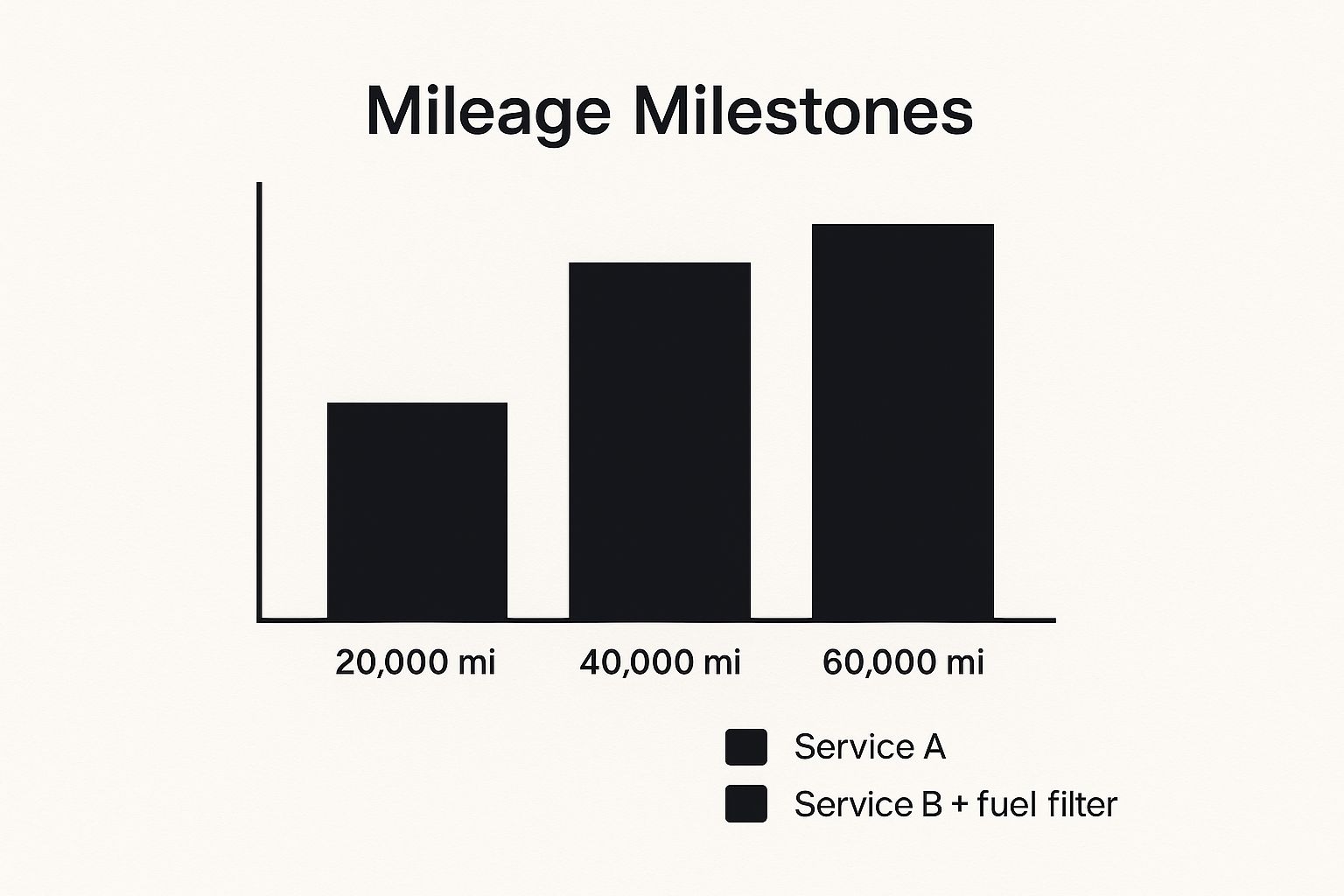
This chart helps visualize the rhythm of Sprinter maintenance—the back-and-forth between Service A and Service B. But more importantly, it shows how other critical jobs, like replacing the fuel filter, are layered in at specific mileage markers. The key takeaway is that while the core services repeat, the maintenance plan deepens as your van puts on the miles.
Sticking to a mileage-based sprinter van maintenance schedule is genuinely the best strategy for keeping your van on the road and out of the shop. This isn't just about changing the oil; it's a systematic approach designed to address wear and tear before it becomes a real problem. Following this plan is what keeps your Sprinter reliable, whether it's the backbone of your business or your home on wheels.
The foundation of the schedule is the alternating Service A and Service B, but don't overlook the extra tasks that pop up at certain milestones. These jobs are just as critical for protecting major systems like your engine, transmission, and brakes.
First 40,000 Miles: Building a Strong Foundation
The first few major service intervals are all about setting your Sprinter up for a long, healthy life. Each one is timed to get ahead of wear on key components before they can degrade and cause a domino effect of issues.
At 20,000 Miles (or 2 Years): This is your van's first date with a full Service B. It covers all the basics from Service A and adds two crucial items: a complete brake fluid exchange and a fresh cabin dust/combination filter. Don't even think about skipping this one—it’s essential for both stopping power and the air you breathe inside.
At 40,000 Miles (or 4 Years): Time for another Service B, but with a couple of important additions. For diesel models, this is the first time you'll need a new fuel filter. At the same time, the engine's air filter gets swapped out to maintain proper performance and fuel economy. It's also worth checking your owner's manual, as some models may be due for transmission service around this point.
This proactive mindset prevents real headaches down the line. A clean fuel filter, for example, is cheap insurance for your high-pressure fuel pump—a part that can run into the thousands to replace if it fails from contamination.
Here’s a quick-reference table to help you track these crucial intervals.
Sprinter Van Mileage-Based Service Schedule
| Mileage Interval | Service Type | Additional Required Tasks |
|---|---|---|
| 20,000 miles | Service B | Brake fluid exchange, Cabin air filter replacement. |
| 40,000 miles | Service B | Fuel filter replacement (diesel), Engine air filter replacement. |
| 60,000 miles | Service A | Brake fluid exchange, Transmission fluid and filter change (check manual for exact interval). |
| 80,000 miles | Service B | Fuel filter replacement (diesel), Engine air filter replacement, Cabin air filter replacement. |
| 100,000 miles | Service A | Brake fluid exchange. |
| 120,000 miles | Service B | Fuel filter replacement (diesel), Engine air filter replacement, Transmission fluid and filter change, Coolant flush. |
This table provides a clear roadmap. As you can see, following the schedule ensures that nothing gets missed as the miles add up.
Maintenance Beyond 60,000 Miles
As your Sprinter racks up the miles, the service pattern remains predictable, but a few less frequent (yet absolutely vital) tasks get added to the mix. This is where sticking to the schedule really pays off, ensuring your van stays dependable for the long haul.
From experience, a common mistake I see is owners putting off things like coolant flushes or transmission fluid changes because they seem "minor." But these fluids break down, and ignoring them can lead to overheating, harsh shifting, and even catastrophic failure. A few hundred dollars in preventative care easily saves you thousands in major repairs.
Here’s what you should be prepared for as you head toward and past the 60,000-mile mark.
- At 60,000 Miles (or 6 Years): The schedule calls for a Service A here. But this milestone is also the typical point for an automatic transmission fluid and filter change. This is a must-do service to protect one of the most complex and expensive components in your van. On top of that, it's time for another brake fluid exchange, which should happen like clockwork every two years, regardless of how many miles you’ve driven.
Budgeting for Long-Term Sprinter Ownership
Buying a Sprinter is just the first step. The real test of ownership is budgeting for its long-term care, especially once you're past the factory warranty period. Your costs will inevitably shift from predictable, routine maintenance to larger, and sometimes unexpected, repairs.
As your van racks up the miles, the simple reality of wear and tear comes into play. Components like the alternator, water pump, and suspension parts don't last forever. Replacing them is a matter of when, not if, and these jobs are almost always more expensive than a standard Service B.
Anticipating Future Repair Costs
It's smart to start putting money aside for these bigger jobs right from the start. Data suggests the average maintenance and repair bill for a Sprinter 2500 over its first 10 years is about $19,921. That's roughly $2,324 more than the average for its class.
What’s more, a hefty 58.54% of owners face a major repair within that first decade. You can dig into more of the specifics on the Sprinter 2500 maintenance cost data from CareEdge.com.
Pro Tip: Open a separate savings account just for your van. Funneling $100 to $200 into it each month builds a solid safety net. When a surprise multi-thousand-dollar repair pops up, you'll be glad you have that fund ready to go.
Preventative Care Versus Major Failures
This is where following your maintenance schedule really pays off. Think about it this way: a preventative transmission fluid service might cost you between $500 and $800. That sounds like a lot, until you compare it to the $7,000+ bill for a full transmission replacement.
The same logic applies across the board. Spending under $200 on a new diesel fuel filter is a small price to pay to protect a high-pressure fuel pump that can easily run into the thousands.
Ultimately, smart budgeting isn't about just saving for repairs; it's about seeing proactive maintenance as an investment. Spending a little now directly prevents the catastrophic (and expensive) failures that can sideline your van down the road.
Essential DIY Checks to Save You Money
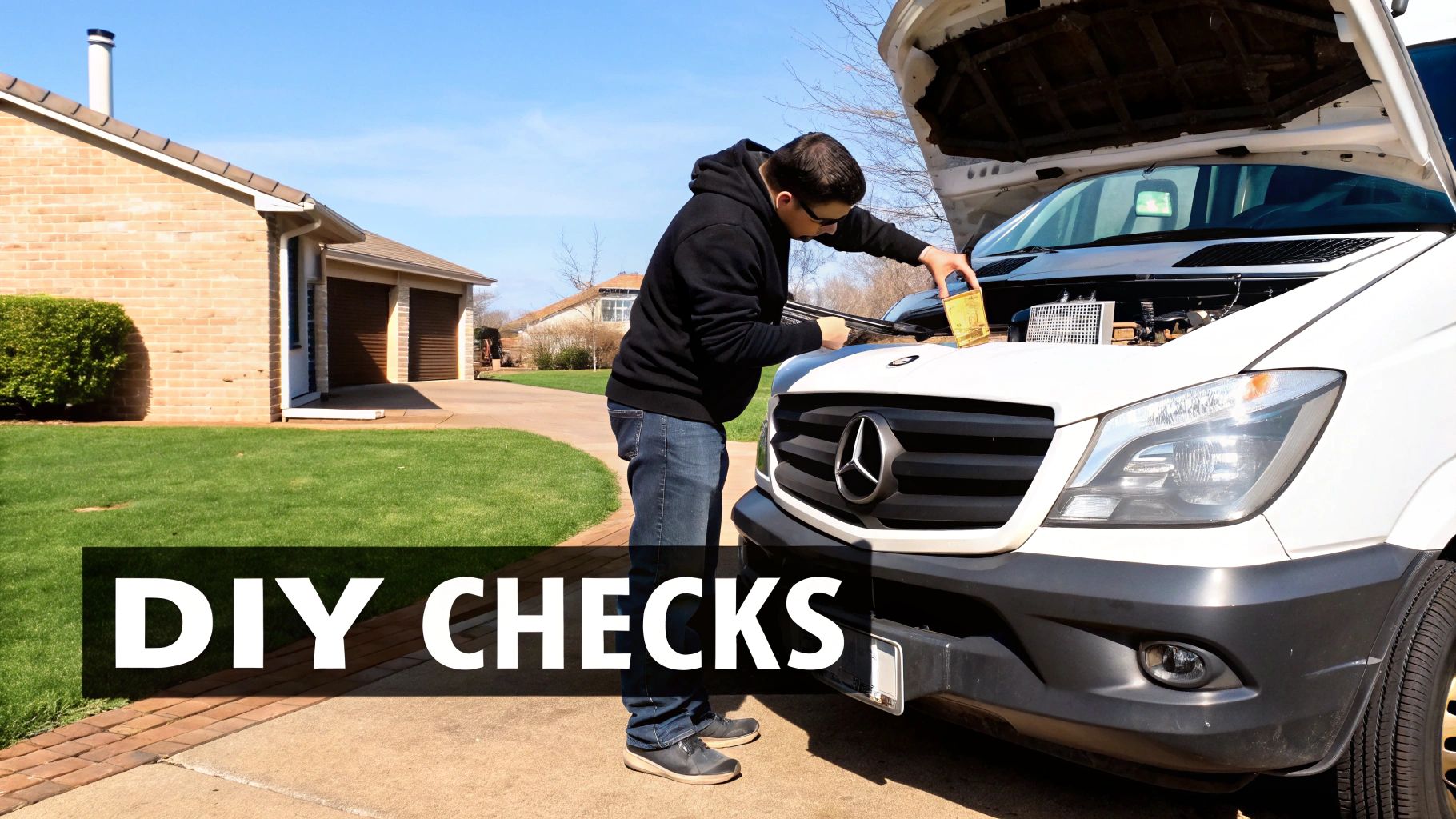
While your Sprinter van maintenance schedule relies on a pro for the heavy lifting, you can save a surprising amount of money by handling a few key checks yourself. These routine inspections aren't just about cutting down on labor costs; they're about getting to know your vehicle on a deeper level.
Learning these simple tasks is empowering. You'll be the first to spot a minor issue, like a slow fluid drip, long before it becomes a major roadside headache. Think of it as preventative care you can do right in your own driveway between your regular Service A and Service B appointments.
Monthly Fluid and System Inspections
Carve out just 15 minutes a month for this quick rundown. It's probably the single best habit you can build to keep your Sprinter reliable and ready for anything.
- Engine Oil: Check this with the engine off and cool. Pull the dipstick, wipe it clean, push it all the way back in, and pull it out again. The oil level should fall neatly between the min and max marks.
- Coolant: Make sure the engine is completely cool before you touch this. The coolant in the reservoir should be between the "min" and "max" lines. Seriously, never open the coolant cap when the engine is hot.
- AdBlue/DEF: If you're driving a diesel, your dashboard will tell you when the Diesel Exhaust Fluid is low. Don't ignore that light—top it off quickly to prevent the van from dropping into a reduced-power mode.
- Wiper Blades and Fluid: This one's easy. Top off the windshield washer fluid and take a close look at the rubber on your wiper blades. If you see any cracking or tearing, replace them. Good visibility is non-negotiable.
Tire and Filter Maintenance
Beyond the fluids, your tires and filters are two areas where a little hands-on attention really pays off. These parts are critical for safety, fuel economy, and even the air you breathe inside the cabin.
Maintaining correct tire pressure isn't just about preventing a flat. Underinflated tires can reduce your fuel efficiency by up to 3% and wear out prematurely, costing you money in both fuel and replacement tires over the long run.
The engine air filter is another simple but crucial component. When it gets clogged with dirt and debris, it chokes the engine, forcing it to work harder and burn more fuel. Swapping in a new one usually takes just a few minutes with basic tools, making it one of the most cost-effective DIY jobs you can do.
Choosing Your Sprinter Service Provider
Deciding where to get your van serviced is just as important as following the Sprinter van maintenance schedule itself. Your two main options are an authorized Mercedes-Benz dealership or a qualified independent mechanic. Each path has its pros and cons, and the best choice really boils down to your specific situation and your van's age.
Dealerships hold a few key advantages, particularly their access to proprietary diagnostic computers, technicians who are factory-trained, and a direct line to genuine Original Equipment Manufacturer (OEM) parts. If you’re dealing with a tricky electronic gremlin or any work covered under warranty, the dealer is pretty much your only option. These techs live and breathe Mercedes-Benz, so they know your Sprinter inside and out.
Of course, that level of specialized service comes with a higher price tag. Independent shops usually offer much more competitive labor rates and can be more flexible. They might give you the choice of using high-quality aftermarket parts to help manage costs, which is a big plus for many owners. The trick is to find a shop that truly knows its way around a Sprinter.
Dealer Versus Independent Shop
When you're weighing your options, you're essentially balancing cost against specialized expertise. A good, reputable independent shop can be an incredible partner for all the routine stuff—think Service A, brake jobs, or fluid changes—and often at a significant saving.
Many seasoned owners have a hybrid approach: they lean on the dealership for warranty work and for diagnosing those really complex, computer-heavy problems. But for all the day-to-day, out-of-warranty maintenance, a trusted independent specialist provides fantastic value.
This strategy makes a lot of sense in practice. An independent mechanic might charge far less for a standard Service B simply because their overhead is lower and they can source filters and fluids from OEM-equivalent suppliers without the dealership markup.
Ultimately, a smart move is to find a local independent shop you trust for the routine work. Keep them as your go-to, but always have the dealership in your back pocket for those unique issues only their specialized equipment and training can solve.
Common Sprinter Maintenance Questions
Even with a detailed maintenance schedule in hand, a few questions always seem to pop up when you're managing your Sprinter's upkeep. Let's tackle some of the most common ones I hear from owners to clear up any confusion about keeping your van in top shape.
Getting straight answers on costs, parts, and key procedures helps you budget properly and understand why each maintenance task is so important.
How Much Do Sprinter Service A and B Cost?
This is probably the number one question, and the answer is: it depends. Costs can swing quite a bit depending on your local labor rates and whether you go to a Mercedes-Benz dealer or a trusted independent mechanic.
As a general rule of thumb, you can expect a standard Service A to run somewhere between $250 and $500. Service B is more comprehensive and often includes extras like a brake fluid flush, so it typically lands in the $600 to $1,000 range. Just remember, that price can climb if other big-ticket items are due at the same time. Always get a clear, itemized quote before you give the green light.
Can I Use Any Synthetic Oil In My Sprinter?
Absolutely not, and this is one area where you can't afford to cut corners. Your Sprinter's engine requires a synthetic oil that meets a very specific Mercedes-Benz approval code, like MB 229.52. Using an oil that doesn't have this exact certification can cause significant engine problems and will almost certainly void your warranty.
Your owner's manual is your best friend here. Double-check the required spec and make sure the oil bottle you or your mechanic uses has that precise approval number printed right on the label.
Is Changing the Fuel Filter Really Necessary So Often?
For any diesel Sprinter, the answer is a resounding yes. These modern high-pressure common rail fuel systems are incredibly sensitive to water and tiny contaminants. A dirty or failing filter can quickly lead to rough running, hesitation, and—worst-case scenario—the failure of very expensive parts.
Think of it this way: this simple, relatively inexpensive filter is your main line of defense for the fuel injectors and high-pressure pump, which can cost thousands to replace. It’s one of the most critical preventative maintenance jobs you can do.
What Does the AdBlue or DEF System Do?
The AdBlue system, which uses Diesel Exhaust Fluid (DEF), is all about emissions control. It's a clever piece of technology that sprays a specialized urea solution into the hot exhaust gas. This triggers a chemical reaction that converts nasty nitrogen oxides into simple, harmless nitrogen and water.
Keeping the DEF tank topped up is non-negotiable. If it runs dry, your Sprinter is programmed to go into a reduced-power "limp mode" to protect itself. Even more frustrating, emissions regulations may prevent it from restarting at all once you shut it off.
For reliable, professional transportation in a meticulously maintained fleet, trust Max's Luxury Rides Inc. Whether you need a ride to the airport or a luxury vehicle for a special event in Chicago, we have you covered. Book your next ride with us today!