
A Sprinter van can carry anywhere from 2 people in a Cargo model to 15 passengers straight from the factory. That huge range is exactly why you see them everywhere—they can be a workhorse for a tradesperson one day and a high-end shuttle the next. It all comes down to how each model is set up to balance passenger room with raw cargo space.
Decoding Sprinter Van Seating Capacity
Think of the Sprinter lineup as a set of specialized tools. You wouldn’t use a hammer to turn a screw, and you wouldn't pick a two-seater Cargo van to shuttle a wedding party. The sprinter van seating capacity is the first and most important spec that defines what each model is built for, creating a clear trade-off between carrying people and hauling gear.
This isn’t by accident. Mercedes-Benz designed the Sprinter platform to be a chameleon, ready to adapt to just about any commercial or personal need you can throw at it. That adaptability is a huge part of its decades-long success.
From Cargo Hauler to People Mover
The real difference between the models is what happens behind the driver's cabin. A Cargo van dedicates every possible inch to equipment, packages, or custom shelving, leaving only the two seats up front. On the flip side, a Passenger van uses that same real estate for multiple rows of seats, making human transport the top priority.
The Crew van splits the difference. It’s the perfect hybrid, giving you a second row of seating for a small team while still leaving a massive cargo area in the back.
Since hitting the market in 1995, the Sprinter has grown from a simple large van into something closer to a minibus. With configurations seating up to 15 (and even 17 in some custom builds), it’s a major player in the passenger transport world. You can learn more about the Sprinter's versatile history on swattransport.ae.
This chart breaks down how the three main Sprinter models are organized by their seating philosophy.
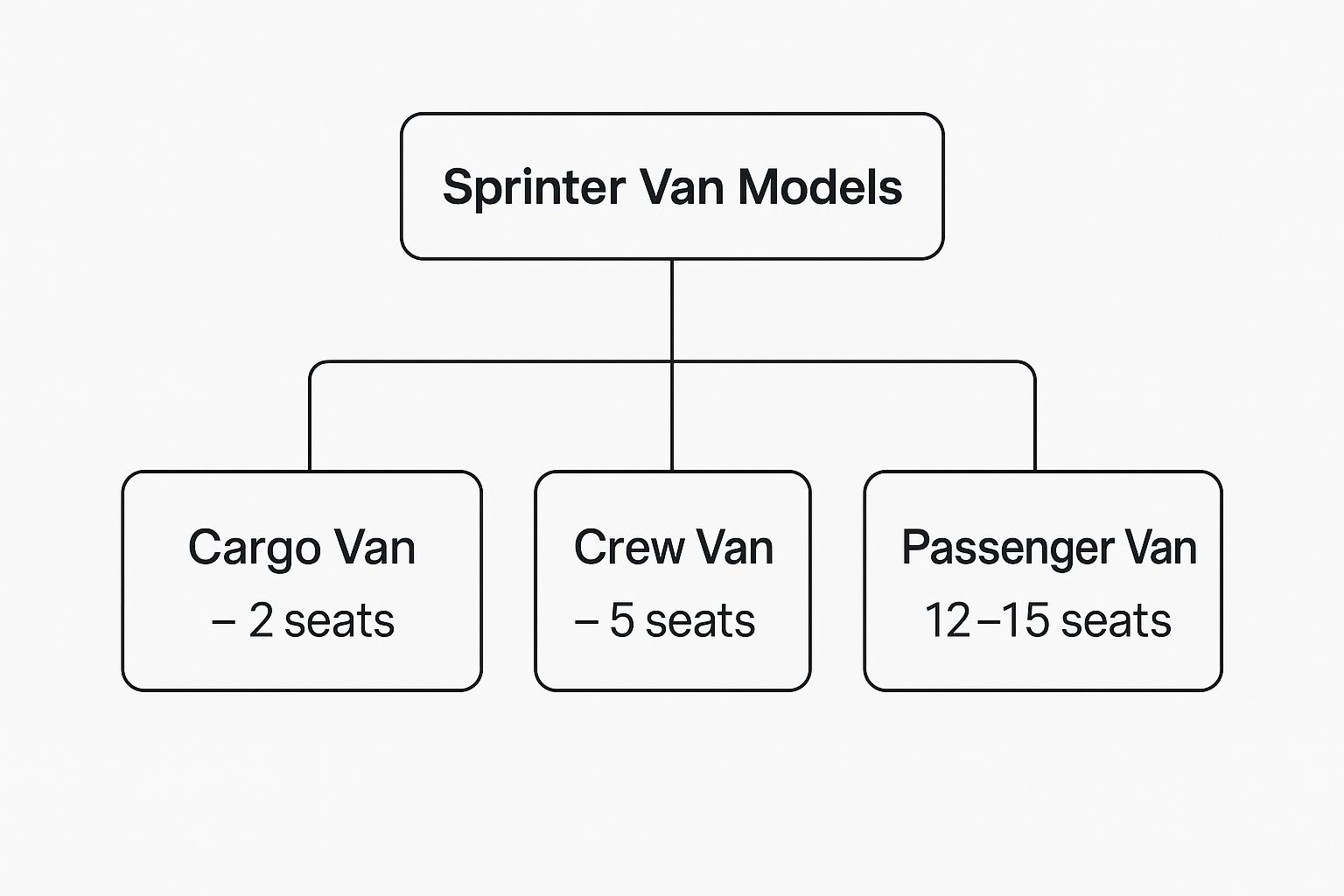
As you can see, each model has a very distinct purpose, from the utility-first Cargo to the group-focused Passenger van.
At its core, choosing the right Sprinter is a simple equation: the more seats you add, the less dedicated cargo space you have. The genius of the lineup is providing distinct, factory-ready solutions at key points along that spectrum.
To put this into a real-world context, let’s look at a quick comparison of these models and what they’re truly built for.
Sprinter Models at a Glance: Seating vs. Purpose
This table gives you a quick overview, connecting each standard Sprinter model to its seating capacity and most common job. It's a simple way to see which van is the right tool for your specific needs.
| Sprinter Model | Typical Seating Capacity | Primary Use Case |
|---|---|---|
| Cargo Van | 2–3 | Commercial transport, trade work, camper conversions |
| Crew Van | 5 | Transporting a work crew and their equipment |
| Passenger Van | 12–15 | Group transport, shuttle services, large family travel |
Whether you're running a business, managing a shuttle service, or just need to move a lot of people, this breakdown makes it clear where each model shines.
A Look at Standard Sprinter Configurations
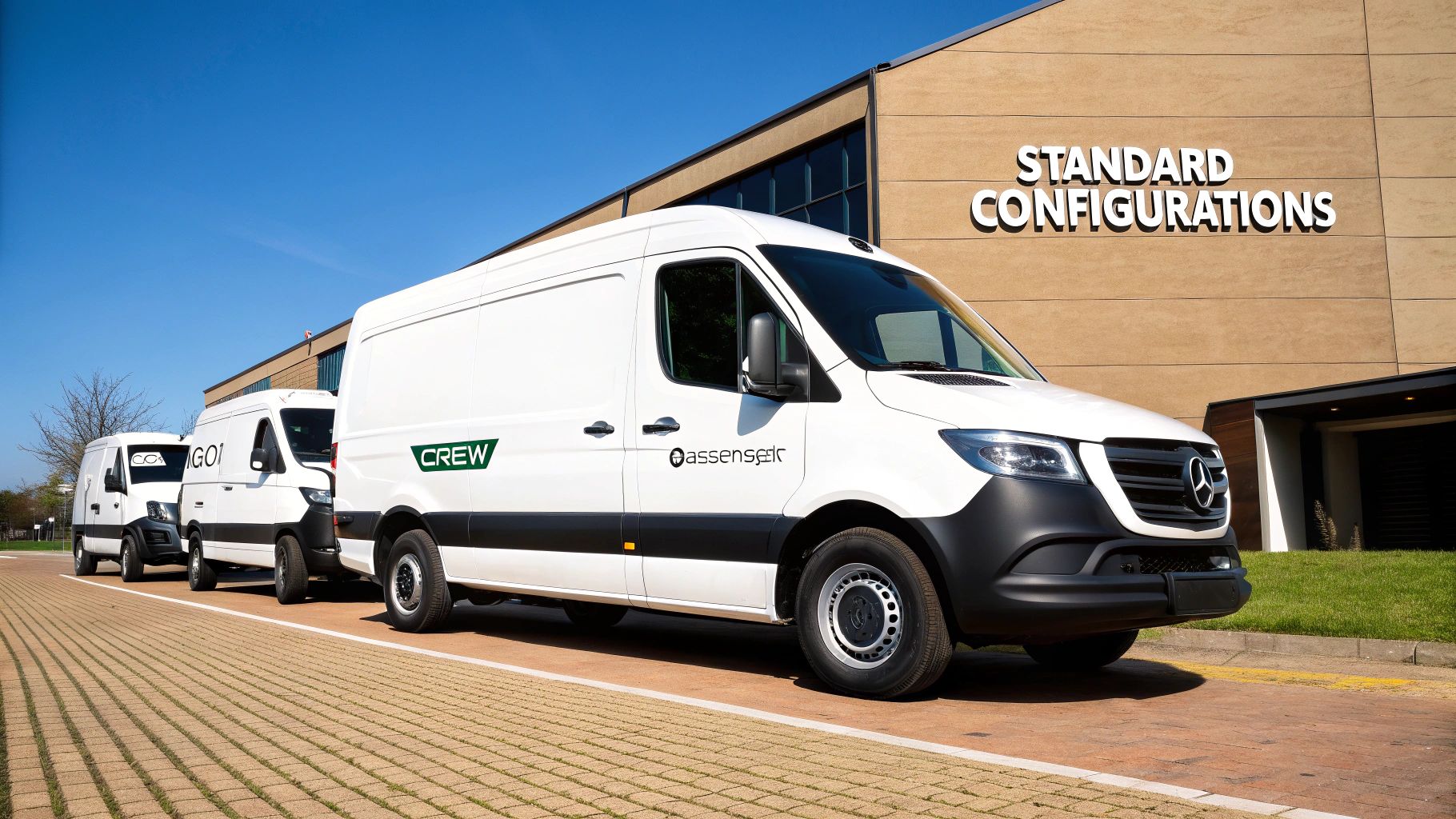
To really get a handle on sprinter van seating capacity, the best place to start is with the options that roll right off the factory floor. Mercedes-Benz has honed its offerings down to three core configurations, and it's best to think of them as specialized tools. Each one is built to solve a very specific transportation challenge.
These aren't just random layouts; they're the result of decades of real-world use and feedback. Since the Sprinter first hit the scene, it's been a massive success, with over 3 million units sold worldwide. A huge part of that success comes from its incredible flexibility, ranging from pure cargo haulers to plush 9-seaters and all the way up to high-capacity 15-passenger shuttles. You can read more about the Sprinter's impressive sales history to get a sense of its impact.
Let's dive into what makes each of these standard models tick.
The Cargo Van: The Workhorse
The Sprinter Cargo Van is the purest form of the platform. It's exactly what it sounds like: a vehicle dedicated almost entirely to hauling stuff. With seating limited to just two or three people up front, its single-minded purpose is to maximize every last inch of space for gear, packages, or custom-built interiors. This is the ultimate blank canvas.
It's the go-to choice for:
- Tradespeople who need a mobile workshop on wheels, like plumbers or electricians.
- Logistics companies and delivery drivers where cargo volume is king.
- DIY van lifers who want total freedom to design their own custom camper layout from scratch.
This model makes no apologies for what it is—a true commercial vehicle that puts utility above all else.
The Crew Van: The Hybrid Solution
So, what happens when you need to move both people and their equipment? That’s where the Sprinter Crew Van comes in. It strikes a clever balance by adding a single, three-person bench seat right behind the driver, bumping the total capacity up to five.
This setup is a lifesaver for all kinds of businesses. Picture a landscaping team showing up to a job with all their mowers and tools securely stored in the back. Or a video production crew that needs to get their camera gear and a few key people to a location in one vehicle. The Crew Van eliminates the need for a second car, which simplifies planning and keeps costs down.
It’s the perfect middle-ground option, giving you a smart mix of passenger and cargo space without making a major compromise on either.
By adding just one row of seats, the Crew Van transforms from a simple hauler into a versatile mobile command center for small teams, proving that a small change in seating can create a completely new use case.
The Passenger Van: The People Mover
When you need to move a crowd, you bring in the Sprinter Passenger Van. This is the version most people think of for group travel, and for good reason. It’s engineered from the ground up to transport people in comfort and safety, dedicating the vast majority of its interior to seating.
Straight from the factory, these vans are typically configured to hold either 12 or 15 people, driver included. This capacity makes them invaluable for shuttle services, hotels, tour companies, and even large families. With features like high ceilings for easy movement and a clear center aisle, the focus is squarely on the passenger experience, making even long trips feel less cramped.
High-Capacity Sprinters for Large Groups
When you need to move more than a small team or family, you’re entering the territory of the high-capacity Sprinter Passenger Van. These models are engineered from the ground up to maximize sprinter van seating capacity, turning that cavernous interior into a serious people-mover. This is where the Sprinter’s passenger-focused design truly shines.
The most common setup you’ll see right from the factory is the 15-passenger model. It’s the workhorse of the industry, usually configured with a driver’s seat and four rows of bench seating. But for those who need to squeeze in just a few more people, specialized upfitters can push the limit to create custom 17-passenger versions, though that often comes with its own set of rules and regulations.
This corner of the commercial van market is always evolving, with manufacturers constantly tweaking designs for better fuel economy and a smoother ride. That push for improvement has given us a solid range of options, from 12- to 17-passenger layouts. If you’re interested in the bigger picture, you can find some great insights into the growing van market on GrandviewResearch.com.
Who Uses High-Capacity Sprinters?
The 15-passenger Sprinter is the go-to choice for a surprisingly wide variety of businesses and organizations. It hits that sweet spot of capacity, comfort, and proven reliability, making it the perfect tool for anyone who regularly transports a crowd.
You’ve probably seen them being used by:
- Airport Shuttle Services: The reliable choice for getting travelers and their bags from A to B.
- Tour Operators: Perfect for city tours where everyone wants a good view and a comfortable seat.
- Hotels and Resorts: Shuttling guests to local hotspots or the nearest airport.
- Schools and Universities: Transporting sports teams, clubs, or students on field trips.
- Community and Religious Organizations: Getting groups to events, gatherings, and outings together.
This image gives you a great look at a typical interior, showing how the layout prioritizes both a clear aisle and individual passenger space.
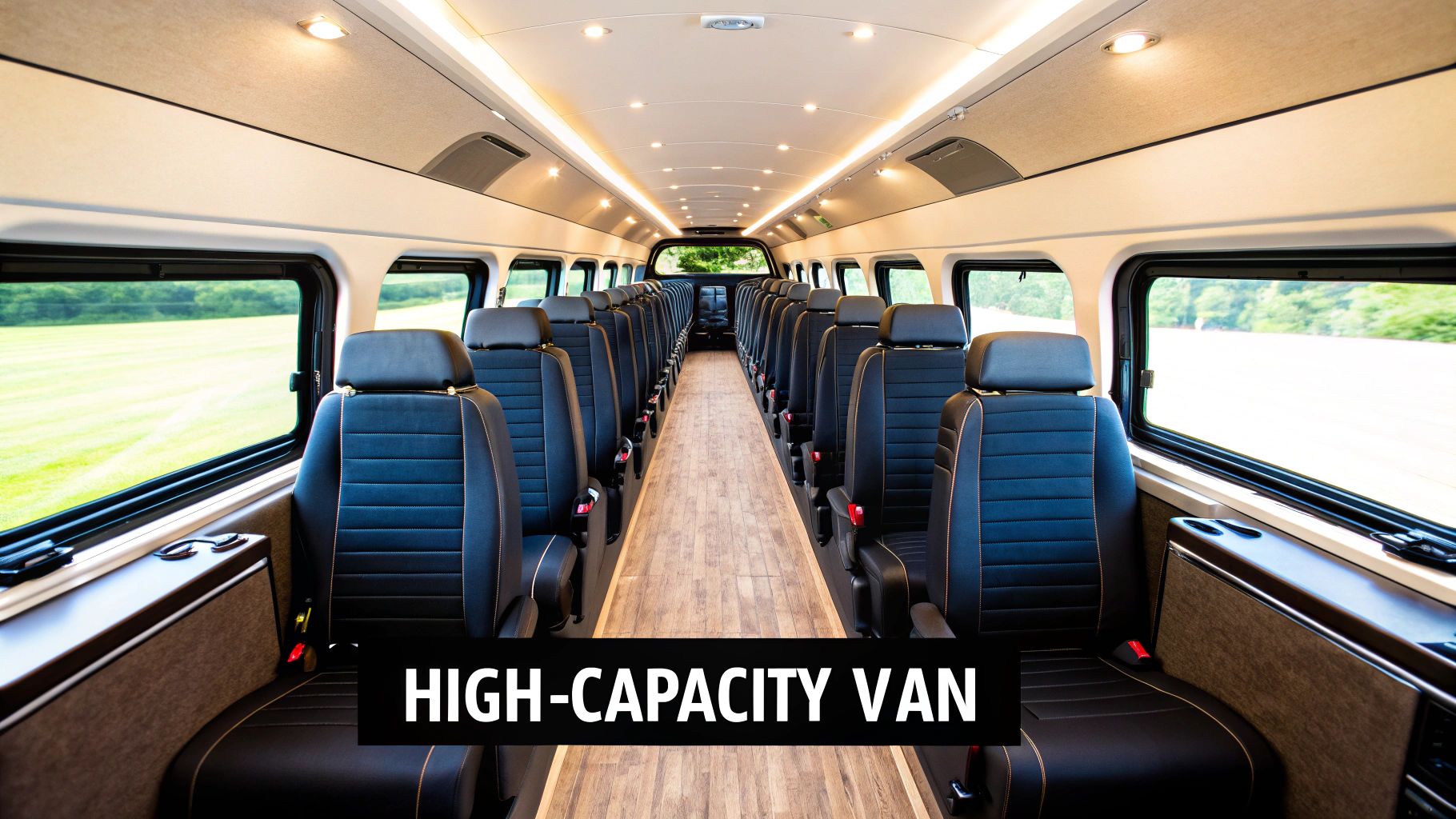
You can see how a well-organized cabin is absolutely critical for shuttle and tour operations—it’s all about creating an efficient flow and a pleasant experience for everyone on board.
Practical Considerations for 15+ Passengers
Running a vehicle this size is a whole different ball game. When you maximize the sprinter van seating capacity, you’re also taking on a greater level of legal and logistical responsibility. It’s not something to take lightly.
Moving from a standard passenger vehicle to a 15-passenger van is a significant step up. It's not just about more seats; it's about a higher standard of care, safety, and regulatory awareness that protects both your passengers and your organization.
Before you jump in, there are a few key things you absolutely need to nail down.
First, dig into your local Commercial Driver's License (CDL) requirements. In the U.S., you might not need one to drive a 15-passenger van for personal trips, but the moment you start using it for commercial purposes—like running a paid shuttle—the rules often change. These regulations vary widely from state to state, so your first call should be to your local DMV.
Next, get ready for a different insurance conversation. Insuring a high-capacity commercial vehicle is more involved and will cost more than your standard car insurance. You'll need a commercial policy that properly covers the increased liability of carrying that many people.
Finally, don’t ever cut corners on passenger comfort. Things like ample headroom, a wide aisle for easy movement, and a powerful climate control system aren't just nice-to-haves. They’re essential for ensuring every trip is a positive—and safe—experience for everyone.
Custom Seating Solutions And Conversions
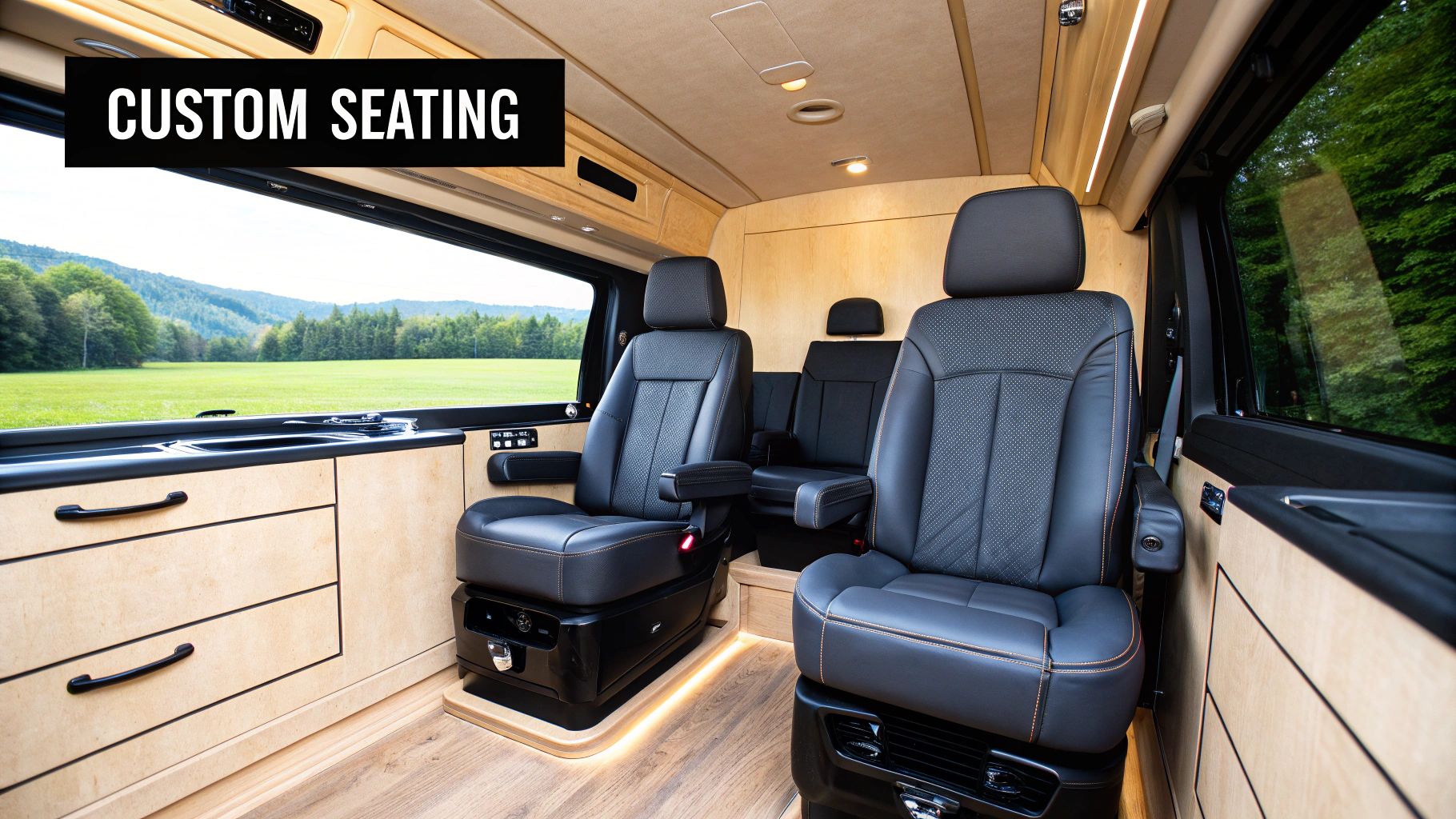
While the factory layouts are great starting points, the real beauty of a Sprinter van is its potential as a blank canvas. This is where custom conversions come into play, turning the standard sprinter van seating capacity from a fixed number into a flexible layout built around your specific needs. It’s this adaptability that lets a workhorse van become almost anything you can dream up.
Think of it like buying a house. A standard floor plan works for most people, but a custom-built home is designed around your family’s exact lifestyle. A conversion does the same for your van, allowing you to prioritize pure luxury, practical function, or a clever mix of both.
From Luxury Transport To Functional Utility
When it comes to custom seating, the possibilities are nearly endless. A bare-bones Cargo van can be transformed into a high-end executive shuttle, swapping empty space for plush, reclining captain's chairs. This "private jet on wheels" approach is perfect for operators like Max's Luxury Rides Inc., where passenger comfort and a premium feel are the entire business model.
On the other end of the spectrum, families and outdoor adventurers often lean into highly functional conversions. This could mean installing bench seats that cleverly fold down into a full-sized bed, giving you a vehicle that’s part passenger van, part camper.
Accessibility is another huge area for customization. Specialized upfitters can turn a Sprinter into a fully ADA-compliant vehicle by:
- Installing certified wheelchair lifts and securement systems.
- Designing wider aisles for easy movement.
- Creating flexible seating layouts to accommodate everyone.
These thoughtful modifications ensure that all passengers can travel safely and comfortably, opening up new opportunities for non-emergency medical transport, tour operators, and community shuttle services.
Customization is about making strategic trade-offs. You might reduce the total number of seats from 15 to 9, but in return, you gain unparalleled comfort, unique features, or life-changing accessibility.
Deciding between a van straight from the factory and a custom build involves weighing your budget, timeline, and specific needs.
Factory vs Custom Seating: What to Consider
| Factor | Factory Seating | Custom Conversion |
|---|---|---|
| Cost | More affordable upfront. Included in the vehicle's MSRP. | Higher initial investment. Costs vary widely based on complexity. |
| Flexibility | Limited layouts designed for general use cases. | Nearly unlimited options. Built to your exact specifications. |
| Timeline | Ready to go from the dealership. | Can take weeks or months depending on the upfitter's schedule. |
| Resale Value | Standard, predictable value. | Can be higher for high-quality, professional builds. |
| Safety | Fully engineered and crash-tested by Mercedes-Benz. | Must be done by a certified professional to meet federal standards. |
Ultimately, a factory van gets the job done reliably, but a custom conversion creates a vehicle that's truly yours.
Safety Is Non-Negotiable
Changing a vehicle's interior—especially adding or moving seats—is serious business with massive safety implications. Every seat and seatbelt is engineered to anchor to specific, reinforced points on the van's chassis. You can't just bolt a new seat to the floor; it won't hold in a crash. It's incredibly dangerous.
This is why working with a certified and reputable conversion professional is non-negotiable. These experts know the complex engineering and federal safety standards inside and out. They ensure every new anchor point is properly reinforced and that all additions meet or exceed legal safety requirements. Choosing a qualified upfitter isn't just a suggestion—it's the most critical step you can take to protect your passengers.
How to Choose the Right Seating Capacity
Feeling a bit overwhelmed by all the choices? I get it. Picking the right sprinter van seating capacity can seem complicated, but it really boils down to one simple idea: focus on what you'll actually be doing with the van day-to-day.
Think about it like buying a new suit. You wouldn't buy one three sizes too big just in case you gain weight someday. In the same way, getting a 15-passenger van when you usually only carry four people means you're stuck maneuvering and paying for a bunch of empty seats. The real goal is finding the sweet spot that fits your typical needs, not just a theoretical maximum.
Start With Your Core Mission
First things first, what is this van’s main job? Is it a workhorse for your business or a chariot for family adventures? Just answering that one question cuts your options down significantly and gives you a clear path forward.
For a business like ours, Max's Luxury Rides Inc., the priority is almost always executive comfort over cramming in as many people as possible. We’ve found that a custom 9-seat setup with spacious captain's chairs delivers a far better experience for our clients than a standard 15-seat bench layout ever could. Your van's primary mission will tell you whether you need to optimize for passenger count, individual comfort, or pure cargo space.
Your ideal seating capacity isn't about filling every seat on every trip. It’s about perfectly serving the needs of your most frequent journeys, ensuring comfort, efficiency, and practicality are always at the forefront.
Once you’ve locked in that core mission, it's time to get into the nitty-gritty of who—and what—you'll be carrying. This is where we move from the big picture to the practical details.
Key Questions to Guide Your Decision
To really nail down the perfect configuration, take a minute to answer these three questions. An honest assessment here will save you a ton of headaches and money later on.
Who Are You Carrying?
Picture your typical passengers. Is it a construction crew with bulky tool belts needing durable, wide seating? Corporate clients who expect a bit of elbow room? Or your own family, complete with car seats and all the gear that comes with kids? The "who" really dictates how much personal space and comfort you’ll need.What Is Your Average Group Size?
Try not to get hung up on that one time a year you need to move the entire extended family. Instead, think about your weekly average. If you consistently transport 6-8 people, a 12-passenger van gives you fantastic flexibility and a little extra breathing room. A 15-passenger model would likely be overkill.How Much Gear Is Coming Along?
It's a simple truth: more people equals more stuff. If you're running a shuttle service, that means luggage for every single passenger. For a family hitting the road, it’s coolers, bikes, and camping equipment. This is where a 12-passenger van with the back bench removed can be a genius move, striking a much better balance between seating and must-have storage than a packed 15-seater.
Common Questions About Sprinter Van Seating
When you start digging into the details of Sprinter vans, a few questions always seem to pop up, especially around regulations and custom modifications. Getting the right answers is key to making a smart, safe decision. Let's tackle some of the most common ones we hear about Sprinter van seating capacity.
How Many People Can A Mercedes Sprinter Van Hold?
A factory-standard Mercedes-Benz Sprinter Passenger Van will typically hold either 12 or 15 people, and that number includes the driver. The more work-oriented Crew Van model seats up to 5, while custom conversions are where things get interesting—they can range from ultra-luxe 7 to 9-seat executive shuttles to high-capacity 17-seat minibuses.
Do I Need A Special License To Drive A 15-Passenger Sprinter Van?
This is a big one, and the answer comes down to where you are and what you're using the van for. In the United States, if you're just using a 15-passenger van for personal trips, you generally don't need a Commercial Driver's License (CDL).
The game changes once money is involved. If you're running a paid shuttle service, transporting clients, or using it for any other commercial purpose, a CDL might be required. These rules can vary quite a bit from state to state, so it's absolutely vital to check with your local DMV first.
Your intended use—personal versus commercial—is the single biggest factor that determines licensing requirements. Always confirm with local authorities before putting a high-capacity van into service for your business.
Can You Add Seats To A Sprinter Cargo Van?
Absolutely, you can add seats to a Cargo van, but this is a job for the pros. It’s not just about bolting in a bench; any new seats must be anchored securely to the van's frame, and you have to install DOT-approved seatbelt systems for every position.
This is not a DIY weekend project. Using a certified upfitter is the only way to ensure the work meets all federal and state vehicle safety standards. They have the expertise to maintain the van's structural integrity, which is crucial for protecting everyone on board.
For a truly exceptional travel experience where comfort and style are paramount, consider the customized luxury fleet at Max's Luxury Rides Inc. Whether you need sophisticated airport transport or an elegant shuttle for a special event, we provide a premium service tailored to your needs. Explore our luxury transportation options and book your ride today!