
In the world of luxury transportation, a pristine vehicle is merely the price of entry. For elite services, true excellence is built on a foundation of uncompromising safety and reliability. A momentary lapse, a soft brake, a dim headlight, or an underinflated tire, can jeopardize passenger safety, tarnish a hard-earned reputation, and result in significant liability. This commitment to safety is not just about avoiding citations; it is about delivering the profound peace of mind that corporate clients and special event guests demand and deserve. A systematic approach to vehicle inspections is, therefore, non-negotiable for any premier fleet operation.
This definitive vehicle safety inspection checklist provides a rigorous, 10-point framework specifically designed for the demands of a professional black car service. Moving far beyond generic advice, this guide offers actionable steps, specific tolerances for critical systems, and operational insights to ensure every airport transfer, corporate outing, and wedding journey is as safe as it is luxurious. We will cover everything from pre-trip verifications a chauffeur must perform to the periodic deep-dive maintenance checks managed at the fleet level. This structured process transforms routine checks from a chore into a core pillar of your brand's promise, ensuring every passenger's experience is flawless from curb to destination. Following this comprehensive checklist is the most effective way to protect your clients, your chauffeurs, and your business's future.
1. Brake System Inspection
For a luxury transportation provider, the braking system is the cornerstone of passenger safety and ride quality. A comprehensive brake system inspection is far more than a simple check; it's a meticulous evaluation of every component responsible for bringing a multi-ton luxury vehicle to a smooth, controlled, and reliable stop. This is a non-negotiable part of any professional vehicle safety inspection checklist, ensuring both chauffeur and client have absolute confidence in the vehicle's performance, especially in the unpredictable stop-and-go traffic of downtown Chicago.
A proper inspection involves evaluating brake pads for minimum thickness, rotors for warping or scoring, calipers for proper engagement, and brake lines for any signs of corrosion or leaks. Critically, it also includes checking the brake fluid for both level and quality, as contaminated fluid can severely compromise braking power.
Key Inspection Points and Frequency
A thorough brake inspection should be scheduled at regular, defined intervals, not just when a problem arises.
- Pads and Rotors: Check for wear every 10,000-15,000 miles, or more frequently for vehicles operating primarily in heavy city traffic. High-end services like those using Mercedes-Benz Sprinters or Cadillac Escalades often mandate checks every 7,500 miles. The minimum safe brake pad thickness is generally considered 3 millimeters.
- Brake Fluid: Perform a fluid flush and replacement every 24 months or 30,000 miles, whichever comes first. This prevents moisture buildup and ensures optimal hydraulic pressure.
- Calipers and Hoses: Visually inspect for leaks, cracks, or damage during every oil change. A malfunctioning caliper can lead to uneven pad wear and pulling to one side during braking.
Fleet Management Insight: Top-tier limousine services achieve near-zero brake-related incidents by implementing a policy of monthly brake audits on high-mileage vehicles. These audits are logged digitally for each vehicle’s service history, providing a clear maintenance record.
Chauffeur Training and Pre-Trip Checks
Chauffeurs are the first line of defense. Train them to recognize early warning signs during their pre-trip checks and daily operations:
- Feel: Does the brake pedal feel "spongy" or go too far to the floor?
- Sound: Are there any high-pitched squealing, grinding, or scraping noises when braking?
- Performance: Does the vehicle pull to one side when the brakes are applied?
This proactive approach allows maintenance to address issues before they compromise passenger safety.
2. Tire Condition and Pressure Assessment
For a premier transportation service, tires are the vehicle's sole connection to the road, directly influencing passenger safety, ride comfort, and fuel efficiency. A comprehensive tire assessment goes far beyond a quick glance; it's a critical evaluation of tread depth, pressure levels, wear patterns, and sidewall integrity. This step is a fundamental part of any professional vehicle safety inspection checklist, guaranteeing a smooth, stable, and secure ride for every client, whether on a long-distance airport transfer or navigating downtown for a special event.
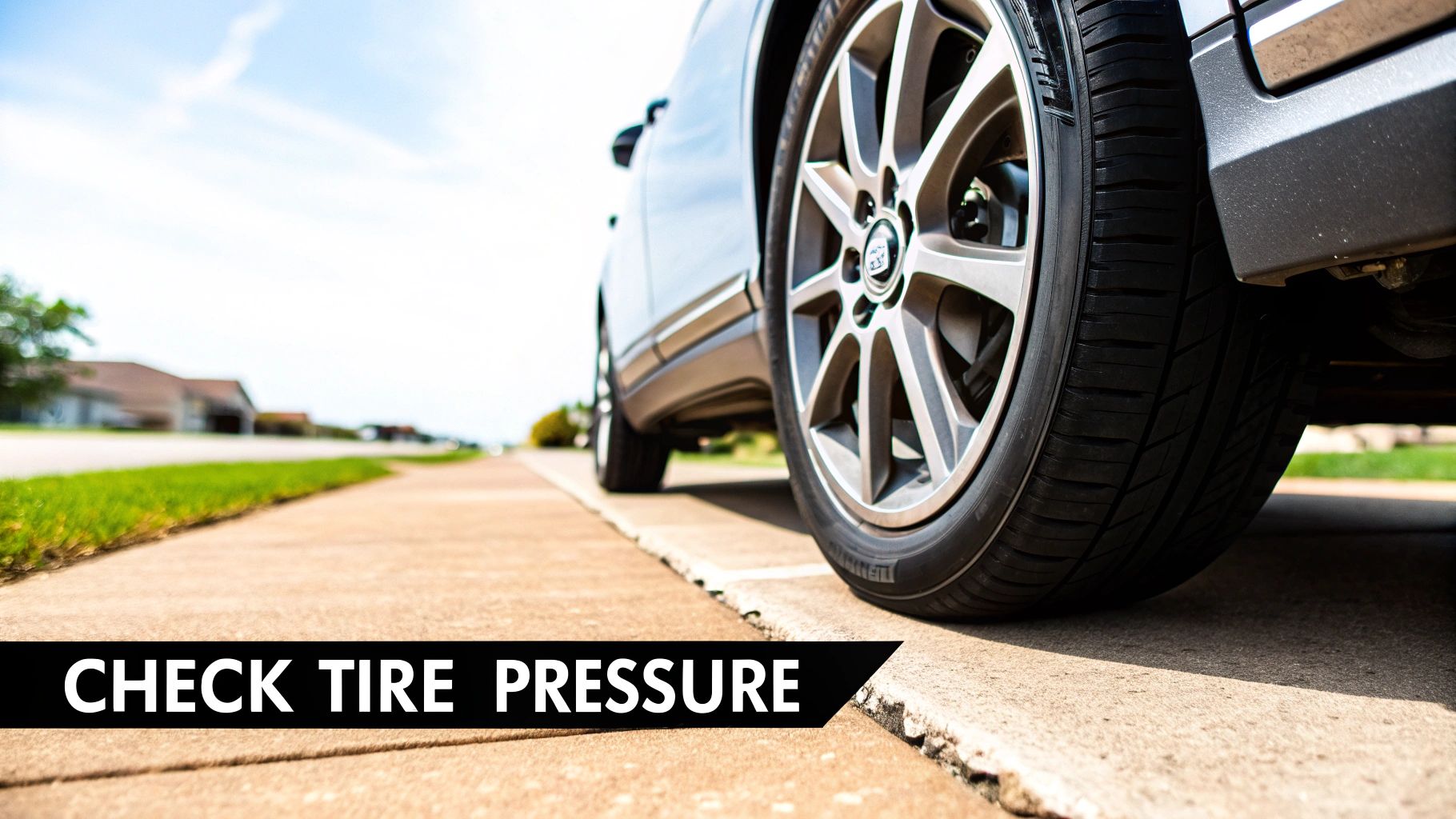
A proper inspection involves using a digital pressure gauge to check PSI, a tread depth gauge to measure wear, and a visual check of the entire tire surface for cuts, bulges, or embedded objects. Properly inflated and maintained tires ensure optimal handling, braking performance, and prevent the discomfort and potential danger of a blowout.
Key Inspection Points and Frequency
A systematic tire inspection schedule is essential for preventing on-the-road failures and maintaining the high standards of a luxury fleet.
- Tire Pressure: Check pressure daily before the vehicle's first trip, when tires are cold. Follow the manufacturer's recommended PSI found on the door jamb sticker, not the maximum pressure listed on the tire sidewall.
- Tread Depth: Measure weekly using a tread depth gauge. The legal minimum is 2/32 of an inch, but for luxury vehicles operating in variable weather, replacement is recommended at 4/32 of an inch to maintain superior traction.
- Rotation and Alignment: Rotate tires every 7,500 miles or as recommended by the luxury vehicle manufacturer to ensure even wear. Check wheel alignment annually or if uneven wear patterns are detected.
Fleet Management Insight: Leading executive car services implement a policy of using nitrogen inflation for their fleets. Nitrogen is less susceptible to temperature fluctuations, providing more stable tire pressure over time, which enhances safety and slightly improves fuel economy.
Chauffeur Training and Pre-Trip Checks
Chauffeurs must be adept at identifying tire issues before they escalate. Empower them with the knowledge to perform effective pre-trip inspections:
- Visual: Is there any visible damage, such as cracks, cuts, or bulges on the sidewalls?
- Pressure: Does the tire look underinflated? Does the Tire Pressure Monitoring System (TPMS) indicate any warnings?
- Wear: Are there any signs of uneven tread wear, which could indicate an alignment or suspension problem?
This diligent, proactive approach ensures that every journey begins with a foundation of safety and reliability, reflecting the professionalism of the service.
3. Lighting System Verification
For a luxury ground transportation service operating in a dynamic environment like Chicago, the lighting system is a critical component of both safety and brand presentation. A comprehensive lighting verification ensures the vehicle is not only legally compliant but also highly visible to other drivers, pedestrians, and the client awaiting their arrival. This part of the vehicle safety inspection checklist goes beyond simple functionality; it guarantees that from the high-intensity discharge (HID) headlights cutting through evening fog to the ambient interior lighting setting a premium tone, every light performs flawlessly.
Proper verification involves a systematic check of every single light source on the vehicle. This includes headlights (low and high beams), taillights, brake lights, turn signals, hazard lights, reverse lights, and license plate lights. For specialty vehicles like stretch limousines or executive vans, it also encompasses interior cabin lighting, accent lights, and any custom branding lights, all of which contribute to the client's luxury experience.
Key Inspection Points and Frequency
A rigorous and consistent lighting check schedule is essential for preventing compliance issues and ensuring passenger safety, especially for nighttime airport transfers and evening events.
- Pre-Trip Daily Check: Chauffeurs must perform a 360-degree walk-around before every shift to confirm all exterior lights are operational. This includes testing turn signals, brake lights (often requiring a second person or a reflective surface), and hazard flashers.
- Interior Lighting: Before picking up the first client of the day, all cabin lights, reading lights, and accent lighting should be tested to ensure they provide the expected ambiance and functionality.
- Weekly Deep Check: A more detailed weekly inspection should check for signs of dimming, flickering, or discoloration, which can indicate a bulb or electrical issue is imminent. Lens clarity should also be assessed and cleaned.
Fleet Management Insight: Leading Chicago black car services integrate a "two-person light check" into their weekly maintenance protocol. One technician operates the controls while another visually confirms the function and brightness of each external light, logging the results digitally to track bulb lifespan and identify recurring electrical faults.
Chauffeur Training and Pre-Trip Checks
Equip chauffeurs to be vigilant about lighting, as they are the first to notice intermittent problems during operation.
- Visual: Are any dashboard warning lights indicating a bulb failure? Are the headlights aimed correctly, not pointing too high or too low?
- Function: Do the turn signals blink at a normal rate? A rapid blink often signals a burnt-out bulb elsewhere in the system.
- Clarity: Are the headlight and taillight lenses clean and free of fogging or condensation that could reduce visibility?
Proactive identification allows for immediate replacement of bulbs or fuses, maintaining the vehicle's impeccable appearance and safety standards.
4. Interior Cleanliness and Upholstery Condition
For a luxury transportation provider, the interior condition is a direct reflection of the service's quality and attention to detail. While not a mechanical safety issue, a pristine interior is paramount for client satisfaction and perceived safety, directly impacting brand reputation. This part of the vehicle safety inspection checklist ensures the passenger environment meets the highest standards of luxury and comfort, which is non-negotiable for corporate clients, wedding parties, and high-profile guests expecting a first-class experience.
A thorough interior assessment involves checking upholstery for tears or stains, ensuring carpeting is immaculate, verifying seat integrity, and eliminating any potential odors. It's about creating an atmosphere of exclusivity and care, from the moment a client opens the door of a Cadillac Escalade or Mercedes-Benz Sprinter.

Key Inspection Points and Frequency
Maintaining a flawless interior requires a disciplined, multi-layered approach, combining daily checks with periodic deep cleaning.
- Daily Pre-Trip Inspection: Before the first pickup, chauffeurs must conduct a full interior wipe-down, vacuum carpets, check for any left-behind items, and address any spots or smudges. This ensures a "like-new" experience for every client.
- Weekly Deep Clean: Perform a more detailed interior cleaning, including leather conditioning, deep vacuuming under mats, and cleaning all glass and control surfaces. This prevents gradual buildup of dirt and grime.
- Monthly Professional Detailing: High-use vehicles like stretch limousines or party buses should receive a full professional detail monthly. This service addresses deep stains, extracts carpets, and sanitizes all surfaces to a clinical standard.
Fleet Management Insight: Premier Chicago black car services mandate that any stain or damage, no matter how minor, must be reported and logged immediately via a mobile app with photos. This allows the dispatch team to swap vehicles if necessary and schedule immediate professional remediation, preventing any client from ever seeing an imperfection.
Chauffeur Training and Post-Trip Checks
Chauffeurs are the custodians of the vehicle's interior and must be trained to maintain impeccable standards throughout their shift.
- Stain Management: Train chauffeurs on how to use an approved, upholstery-safe spot cleaner to address minor spills immediately before they set.
- Odor Control: Emphasize the importance of proper ventilation and prohibit any activities (like smoking or eating strong-smelling foods) that could compromise the neutral, clean scent of the cabin.
- Post-Trip Sweep: After every drop-off, a quick visual sweep and removal of any trash or debris is mandatory. This "reset" ensures the vehicle is perfect for the next passenger.
This commitment to interior excellence is what separates a standard car service from a true luxury transportation provider.
5. Engine and Fluid Level Checks
The engine is the heart of a luxury vehicle, and its fluids are the lifeblood that ensures smooth, reliable performance. For a premium transportation service, an engine failure or fluid-related issue during a client transfer is a critical service failure. A comprehensive check of the engine and all vital fluids is an essential part of any professional vehicle safety inspection checklist, safeguarding against breakdowns and preserving the high-performance characteristics expected of vehicles like a Lincoln Navigator or a Mercedes-Benz S-Class.
This inspection goes beyond a simple glance at the oil dipstick. It involves a systematic check of all critical fluids, including engine oil, coolant, transmission fluid, power steering fluid, and windshield washer fluid. Maintaining correct levels with OEM-specified fluids is crucial for preventing catastrophic engine damage, overheating, and transmission failure, ensuring the vehicle is always ready for a demanding O'Hare airport transfer or a multi-hour charter.
Key Inspection Points and Frequency
A disciplined fluid inspection schedule prevents minor issues from escalating into costly repairs and vehicle downtime.
- Engine Oil and Coolant: Check levels before the first dispatch of the day. Modern luxury vehicles may have electronic sensors, but a manual check is a failsafe. Ensure oil is changed according to manufacturer specifications (typically 7,500-10,000 miles for full synthetic) and coolant is flushed every 40,000-60,000 miles.
- Transmission and Power Steering Fluid: These should be inspected monthly or during every oil change. Low levels can indicate a leak, which could lead to severe mechanical failure.
- Windshield Washer Fluid: Top off weekly. In Chicago's unpredictable weather, a clear windshield is a primary safety feature, and running out of fluid during a trip is unprofessional and unsafe.
Fleet Management Insight: Leading corporate car services implement a "pre-shift fluid check" protocol where every chauffeur must verify and log fluid levels before accepting their first assignment. This creates a culture of accountability and provides an early warning system for potential leaks or consumption issues.
Chauffeur Training and Pre-Trip Checks
Your chauffeurs are the daily guardians of vehicle health. Train them to perform an efficient and accurate fluid check as part of their standard pre-trip inspection.
- Location: Can they correctly identify all fluid reservoirs and dipsticks under the hood?
- Condition: Teach them to look not just at the level, but also the color and consistency of fluids like engine oil and coolant. Dark, gritty oil or murky coolant are red flags.
- Alerts: Ensure they understand every dashboard warning light related to fluids (e.g., oil pressure, engine temperature) and know the immediate protocol for reporting it.
This proactive daily monitoring is the most effective way to ensure vehicle reliability and client satisfaction.
6. Air Conditioning and Climate Control System
For a luxury transportation provider, passenger comfort is inseparable from safety and brand reputation. The climate control system is not just a convenience; it's a critical component of the client experience. A comprehensive inspection ensures the HVAC system can maintain a perfect cabin environment, whether facing a humid Chicago summer or a frigid winter, which is a key part of any professional vehicle safety inspection checklist. For premium clientele, a malfunctioning AC or heater is an unacceptable service failure.
This inspection goes beyond a simple on/off check. It involves verifying the air conditioning compressor's engagement, checking refrigerant levels for optimal cooling, ensuring the heater core is functioning, and confirming all vents and controls are fully operational. The cabin air filter is also a crucial element, directly impacting air quality and passenger well-being.
Key Inspection Points and Frequency
A consistent, year-round inspection schedule ensures the climate control system is always ready to perform, preventing last-minute failures before a high-profile booking.
- Cabin Air Filter: Replace every 15,000 miles or annually, whichever comes first. In urban environments like Chicago, more frequent changes may be needed to eliminate pollutants and allergens.
- Refrigerant Levels: Perform a professional AC service and pressure check each spring before the high-demand summer season. This pre-emptive check can identify slow leaks before they cause a complete system failure.
- System Function Test: Conduct a full function test of both heating and cooling systems during every seasonal transition (e.g., in March and October). Run the system on all settings to confirm proper operation.
Fleet Management Insight: Leading corporate car services in Chicago implement a "Comfort Guarantee" policy. This involves pre-setting the cabin temperature to a standard 72 degrees Fahrenheit 15 minutes prior to every pickup, a procedure verified and logged in the chauffeur's pre-trip digital checklist.
Chauffeur Training and Pre-Trip Checks
Chauffeurs must be trained to identify and manage the climate control system as part of their pre-trip routine and passenger interaction.
- Sound: Listen for unusual noises like a loud clicking or a grinding sound when the AC compressor engages.
- Smell: Is there a musty or mildew odor coming from the vents? This often indicates a dirty cabin air filter or moisture buildup in the system.
- Performance: Does the air coming from the vents feel weak, or does it take an unusually long time to cool or heat the cabin?
Empowering chauffeurs to offer personalized climate preferences and address issues proactively transforms a simple ride into a luxurious, client-focused experience.
7. Windshield and Wiper System Assessment
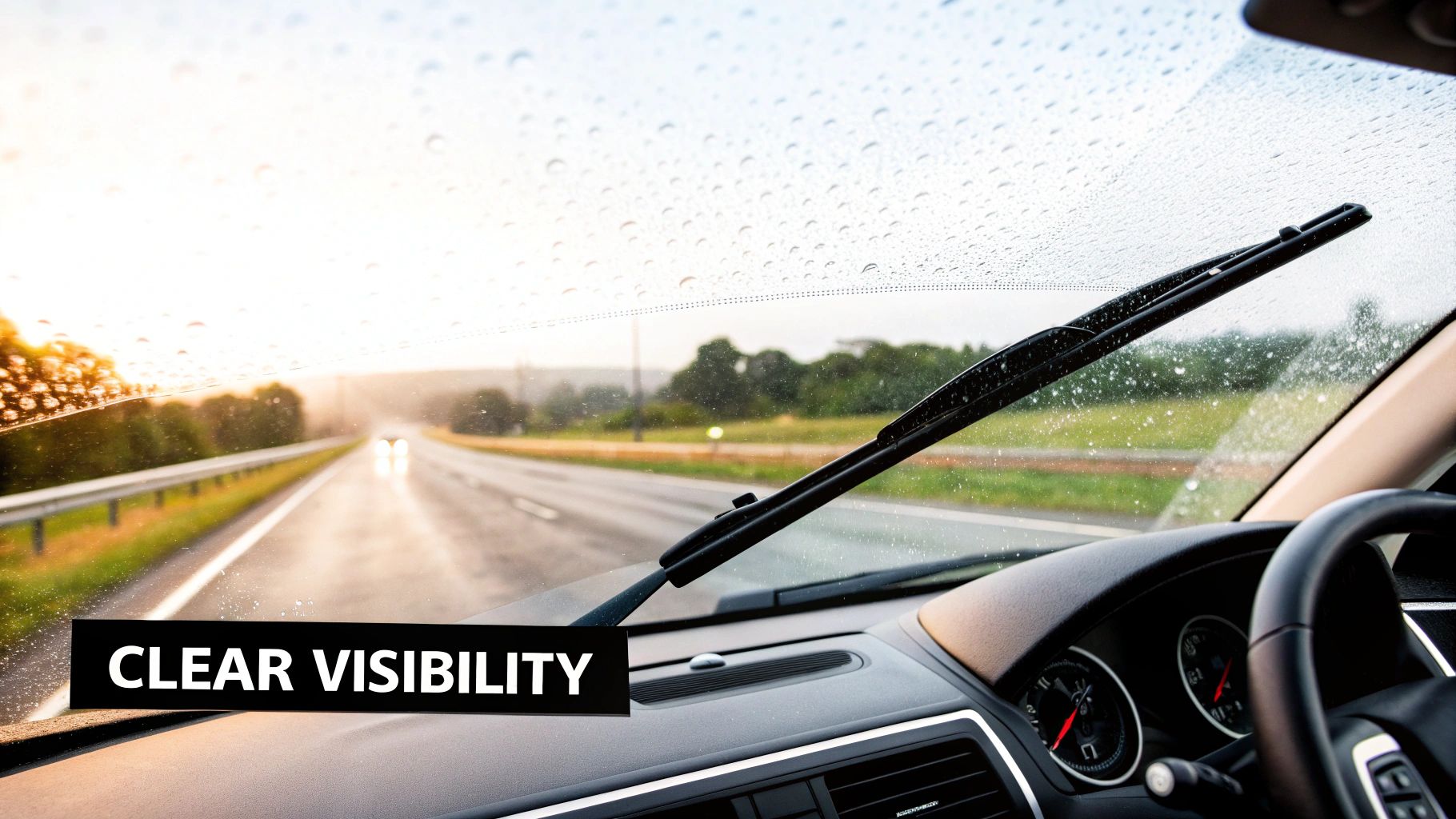
For a premier transportation service, unobstructed driver visibility is a fundamental safety requirement. A comprehensive windshield and wiper system assessment is crucial, as it directly impacts the chauffeur's ability to navigate safely through Chicago’s unpredictable weather, from sudden downpours to lake-effect snow. This check, a vital part of any professional vehicle safety inspection checklist, ensures the vehicle not only presents a pristine image but is also equipped to handle adverse conditions during a critical airport transfer or corporate outing.
A thorough assessment goes beyond simply checking wiper blades. It involves inspecting the windshield for chips and cracks that can compromise structural integrity and obstruct vision, verifying the wiper motor’s function, and ensuring the washer fluid system is fully operational and filled with the appropriate seasonal fluid.
Key Inspection Points and Frequency
A proactive approach to visibility ensures safety and prevents costly last-minute repairs.
- Wiper Blades: Replace every 6-12 months, or as soon as streaking or chattering is noticed. Premium services catering to corporate transportation often replace them seasonally, installing winter-grade blades before the first snowfall.
- Washer Fluid: Check the fluid level weekly and top off as needed. Critically, switch to a de-icing or winter-grade washer fluid by October to prevent freezing in the lines and reservoir during Chicago's harsh winters.
- Windshield Integrity: Visually inspect the windshield for new chips or cracks during every pre-trip inspection. Small chips should be repaired immediately to prevent them from spreading, which can necessitate a full windshield replacement.
Fleet Management Insight: Leading Chicago black car services mandate a "clear vision" standard before any vehicle is dispatched. This includes a streak-free cleaning of all glass and immediate grounding of any vehicle with a chip or crack in the driver's direct line of sight, per NHTSA visibility guidelines.
Chauffeur Training and Pre-Trip Checks
Chauffeurs must be trained to identify and report visibility issues before they affect a client’s journey.
- Function Test: Activate the wipers and washers. Do the blades move smoothly and quietly across the glass? Does the spray hit the correct area of the windshield?
- Visual Inspection: Look closely for any hazing, pitting, or delamination on the windshield itself, especially at night or in low light.
- Blade Condition: Manually lift the wiper arm and run a finger along the rubber edge (carefully). Is it pliable and smooth, or is it cracked, hard, or nicked?
This attention to detail ensures every passenger journey begins with a perfectly clear and safe view of the road ahead.
8. Suspension and Steering System Inspection
For a premium transportation provider, the suspension and steering systems are as crucial to the client experience as they are to safety. These systems define the ride quality, ensuring the smooth, quiet, and comfortable journey expected in a luxury vehicle. A comprehensive inspection of these components is a vital part of any professional vehicle safety inspection checklist, guaranteeing not just directional control but also the serene, "floating" sensation that distinguishes a high-end service. It's about delivering an experience, not just a ride.
A thorough evaluation includes checking shock absorbers and struts for leaks or wear, examining springs for integrity, and ensuring all linkages and bushings are sound. The steering inspection focuses on the responsiveness of the power steering system, checking for any excessive "play" in the steering wheel, and confirming proper vehicle alignment to prevent uneven tire wear and ensure predictable handling.
Key Inspection Points and Frequency
A proactive maintenance schedule prevents a minor handling issue from becoming a major safety concern or a comfort complaint.
- Comprehensive Inspection: A full suspension and steering system check should be performed every 50,000 miles or annually. However, for vehicles navigating the pothole-ridden streets of major urban centers, more frequent checks are advisable.
- Wheel Alignment: Perform a four-wheel alignment check every 12 months, after any tire replacement, or immediately following any significant impact with a curb or pothole. This protects tire investments and ensures optimal handling.
- Power Steering Fluid: The power steering fluid level should be checked during every oil change, and the fluid itself should be flushed and replaced according to the manufacturer's recommended service interval, typically every 40,000-60,000 miles.
Fleet Management Insight: Leading executive car services in cities like Chicago and New York mandate quarterly alignment checks and a "road feel" test drive by a senior mechanic to catch subtle degradation in ride quality. This preserves the brand's reputation for superior comfort and meticulous vehicle care.
Chauffeur Training and Pre-Trip Checks
Chauffeurs are uniquely positioned to detect early signs of suspension and steering issues during their daily routes.
- Feel: Does the vehicle drift or pull to one side? Is there excessive vibration or "looseness" felt through the steering wheel?
- Sound: Are there any clunking, creaking, or knocking sounds when turning or driving over bumps?
- Performance: Does the vehicle feel unstable at highway speeds or "nosedive" excessively during braking?
Empowering chauffeurs to report these sensory details immediately allows for swift corrective action, maintaining both safety and the signature smooth ride your clients expect.
9. Exterior Body Condition and Paint Assessment
For a premier luxury transportation service, the vehicle's exterior is the first handshake with the client. A meticulous exterior body and paint assessment is more than a matter of aesthetics; it is a direct reflection of the company's standards for quality, professionalism, and attention to detail. This inspection, a critical component of any professional vehicle safety inspection checklist, ensures the first impression is one of immaculate care and sets the expectation for the five-star experience to follow, from O'Hare airport pickups to special event transportation.
A comprehensive assessment involves a detailed visual check of every body panel for dents, dings, scratches, and panel gap consistency. It also includes evaluating the paint for swirl marks, fading, or chips and identifying any signs of rust, especially in hidden areas like wheel wells and under door sills. For a Chicago-based service, this is a safety issue as well, since unchecked rust can compromise structural integrity over time.
Key Inspection Points and Frequency
Maintaining a pristine exterior requires a consistent, proactive schedule, especially when facing harsh urban and seasonal conditions.
- Daily Wash/Wipe Down: A daily rinse or waterless wash is essential to remove corrosive elements like road salt, bird droppings, and industrial fallout. High-end services, particularly those catering to corporate clients, often mandate a full detail between every client booking.
- Wax and Sealant Application: A high-quality carnauba wax or synthetic paint sealant should be applied at least monthly. This creates a protective barrier against UV rays, acid rain, and the abrasive salt used on Chicago's winter roads.
- Damage Triage: Minor scratches and rock chips should be addressed immediately with touch-up paint to prevent rust from forming. Dents or panel damage should be scheduled for professional repair within the week.
Fleet Management Insight: Leading Chicago black car services implement a "Showroom Standard" policy. Before any vehicle is dispatched, it undergoes a 15-point exterior check under bright lighting. Any imperfection, no matter how minor, is logged, photographed, and scheduled for remediation, ensuring a flawless presentation for every single client.
Chauffeur Training and Pre-Trip Checks
Chauffeurs must be trained to view the vehicle's exterior with a critical eye during their pre-trip walk-around.
- Lighting: Inspect the vehicle under different lighting conditions to spot imperfections that may be hidden in shade.
- Tactile Check: Gently run a hand (in a microfiber cloth) over the paint after washing to feel for bonded contaminants that need clay bar treatment.
- Panel Alignment: Look down the sides of the vehicle to ensure all body panels are perfectly aligned and gaps are uniform.
This commitment to external perfection reinforces the brand's promise of luxury and uncompromising quality from the moment the vehicle arrives.
10. Safety Equipment and Emergency Systems Verification
For an elite transportation provider, safety extends far beyond the mechanical operation of the vehicle. A comprehensive verification of safety equipment and emergency systems is a fundamental component of a professional vehicle safety inspection checklist. This process ensures that every vehicle is not just mechanically sound but also fully prepared to protect passengers and chauffeurs in an emergency, reinforcing client trust and meeting stringent regulatory standards set by bodies like the DOT and NHTSA.
This inspection involves a systematic check of all passive and active safety features. It covers everything from seat belts and airbags to fire extinguishers, first aid kits, and emergency exits, which are especially critical in larger vehicles like stretch limousines and Sprinter vans. It is a mandatory check that demonstrates a commitment to passenger well-being above all else.
Key Inspection Points and Frequency
A proactive and scheduled approach to safety equipment is essential for maintaining compliance and readiness.
- Seat Belts and Airbags: All seat belts must be visually inspected for fraying or damage and checked for proper retraction and latching functionality before every shift. The airbag system's indicator light on the dashboard must be checked during every vehicle startup to ensure the system is active and has no faults.
- Emergency Supplies: First aid kits and fire extinguishers must be inspected monthly for accessibility, proper charge (for extinguishers), and expiration dates. A log should be kept to track these checks and any replacements.
- Emergency Exits: For vehicles equipped with them (e.g., stretch limousines, buses), emergency exits, including window latches and roof hatches, must be tested for proper operation on a quarterly basis.
Fleet Management Insight: Leading corporate car services implement quarterly safety audits where every piece of emergency equipment is physically tested and documented. This practice not only ensures compliance but also serves as a crucial training refresher for staff, keeping emergency procedures top-of-mind.
Chauffeur Training and Pre-Trip Checks
The chauffeur is the ultimate guarantor of onboard safety. Their pre-trip diligence is critical for verifying that all systems are operational.
- Location: Can the chauffeur immediately locate the fire extinguisher and first aid kit?
- Functionality: Does a quick tug on each seat belt confirm it will latch securely?
- Communication: Has the emergency communication system or panic button (if equipped) been tested within the last month?
This rigorous pre-trip verification ensures that in the critical moments of an emergency, every tool is in its place and functions as intended.
10-Point Vehicle Safety Inspection Comparison
| Inspection Item | 🔄 Implementation Complexity | ⚡ Resource Requirements | 📊 Expected Outcomes | 💡 Ideal Use Cases | ⭐ Key Advantages |
|---|---|---|---|---|---|
| Brake System Inspection | High — multi-component diagnostics, detailed measurements | Specialized gauges, fluid testers, trained techs; 60–120 min | Reliable braking, reduced failures, compliance | Airport transfers, high-use sedans/limousines | Maximizes safety and reduces liability ⭐⭐⭐ |
| Tire Condition & Pressure Assessment | Low–Medium — quick checks and measurements | Pressure gauge, tread tool; 15–30 min; seasonal attention | Improved comfort, fuel economy, reduced blowouts | Pre-shift checks, long airport trips, daily ops | Enhances ride and extends tire life ⭐⭐ |
| Lighting System Verification | Low–Medium — bulb/function tests; wiring may be complex | Light meter/alignment tools, spare bulbs; 15–45 min | Better visibility, fewer violations, improved appearance | Night operations, events, limousines with mood lighting | Ensures compliance and premium appearance ⭐⭐ |
| Interior Cleanliness & Upholstery | Medium — visual plus detailed cleaning | Detailing supplies or pro services; 30–90 min | High client satisfaction, preserved resale value | Pre-event, corporate clients, weddings | Strengthens brand image and retention ⭐⭐ |
| Engine & Fluid Level Checks | Medium — routine but requires skill | Fluid testers, OEM fluids, safety gear; 10–30 min | Prevents breakdowns, maintains performance | Daily pre-shift, long trips, 24/7 fleets | Improves reliability and longevity ⭐⭐⭐ |
| Air Conditioning & Climate Control | Medium–High — refrigerant and HVAC diagnostics | AC gauges, recharge equipment, filters; potentially long repairs | Consistent comfort, better air quality | Summer/winter service, VIP clients | Critical for passenger comfort ⭐⭐⭐ |
| Windshield & Wiper System Assessment | Low — visual and functional checks | Wiper blades, washer fluid; 5–20 min; seasonal replacements | Clear visibility in adverse weather, professional look | Pre-trip, rainy/snowy seasons | Ensures visibility and safety ⭐ |
| Suspension & Steering Inspection | High — alignment, component testing, road tests | Alignment equipment, lifts, trained technicians; time-intensive | Smooth ride, improved handling, less tire wear | Limousines, executive vehicles, post-incident checks | Maintains ride quality and safety ⭐⭐⭐ |
| Exterior Body & Paint Assessment | Low–Medium — visual inspection, touch-up needs | Detailing tools, paint correction/repair as needed; variable time | Strong first impression, protects resale value | Event-ready vehicles, daily display fleets | Protects brand image and vehicle value ⭐⭐ |
| Safety Equipment & Emergency Systems | Medium — functional checks and record-keeping | Checklists, replacement kits, training; periodic audits | Regulatory compliance, passenger protection | All services, mandatory for stretch limousines | Ensures legal compliance and client trust ⭐⭐⭐ |
Integrating Excellence: Turning Your Checklist into a Culture of Safety
Navigating this comprehensive vehicle safety inspection checklist reveals a fundamental truth about premier transportation: excellence is not an accident. It is the direct result of deliberate, consistent, and meticulous attention to detail. We have journeyed through the ten critical pillars of vehicle readiness, from the non-negotiable stopping power of the brake system to the reassuring presence of fully functional safety equipment. Each point on this list is more than a box to be ticked; it represents a commitment to the well-being of every passenger and the integrity of your operation.
The core takeaway is that a checklist is only as powerful as the culture that supports it. A piece of paper or a digital form, by itself, cannot ensure safety. True operational security is achieved when every chauffeur and fleet manager understands the "why" behind each inspection point. It is fostered when pre-trip checks are viewed not as a burdensome chore, but as a professional responsibility and a vital first step in delivering an impeccable service experience. This shift in perspective transforms a routine task into a powerful brand-building activity.
From Checklist to Culture: Actionable Next Steps
To truly embed these principles into your daily operations, consider these next steps. First, formalize your process. Use the sample checklist provided in this guide as a starting point, but customize it to fit the specific needs of your fleet, whether it comprises sedans, SUVs, or sprinter vans. Second, invest in training. Ensure every chauffeur is not just handed the checklist, but is thoroughly trained on how to perform each check correctly, what to look for, and how to properly report any discrepancies. This empowerment builds ownership and accountability.
Finally, leverage technology to streamline and document. Digital logging systems create a transparent, searchable history for each vehicle, simplifying maintenance scheduling and demonstrating a concrete commitment to safety standards. This meticulous record-keeping is invaluable for internal audits, insurance purposes, and, most importantly, for building unshakeable client confidence.
Key Insight: A world-class vehicle safety inspection checklist is a dynamic tool, not a static document. It should be reviewed and updated regularly to account for new vehicle technologies, changing seasonal conditions, and feedback from the chauffeurs who interact with the vehicles daily.
The Lasting Impact of Diligence
Mastering a comprehensive vehicle safety inspection checklist is not merely about preventing breakdowns or meeting regulatory requirements. It is about building a reputation for unwavering reliability and care. For corporate clients booking an airport transfer from O'Hare, for wedding planners coordinating a once-in-a-lifetime event, or for families entrusting you with their safety, this behind-the-scenes diligence is what they are truly paying for. It is the unseen foundation of luxury service.
By integrating these inspection protocols into the very fabric of your business, you create a virtuous cycle. Well-maintained vehicles provide a superior passenger experience, which in turn generates positive reviews and repeat business. Proactive maintenance reduces costly emergency repairs and vehicle downtime, improving profitability. Most importantly, it cultivates a culture of safety that protects your most valuable assets: your clients, your team, and your brand's sterling reputation. This is how a simple checklist becomes a powerful engine for long-term growth and success.
Ready to experience the peace of mind that comes from a fleet maintained with this level of meticulous care? At Max's Luxury Rides Inc., our commitment to a rigorous vehicle safety inspection checklist is the cornerstone of every journey we provide. Book your next ride with us and feel the difference that a culture of safety and excellence makes.